Who will lead the Global South? China’s Belt and Road vs America’s strategic partnerships


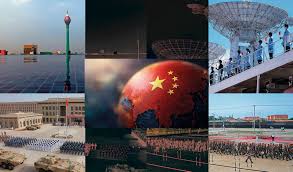
Competition between China and United States is no longer limited to trade, military power or technology.
Increasingly, the rivalry is expanding across the Global South, where both powers are competing for influence through infrastructure investment, energy cooperation, diplomacy, financing and strategic partnerships.
RECOMMENDED STORIES
From Africa and Central Asia to the Middle East and Latin America, developing countries have become central arenas in the evolving geopolitical contest between Beijing and Washington. China’s Belt and Road Initiative has dramatically expanded Beijing’s economic and political presence across multiple regions over the past decade, while the United States and its allies are responding with new partnership frameworks, investment initiatives and strategic engagement efforts.
For many developing countries, this competition creates both opportunities and risks. Governments seek investment, infrastructure and technology, but also want to avoid becoming trapped in geopolitical rivalry between major powers.
The broader question now shaping global politics is increasingly clear: who will lead the Global South in the emerging international order?
What is the Belt and Road Initiative?
The Belt and Road Initiative, often called BRI, is one of the largest international infrastructure and connectivity projects in modern history.
Launched by China in 2013, the initiative aims to strengthen trade, transportation and economic links across:
-
Asia
-
Africa
-
Europe
-
The Middle East
-
Latin America
The project includes investments in:
-
Railways
-
Ports
-
Highways
-
Energy infrastructure
-
Industrial zones
-
Telecommunications
-
Logistics networks
China presents the initiative as a platform for economic cooperation and shared development.
For Beijing, the Belt and Road also supports broader strategic goals including:
-
Expanding trade routes
-
Securing energy access
-
Strengthening political partnerships
-
Increasing international influence
-
Supporting Chinese companies abroad
Over time, BRI has become one of the most visible symbols of China’s growing global role.
Why did China expand so aggressively into the Global South?
Several factors explain China’s growing engagement with developing countries.
First, China’s economic growth created enormous demand for:
-
Energy resources
-
Raw materials
-
Export markets
-
International transportation corridors
Second, Beijing sought to diversify trade routes and reduce dependence on maritime chokepoints vulnerable to geopolitical tensions.
Third, many developing countries urgently needed infrastructure investment that Western institutions often failed to provide quickly enough.
Chinese financing and construction companies moved aggressively into this gap.
At the same time, Beijing increasingly viewed the Global South as strategically important for:
-
Diplomatic influence
-
International voting support
-
Economic partnerships
-
Multipolar global governance
China’s leadership often frames cooperation with developing countries as part of a broader effort to create a more balanced international system less dominated by Western powers.
Why has the Belt and Road become controversial?
Although many countries welcomed Chinese investment, the Belt and Road Initiative has also faced growing criticism.
Critics raise concerns regarding:
-
Debt sustainability
-
Financial transparency
-
Environmental standards
-
Political influence
-
Strategic dependency
Some Western governments accuse China of using infrastructure financing to expand geopolitical leverage.
The term “debt trap diplomacy” became widely debated, although experts remain divided over how accurately it describes Chinese lending practices overall.
Certain projects also faced criticism because of:
-
Delays
-
Cost overruns
-
Limited local employment
-
Governance concerns
At the same time, many developing countries continue viewing Chinese investment as essential because infrastructure gaps remain enormous across large parts of the Global South.
For numerous governments, the immediate need for roads, ports and energy systems outweighs geopolitical concerns.
How is the United States responding?
The United States and its allies increasingly view China’s expanding influence as a strategic challenge.
Washington has therefore expanded efforts to strengthen partnerships across:
-
Africa
-
Southeast Asia
-
Latin America
-
The Indo Pacific
-
Central Asia
-
The Middle East
American strategy generally focuses on:
-
Investment partnerships
-
Technology cooperation
-
Security coordination
-
Supply chain diversification
-
Infrastructure support
-
Energy transition initiatives
The United States also emphasizes:
-
Democratic governance
-
Transparency
-
Private sector investment
-
Rules based international systems
Unlike China’s heavily state driven financing model, American approaches often rely more heavily on:
-
Private investment
-
Multilateral institutions
-
Strategic alliances
-
Development partnerships
The broader goal is counterbalancing Chinese influence without forcing countries into direct confrontation.
Why is the Global South so strategically important now?
The Global South has become increasingly important because it represents:
-
Rapid population growth
-
Expanding markets
-
Strategic resources
-
Future industrial centers
-
Key trade corridors
-
Critical voting blocs internationally
Many developing countries are becoming major geopolitical actors themselves rather than passive participants in global politics.
Control over:
-
Energy resources
-
Critical minerals
-
Maritime routes
-
Industrial supply chains
-
Infrastructure corridors
increasingly shapes international influence.
At the same time, emerging economies often seek greater independence from traditional Western dominated institutions.
This creates opportunities for both China and the United States to expand partnerships and influence.
How are infrastructure projects shaping geopolitics?
Infrastructure is increasingly becoming a geopolitical tool.
Ports, railways, pipelines and logistics corridors now influence:
-
Trade flows
-
Military access
-
Energy security
-
Political influence
-
Regional integration
For example, transportation routes linking:
-
Asia
-
Central Asia
-
The South Caucasus
-
The Middle East
-
Europe
are gaining major strategic importance.
Countries located along these corridors increasingly benefit from:
-
Investment
-
Transit revenues
-
Industrial development
-
Geopolitical leverage
Infrastructure diplomacy has therefore become central to global competition.
The struggle is no longer only about military bases or alliances.
It is increasingly about connectivity and economic integration.
What role does energy play in the rivalry?
Energy security remains one of the most important dimensions of major power competition.
China is one of the world’s largest energy importers, making stable access to oil, gas and renewable energy supply chains strategically critical.
As a result, Beijing has expanded energy partnerships across:
-
The Middle East
-
Central Asia
-
Africa
-
Latin America
Meanwhile, the United States continues maintaining strong influence in global energy markets through:
-
Strategic alliances
-
LNG exports
-
Financial systems
-
Energy technologies
The transition toward renewable energy is also reshaping competition.
Control over:
-
Battery supply chains
-
Solar technologies
-
Critical minerals
-
Electric vehicle production
is becoming increasingly important for long term geopolitical influence.
Why is Africa becoming a major geopolitical arena?
Africa has become one of the key regions where U.S.–China competition is most visible.
The continent’s:
-
Young population
-
Natural resources
-
Urban growth
-
Strategic geography
make it increasingly important globally.
China has invested heavily in African infrastructure including:
-
Railways
-
Ports
-
Power plants
-
Telecommunications
-
Industrial parks
Meanwhile, the United States increasingly seeks deeper engagement through:
-
Trade partnerships
-
Security cooperation
-
Technology initiatives
-
Development financing
African governments themselves often seek balanced relationships with multiple global powers rather than exclusive alignment.
Many leaders emphasize pragmatic cooperation focused on development needs rather than ideological blocs.
How does technology affect competition in the Global South?
Technology has become another major area of influence competition.
China has expanded digital infrastructure projects involving:
-
Telecommunications
-
Smart city systems
-
Surveillance technologies
-
E commerce platforms
-
Digital payments
Meanwhile, the United States and its allies promote alternative digital ecosystems focused on:
-
Open internet standards
-
Cybersecurity
-
Data protection
-
Private sector innovation
The competition increasingly extends into:
-
Artificial intelligence
-
Semiconductor access
-
Cloud computing
-
Digital governance
Developing countries now face important choices regarding which technological systems and standards they adopt.
Why are many countries avoiding choosing sides?
Most Global South countries do not want to become trapped between Washington and Beijing.
Many governments benefit economically from Chinese investment while simultaneously maintaining important security or financial relationships with the United States and Western institutions.
As a result, numerous countries pursue:
-
Strategic balancing
-
Multi vector diplomacy
-
Nonalignment
-
Flexible partnerships
This reflects a broader trend toward multipolar international politics.
Many developing countries increasingly seek autonomy rather than dependence on any single major power.
The Global South is therefore becoming more politically influential and diplomatically independent.
How does the rivalry affect international institutions?
Competition between China and the United States increasingly influences:
-
Development banks
-
Trade systems
-
International organizations
-
Infrastructure financing
-
Climate negotiations
China has expanded its role in institutions such as:
-
BRICS
-
The Asian Infrastructure Investment Bank
-
Regional development initiatives
Meanwhile, the United States continues playing central roles in:
-
The World Bank
-
IMF systems
-
NATO aligned partnerships
-
Western financial institutions
The struggle increasingly concerns who shapes future global governance structures.
Could the rivalry divide the world economically?
Some analysts worry that growing competition could fragment the international system into competing economic spheres.
This could affect:
-
Trade networks
-
Technology standards
-
Infrastructure systems
-
Financial mechanisms
-
Supply chains
However, many Global South countries resist rigid bloc politics because they depend on economic relations with multiple partners simultaneously.
The future global order may therefore become more flexible and multipolar rather than fully divided into two opposing camps.
Why does Central Asia and the South Caucasus matter?
Regions such as Central Asia and the South Caucasus are gaining strategic importance because of their roles in:
-
Energy transit
-
Transportation corridors
-
Eurasian connectivity
-
Trade diversification
Countries in these regions increasingly benefit from competition among major powers seeking access and influence.
Infrastructure projects connecting:
-
China
-
Central Asia
-
Azerbaijan
-
Türkiye
-
Europe
are becoming increasingly important for global trade diversification.
This enhances the geopolitical importance of emerging middle corridor routes and regional connectivity strategies.
How does climate change influence the competition?
Climate change is reshaping development priorities globally.
Many Global South countries require massive investment for:
-
Renewable energy
-
Climate adaptation
-
Sustainable infrastructure
-
Water systems
-
Green transportation
China currently dominates several renewable energy sectors including:
-
Solar panels
-
Battery manufacturing
-
Electric vehicles
Meanwhile, the United States and its allies are increasing green investment partnerships internationally.
Climate financing therefore represents another major arena of geopolitical competition and cooperation.
Could the Global South become more independent overall?
One of the most important long term trends is the growing political confidence of many developing countries.
Rather than simply aligning with existing powers, many states increasingly seek:
-
Strategic autonomy
-
Regional integration
-
Independent diplomacy
-
Diversified partnerships
The Global South itself is becoming more influential economically and politically.
Countries across Asia, Africa and Latin America increasingly shape:
-
Energy markets
-
Commodity production
-
Population growth
-
Manufacturing
-
Global consumption trends
This may gradually reduce the dominance of traditional Western centered global systems.
What could the future international order look like?
The world may be moving toward a more multipolar system where:
-
China expands economic influence
-
The United States retains major security and technological advantages
-
Regional powers gain greater autonomy
-
Developing countries exercise more diplomatic flexibility
Rather than a simple bipolar Cold War style division, the future international order may become more fluid and competitive.
Infrastructure, trade and technology partnerships may matter as much as traditional military alliances.
Why does this competition matter globally?
The struggle for influence in the Global South affects:
-
Global trade routes
-
Energy security
-
Technology systems
-
Climate policy
-
International institutions
-
Economic development
-
Geopolitical stability
The outcome may shape how globalization evolves over the coming decades.
The rivalry between China and United States is therefore not only about which power becomes stronger.
It is about who influences the future direction of global development itself.
The central question is no longer whether the Global South matters strategically.
It clearly does.
The real question is whether developing countries can transform growing great power competition into opportunities for sustainable growth and greater international influence without becoming divided by geopolitical confrontation.
By Faig Mahmudov


Similar news