Taiwan and the risk of great power conflict


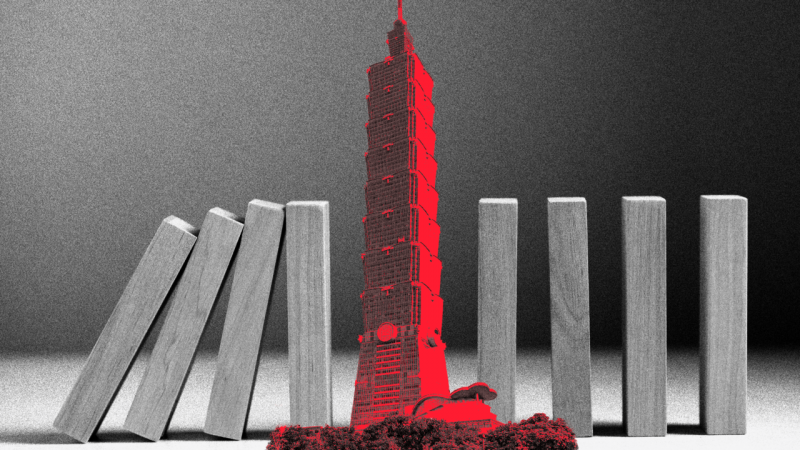
Taiwan has become one of the most dangerous and strategically sensitive flashpoints in modern international politics.
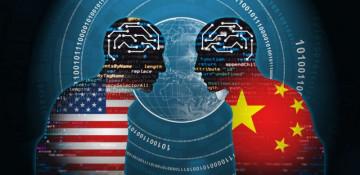
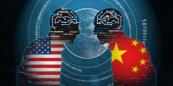
Rising tensions surrounding the island increasingly dominate relations between United States and China, raising global concerns about the possibility of military confrontation between the world’s two largest powers.
RECOMMENDED STORIES
What was once viewed primarily as a regional dispute now carries enormous geopolitical, economic and security implications for the entire international system. Military activity around Taiwan has intensified significantly in recent years, diplomatic rhetoric has hardened and strategic competition in the Indo Pacific region continues expanding.
At the same time, Taiwan occupies a uniquely important position in the global economy because of its dominance in advanced semiconductor manufacturing. Any serious crisis around the island could therefore disrupt international trade, technology production and financial markets worldwide.
As a result, policymakers increasingly warn that Taiwan may represent the single greatest risk of great power conflict in the 21st century.
The central question facing the international community is whether Washington and Beijing can manage escalating tensions without allowing the Taiwan issue to trigger a wider geopolitical crisis.
Why is Taiwan so important to China?
China considers Taiwan part of its sovereign territory and has consistently stated that reunification remains a core national objective.
The roots of the issue date back to the Chinese civil war in the 20th century. After the Communist Party established control over mainland China in 1949, the Republic of China government retreated to Taiwan.
Since then, Taiwan has operated with its own:
-
Government
-
Military
-
Economy
-
Political system
-
Elections
However, Beijing has never abandoned its claim over the island.
For Chinese leaders, Taiwan is not viewed simply as a territorial dispute. It is deeply connected to:
-
National sovereignty
-
Historical identity
-
Political legitimacy
-
Territorial integrity
Chinese officials repeatedly state that foreign interference in Taiwan represents interference in China’s internal affairs.
Beijing has also made clear that while peaceful reunification remains its preferred approach, it does not rule out the use of force under certain circumstances.
What is the U.S. position on Taiwan?
The United States officially follows the “One China” policy, meaning Washington formally recognizes the government in Beijing rather than Taiwan as the official government of China.
However, the United States also maintains strong unofficial relations with Taiwan and supports its defensive capabilities.
American policy toward Taiwan is intentionally complex and somewhat strategically ambiguous.
Washington provides military support and arms sales to Taiwan while avoiding an explicit formal commitment to defend the island militarily in every scenario.
The broader goal of this ambiguity has traditionally been:
-
Deterring Chinese military action
-
Discouraging unilateral Taiwanese independence moves
-
Preserving regional stability
However, tensions have increased as both Washington and Beijing perceive changes in the strategic balance.
The United States increasingly views Taiwan as important not only for regional security, but also for maintaining broader Indo Pacific stability.
Why has Taiwan become more dangerous in recent years?
Several factors have intensified tensions surrounding Taiwan.
One major factor is China’s rapidly expanding military capabilities.
Over the past two decades, China has modernized its armed forces significantly, investing heavily in:
-
Naval expansion
-
Missile systems
-
Air power
-
Cyber warfare
-
Space technologies
-
Artificial intelligence
Military exercises and aircraft activity near Taiwan have increased dramatically.
At the same time, U.S. political and military support for Taiwan has become more visible through:
-
Arms sales
-
Congressional visits
-
Security cooperation
-
Indo Pacific alliance strengthening
Taiwan itself has also developed a stronger local identity over time, with many residents increasingly viewing Taiwan as politically distinct from mainland China.
These developments have created growing strategic mistrust between Washington and Beijing.
Why is Taiwan economically important globally?
Taiwan’s importance extends far beyond geopolitics.
The island plays a critical role in the global technology industry, particularly in semiconductor production.
Advanced semiconductors power:
-
Smartphones
-
Artificial intelligence systems
-
Data centers
-
Military equipment
-
Vehicles
-
Telecommunications
-
Consumer electronics
Taiwan hosts some of the world’s most advanced semiconductor manufacturing facilities, making it central to global technology supply chains.
This creates enormous economic risks.
A military conflict or major disruption involving Taiwan could trigger:
-
Global supply chain crises
-
Semiconductor shortages
-
Technology production disruptions
-
Financial market instability
-
Economic recession risks
The global economy’s dependence on Taiwanese chip production has therefore made the Taiwan issue even more strategically sensitive.
How does Taiwan fit into U.S.–China rivalry?
Taiwan increasingly represents the most visible symbol of broader strategic competition between Washington and Beijing.
For the United States, the issue involves:
-
Regional alliance credibility
-
Indo Pacific security
-
Freedom of navigation
-
Balance of power
-
Protection of democratic partners
For China, Taiwan represents:
-
Sovereignty
-
National reunification
-
Historical legitimacy
-
Resistance to foreign pressure
As strategic rivalry intensifies across trade, technology and military influence, Taiwan has become increasingly central to both sides’ geopolitical calculations.
Many analysts believe Taiwan is dangerous precisely because it combines:
-
Military competition
-
National identity
-
Great power rivalry
-
Economic interdependence
-
Strategic symbolism
This makes compromise extremely difficult politically for both governments.
What role does military deterrence play?
Deterrence remains central to preventing conflict.
The United States and its regional allies seek to discourage military action by demonstrating that any attempt to seize Taiwan by force would carry major costs.
This includes:
-
Military presence in the Indo Pacific
-
Naval operations
-
Security partnerships
-
Defense cooperation
-
Arms sales to Taiwan
Meanwhile, China uses military exercises and demonstrations of force to signal its determination regarding reunification.
The challenge is that deterrence itself can increase tensions.
Military buildups, exercises and strategic signaling may strengthen stability in some situations while also increasing risks of:
-
Miscalculation
-
Accidental escalation
-
Crisis instability
The Taiwan Strait has therefore become one of the most heavily monitored and strategically sensitive regions globally.
Could a conflict happen accidentally?
One of the greatest fears among security experts is the possibility of accidental escalation.
Military aircraft and naval vessels from multiple countries operate increasingly close to one another in the region.
This raises risks involving:
-
Navigation incidents
-
Miscommunication
-
Technical errors
-
Misinterpreted actions
Cyberattacks, disinformation campaigns or political crises could also escalate tensions unexpectedly.
Because both sides view Taiwan as strategically vital, even relatively small incidents could potentially trigger larger confrontations if crisis management mechanisms fail.
This is why military communication channels between Washington and Beijing are considered critically important.
How are regional countries responding?
Countries across the Indo Pacific region closely monitor Taiwan tensions because the consequences of conflict would directly affect regional stability.
Several U.S. allies including:
-
Japan
-
South Korea
-
Australia
-
The Philippines
have strengthened security coordination with Washington in recent years.
Japan in particular increasingly views Taiwan stability as closely connected to its own national security.
At the same time, many countries seek to avoid direct confrontation between the two powers.
Most regional governments maintain significant economic ties with China while also depending on U.S. security partnerships.
As a result, many states attempt to balance diplomacy carefully without choosing outright alignment in every aspect of the rivalry.
How does public opinion in Taiwan affect the situation?
Taiwan’s internal politics play an important role in shaping cross Strait relations.
Public opinion on the island is complex.
Some residents support eventual formal independence, while others prefer maintaining the current status quo without provoking conflict.
Most Taiwanese citizens prioritize:
-
Security
-
Stability
-
Economic prosperity
-
Democratic governance
Taiwan has developed into a democratic political system with regular elections and strong civil institutions.
This political evolution increasingly influences international perceptions of the island.
However, formal declarations of independence remain highly sensitive because Beijing has repeatedly warned such actions could trigger military responses.
As a result, Taiwan’s leaders generally navigate carefully between maintaining autonomy and avoiding direct escalation.
Could economic interdependence prevent conflict?
Despite geopolitical tensions, China and Taiwan remain economically connected in many areas.
Trade, investment and business relationships across the Taiwan Strait remain substantial.
Some analysts argue that this interdependence creates incentives for stability because conflict would produce devastating economic consequences for all sides involved.
However, history shows that economic ties alone do not always prevent geopolitical confrontation.
In recent years, strategic considerations have increasingly begun outweighing purely economic logic in many areas of international politics.
Governments worldwide are now reassessing supply chain dependencies and economic vulnerabilities connected to Taiwan.
How does technology affect the crisis?
Technology plays a major role in Taiwan related tensions.
The island’s semiconductor industry has become strategically critical for both commercial and military technologies globally.
Control over advanced chips increasingly influences:
-
Artificial intelligence
-
Military systems
-
Economic competitiveness
-
Cybersecurity
-
Technological leadership
As the global AI race intensifies, Taiwan’s semiconductor dominance has become even more important strategically.
Some analysts describe semiconductors as the “new oil” of the digital economy.
This increases international attention on Taiwan far beyond traditional geopolitical considerations.
Could diplomacy still reduce tensions?
Diplomatic engagement remains one of the most important tools for preventing escalation.
Although U.S.–China relations remain tense, both governments continue maintaining communication channels because the risks of conflict are extremely high.
Potential stabilizing measures could include:
-
Military communication mechanisms
-
Crisis management protocols
-
Confidence building measures
-
Strategic dialogue
-
Regional diplomacy
However, political mistrust continues complicating diplomatic progress.
Domestic political pressures in both countries also limit flexibility.
Taiwan itself remains politically sensitive for Chinese leadership, while American policymakers face pressure to demonstrate commitment to regional allies and democratic partners.
What would happen if a conflict occurred?
A major conflict over Taiwan would likely have global consequences.
Potential impacts could include:
-
Severe global economic disruption
-
Semiconductor shortages
-
Financial market instability
-
Maritime trade disruptions
-
Energy supply challenges
-
Cyber warfare escalation
-
Regional military confrontation
Because both China and the United States are nuclear powers, the risks associated with direct military conflict would be extraordinarily serious.
Even limited confrontation could destabilize the broader international system significantly.
This explains why many analysts view Taiwan as the most dangerous geopolitical hotspot in the world today.
How does the Taiwan issue reflect broader global change?
The Taiwan question increasingly symbolizes larger transformations in global politics.
It reflects:
-
The rise of China
-
Strategic competition between major powers
-
Technological rivalry
-
Shifting regional balances
-
Questions about international order
The issue also demonstrates how globalization and geopolitics have become deeply interconnected.
Taiwan is simultaneously:
-
A security issue
-
An economic issue
-
A technological issue
-
A diplomatic issue
-
A symbolic issue
This complexity makes managing tensions especially difficult.
Why does the world care so much about Taiwan?
Taiwan matters globally because it sits at the intersection of nearly every major geopolitical trend shaping the 21st century.
It involves:
-
Great power rivalry
-
Advanced technology
-
Military competition
-
Economic interdependence
-
Regional security
-
Democratic governance
-
National identity
The stakes therefore extend far beyond the island itself.
The future of Taiwan could influence:
-
Indo Pacific stability
-
Global technology markets
-
International trade
-
Military alliances
-
The broader balance of power between the United States and China
The central challenge facing world leaders is whether strategic competition can remain manageable despite rising tensions.
The Taiwan issue increasingly demonstrates how fragile the balance between deterrence and escalation has become in an era of intensifying geopolitical rivalry.
The question is no longer whether Taiwan is strategically important.
It clearly is.
The real question is whether the world’s major powers can prevent one of the most sensitive territorial disputes in modern history from evolving into a wider global crisis.
By Faig Mahmudov


Similar news