The rise of the “15 minute city” and human centered urban planning


For decades, modern cities were largely designed around automobiles, highways and rapid expansion. Urban growth often prioritized economic efficiency, large scale infrastructure and suburban development over human interaction, walkability and quality of life.
As cities expanded outward, commuting times increased, traffic congestion worsened and many urban residents became increasingly disconnected from essential services within their own neighborhoods.
RECOMMENDED STORIES
Today, however, a different urban model is gaining global attention: the “15 minute city.”
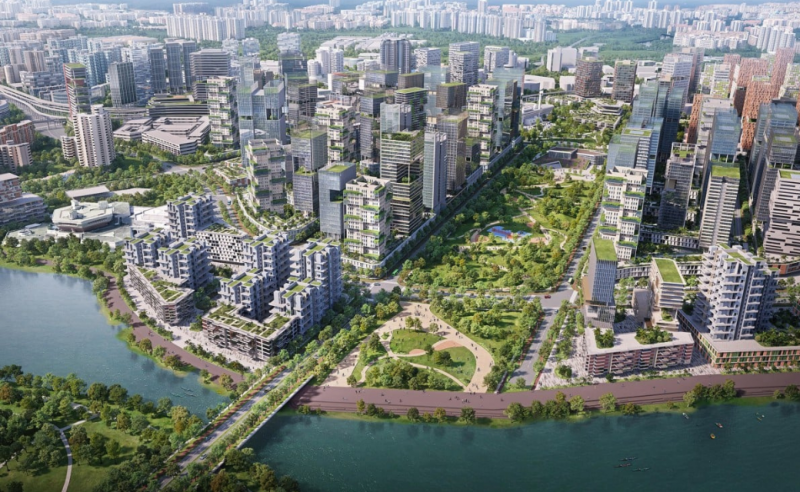
The idea is simple but transformative. In a 15 minute city, residents should be able to access most essential daily needs within a short walk or bicycle ride from their homes. Workplaces, schools, healthcare services, parks, grocery stores, public transportation and recreational spaces are designed to exist within close proximity rather than requiring long car dependent commutes.
Supporters argue that this model can improve quality of life, reduce environmental damage, strengthen local economies and create healthier communities. Critics, meanwhile, warn about potential social inequality, rising property prices and fears of excessive urban regulation.
As cities worldwide rethink urban development after the COVID 19 pandemic, climate change and rapid population growth, human centered urban planning has become one of the major themes discussed at World Urban Forum 13.
The debate surrounding the 15 minute city reflects a broader global question: should cities be designed primarily for vehicles and economic efficiency, or for the daily wellbeing of people?
What exactly is a “15 minute city”?
The 15 minute city concept is based on proximity and accessibility.
Under this model, residents should be able to reach most daily necessities within approximately 15 minutes by walking, cycling or public transportation.
These necessities generally include:
- Schools
- Healthcare services
- Grocery stores
- Parks
- Public transportation
- Workspaces
- Restaurants and cafes
- Cultural facilities
- Recreational areas
The concept does not necessarily mean people are restricted to their neighborhoods. Rather, it aims to reduce dependence on long commutes and improve local accessibility.
Urban planners argue that cities should function more like interconnected communities rather than fragmented zones separated by large distances and heavy traffic infrastructure.
The idea gained significant international attention during and after the COVID 19 pandemic, when lockdowns highlighted the importance of local neighborhoods, nearby public services and walkable urban environments.
Why are cities reconsidering car centered development?
Many modern cities were shaped heavily by automobile oriented planning during the 20th century.
Highways, large parking areas and suburban expansion became central features of urban development in many countries. While this model supported economic growth and personal mobility, it also created long term challenges.
Car dependent cities often experience:
- Severe traffic congestion
- Air pollution
- Noise pollution
- Long commuting times
- Social isolation
- Reduced public space
- Higher carbon emissions
In many urban areas, roads and parking infrastructure occupy enormous amounts of valuable land that could otherwise support housing, parks or public facilities.
Long commutes also affect mental health, family life and productivity.
Urban planners increasingly argue that cities designed primarily around vehicles often become less human centered and less socially connected.
The 15 minute city model seeks to reverse some of these trends by prioritizing pedestrians, cyclists and public transportation over private cars.
How does the 15 minute city relate to climate change?
Climate change is one of the major drivers behind growing interest in human centered urban planning.
Transportation remains one of the largest sources of greenhouse gas emissions globally. Car dependent urban systems contribute significantly to air pollution and energy consumption.
By reducing the need for long daily commutes, 15 minute cities may help lower:
- Fuel consumption
- Traffic congestion
- Carbon emissions
- Urban pollution
Walkable cities also encourage more sustainable lifestyles by supporting public transportation and active mobility.
Green urban planning often accompanies the 15 minute city concept through:
- Expanded green spaces
- Bicycle infrastructure
- Energy efficient buildings
- Climate adaptive public areas
- Reduced road infrastructure
Urban experts increasingly argue that sustainable cities require not only technological solutions, but also redesigned urban lifestyles.
The structure of cities themselves directly influences environmental impact.
How can walkable cities improve public health?
Health experts increasingly link urban design to physical and mental wellbeing.
Walkable neighborhoods encourage daily physical activity, helping reduce risks associated with:
- Obesity
- Heart disease
- Diabetes
- Stress
- Depression
Access to parks, green spaces and public gathering areas also supports mental health and social interaction.
Long commuting times, by contrast, are often associated with:
- Higher stress levels
- Reduced family time
- Sleep problems
- Sedentary lifestyles
During the COVID 19 pandemic, many residents realized how important nearby parks, local businesses and public spaces were for daily life.
Urban planners increasingly argue that healthy cities should not only provide medical services, but also create environments that support healthier lifestyles naturally.
Human centered planning therefore integrates public health directly into urban design.
What role does public transportation play?
The 15 minute city does not eliminate the need for public transportation. Instead, it seeks to integrate transportation more effectively with local communities.
Efficient public transport remains essential for:
- Regional connectivity
- Economic mobility
- Access to specialized services
- Reducing car dependency
However, planners increasingly emphasize multimodal mobility systems that combine:
- Walking
- Cycling
- Buses
- Metro systems
- Trams
- Shared mobility services
The goal is creating flexible transportation networks that prioritize accessibility rather than car ownership alone.
Many cities are expanding bicycle lanes, pedestrian zones and public transport infrastructure simultaneously as part of broader urban transformation strategies.
This reflects a growing recognition that mobility should focus on people rather than vehicles.
Why are mixed use neighborhoods becoming more popular?
Traditional urban planning often separated cities into distinct zones:
- Residential districts
- Business areas
- Industrial zones
- Commercial centers
While this model improved organization, it also increased commuting distances and reduced neighborhood diversity.
Mixed use development seeks to combine housing, workplaces, shops and services within the same areas.
Supporters argue this creates:
- More vibrant communities
- Stronger local economies
- Reduced transportation needs
- Safer public spaces
- Better social interaction
Local businesses may also benefit because residents spend more time within their neighborhoods.
Human centered planning increasingly prioritizes community interaction and street level activity rather than isolated urban functions.
How does technology support human centered planning?
Modern technology is helping cities redesign urban spaces more efficiently.
Data analytics and artificial intelligence allow planners to study:
- Traffic patterns
- Pedestrian movement
- Public transport usage
- Air quality
- Population density
- Infrastructure demand
Smart city technologies can help identify which neighborhoods lack access to essential services and where improvements are needed most.
Digital urban models also allow governments to simulate how street redesigns or transportation changes may affect mobility before construction begins.
However, urban experts caution that technology should support human centered planning rather than dominate it.
The ultimate goal is not creating cities that are simply more efficient, but cities that improve quality of life and social wellbeing.
Could the 15 minute city increase inequality?
Despite its popularity among many urban planners, the 15 minute city concept also faces criticism.
One concern is that highly desirable walkable neighborhoods may become more expensive over time, potentially pushing lower income residents out through gentrification.
As neighborhoods improve, property values and rents may rise significantly.
Critics warn that without affordable housing policies, human centered urban development could unintentionally deepen inequality.
There are also concerns that wealthier districts may receive better infrastructure investments than poorer communities.
Urban experts therefore stress that inclusive planning is essential.
A successful 15 minute city should provide equal access to:
- Public services
- Transportation
- Green spaces
- Education
- Healthcare
- Housing
Otherwise, urban transformation risks benefiting only privileged populations.
Why has the concept become politically controversial in some places?
In some countries, the 15 minute city idea has become politically sensitive and the subject of misinformation campaigns.
Critics and conspiracy theories have falsely claimed that such urban models aim to restrict freedom of movement or confine residents to specific districts.
Urban planners strongly reject these interpretations.
The actual concept focuses on increasing convenience and reducing unnecessary commuting rather than limiting mobility.
Residents remain free to travel throughout cities and beyond them.
However, debates surrounding traffic restrictions, environmental regulations and urban redesign have sometimes created political tension.
The controversy reflects broader societal debates about:
- Climate policy
- Government regulation
- Urban lifestyles
- Technological change
- Individual freedom
As cities attempt major transformations, public communication and community participation have become increasingly important.
How are different cities implementing these ideas?
Cities around the world are adopting human centered planning approaches in different ways.
Some are expanding pedestrian zones and reducing car traffic in city centers. Others focus on improving public transportation and bicycle infrastructure.
Several urban areas are investing heavily in:
- Local parks
- Community spaces
- Mixed use developments
- Neighborhood healthcare facilities
- Local education infrastructure
European cities have often been among the most active promoters of walkable urban models, although similar approaches are also expanding in parts of Asia, Latin America and the Middle East.
The exact implementation varies depending on:
- Geography
- Population density
- Economic conditions
- Existing infrastructure
- Cultural preferences
There is no single universal model for a 15 minute city.
What role does architecture play in human centered urbanism?
Architecture is becoming increasingly focused on human experience rather than purely visual or commercial considerations.
Human centered architecture emphasizes:
- Accessibility
- Natural light
- Public interaction
- Environmental sustainability
- Community integration
- Flexible public spaces
Street design is also evolving.
Urban planners increasingly favor:
- Wider sidewalks
- Outdoor public seating
- Tree lined streets
- Safe cycling routes
- Reduced traffic dominance
Public spaces themselves are viewed as essential social infrastructure.
Parks, plazas and community areas help strengthen social cohesion and improve mental wellbeing.
The design of buildings and streets therefore directly shapes how people interact with cities and with each other.
Can human centered planning improve economic productivity?
Supporters argue that walkable and accessible cities may also strengthen economies.
Reduced commuting times can improve productivity and work life balance. Attractive urban environments may help cities attract talent, tourism and investment.
Local businesses often benefit from increased pedestrian activity and neighborhood based commerce.
At the same time, infrastructure costs may decrease if cities rely less heavily on large highway expansion projects.
Urban economists increasingly argue that quality of life itself has become an important economic factor in global competitiveness.
Cities that offer healthier, safer and more accessible environments may become more attractive for both residents and businesses.
How does this relate to social cohesion?
One major goal of human centered urbanism is rebuilding social connection within increasingly fragmented urban environments.
Car dependent cities often reduce spontaneous public interaction because residents spend large amounts of time commuting between isolated zones.
Walkable neighborhoods encourage:
- Community interaction
- Local engagement
- Public activity
- Cultural exchange
Public spaces become areas where social life develops naturally.
Urban sociologists increasingly warn that social isolation and declining community interaction can weaken civic trust and social resilience.
Human centered urban planning therefore seeks not only to improve infrastructure, but also to strengthen community relationships.
What challenges do developing cities face?
Implementing human centered urban models can be especially difficult in rapidly growing developing cities.
Challenges often include:
- Limited funding
- Informal settlements
- Weak infrastructure
- Rapid population growth
- Traffic congestion
- Housing shortages
However, some experts argue that developing cities may also have opportunities to avoid repeating mistakes made by heavily car dependent urban systems elsewhere.
New urban expansion projects increasingly incorporate:
- Mixed use development
- Public transportation
- Green infrastructure
- Walkable neighborhood planning
International cooperation and investment may play important roles in supporting these transitions.
Why is WUF13 focusing on these discussions?
At World Urban Forum 13, discussions about human centered urban planning reflect growing global concern regarding the future livability of cities.
Rapid urbanization, climate pressures, technological transformation and social inequality are forcing governments to reconsider traditional development models.
The forum highlights how urban planning affects not only transportation and infrastructure, but also:
- Public health
- Social equality
- Climate resilience
- Economic opportunity
- Community wellbeing
Human centered cities are increasingly viewed as critical for long term sustainability and stability.
What could the cities of the future look like?
Future cities may become:
- More walkable
- Less car dependent
- More environmentally sustainable
- Digitally integrated
- Community oriented
- Climate resilient
Urban spaces may increasingly prioritize:
- Public interaction
- Accessibility
- Mixed use development
- Green infrastructure
- Local services
Technology will likely continue playing an important role, but experts increasingly stress that successful cities must remain focused on human experience rather than technological efficiency alone.
The future of urban development may therefore depend on whether governments can design cities that are not only economically productive, but also healthier, more inclusive and more connected socially.
The rise of the 15 minute city reflects a broader transformation in how humanity understands urban life itself.
The central question facing modern urban planners is no longer simply how cities expand.
It is how cities can become places where people genuinely want to live, work and build communities in an increasingly complex world.
By Faig Mahmudov


Similar news