Yandex metrika counter
The global AI race: How China and the U.S. are competing for technological dominance
Source: Xinhua

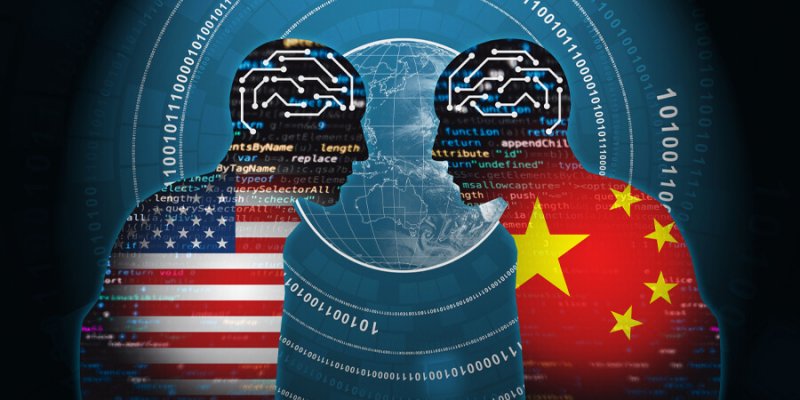
Artificial intelligence has become one of the most important battlegrounds in the growing strategic rivalry between United States and China.

What began as competition over trade and manufacturing has rapidly evolved into a high stakes struggle for control over the technologies expected to shape the global economy, military power and political influence in the 21st century.

Governments, technology companies and security experts increasingly view AI not simply as a commercial innovation, but as a strategic asset comparable to oil, nuclear technology or industrial power during earlier eras. Artificial intelligence is expected to transform industries ranging from healthcare and finance to defense, transportation and scientific research.

As a result, Washington and Beijing are investing enormous financial, political and technological resources into securing leadership in advanced computing, semiconductors, machine learning and digital infrastructure.

The rivalry is no longer only about who builds better technology.

It is increasingly about who shapes the future rules, standards and architecture of the global digital order itself.

Why has AI become so strategically important?

Artificial intelligence is expected to influence nearly every sector of modern society.

AI systems can:

  • Analyze massive amounts of data
  • Automate industrial production
  • Improve military intelligence
  • Accelerate scientific discovery
  • Optimize logistics
  • Support financial systems
  • Enhance cybersecurity
  • Power autonomous systems

Because AI affects both economic productivity and national security, governments increasingly see technological leadership as directly tied to geopolitical power.

Experts often compare AI to earlier transformative technologies such as electricity or the internet because of its potential to reshape entire economies.

The country leading in AI could gain major advantages in:

  • Economic competitiveness
  • Military capability
  • Industrial efficiency
  • Scientific research
  • Global influence

This explains why the United States and China now treat artificial intelligence as a core national priority.

Why are the U.S. and China leading the AI race?

Several factors explain why Washington and Beijing dominate global AI competition.

The United States remains the world leader in many critical areas including:

  • Advanced semiconductor design
  • Cloud computing
  • Software ecosystems
  • AI research institutions
  • Venture capital investment
  • Leading technology companies

Major American firms play central roles in developing cutting edge AI systems and computing infrastructure.

Meanwhile, China possesses several major advantages of its own.

These include:

  • Massive domestic data availability
  • Large scale manufacturing capacity
  • Strong government support
  • Rapid digital adoption
  • Expanding AI research
  • Huge technology markets

China’s digital ecosystem has expanded rapidly across sectors such as:

  • Mobile payments
  • E commerce
  • Smart cities
  • Facial recognition
  • Digital platforms

The scale of both economies and technological ecosystems makes them natural competitors for global AI leadership.

Why are semiconductors central to the AI competition?

Semiconductors, commonly known as computer chips, are at the heart of the AI race.

Advanced AI systems require enormous computing power, which depends heavily on high performance chips.

Modern semiconductors power:

  • AI training systems
  • Data centers
  • Smartphones
  • Military systems
  • Autonomous vehicles
  • Cloud computing infrastructure

The United States and its allies currently dominate many of the most advanced semiconductor technologies.

Washington has increasingly restricted Chinese access to cutting edge chips and semiconductor manufacturing equipment.

American officials argue that advanced AI and chip technologies could strengthen China’s military capabilities and threaten long term strategic balance.

These export controls have become one of the most significant aspects of U.S.–China technological competition.

China, meanwhile, has accelerated efforts to develop domestic semiconductor production and reduce dependence on foreign suppliers.

The semiconductor battle increasingly represents the technological front line of geopolitical rivalry.

How is China responding to U.S. technology restrictions?

China has responded to American export controls by intensifying investment in technological self sufficiency.

Beijing increasingly views reliance on foreign advanced technologies as a strategic vulnerability.

As a result, China has expanded support for:

  • Domestic semiconductor production
  • AI research institutions
  • Quantum computing
  • Advanced manufacturing
  • National technology champions

Chinese companies are also investing heavily in alternative supply chains and domestic innovation ecosystems.

The government’s broader goal is reducing dependence on Western technologies while strengthening national technological sovereignty.

At the same time, China continues competing aggressively in commercial sectors such as:

  • Electric vehicles
  • Renewable energy
  • Telecommunications
  • Consumer electronics
  • Smart infrastructure

This reflects a larger strategy of securing technological leadership across multiple industries simultaneously.

Why is data so important in AI development?

Artificial intelligence systems depend heavily on large datasets.

The more data AI models can process, the more effectively they can identify patterns, improve predictions and refine performance.

China’s enormous population and highly digitized consumer ecosystem provide significant advantages in data generation.

Massive volumes of information are produced daily through:

  • Mobile payments
  • E commerce
  • Social media
  • Smart city infrastructure
  • Digital public services

Meanwhile, American technology companies continue dominating many global digital platforms and cloud computing systems.

This creates a global competition not only for algorithms, but also for:

  • Data access
  • Computing power
  • Digital infrastructure
  • Cloud services

However, growing concerns about privacy and data security are also shaping AI governance debates worldwide.

How does AI affect military competition?

Military applications of artificial intelligence are becoming increasingly important in strategic planning.

AI may influence:

  • Autonomous weapons systems
  • Intelligence analysis
  • Cyber warfare
  • Drone operations
  • Battlefield coordination
  • Missile defense
  • Surveillance systems

Both Washington and Beijing are investing heavily in military AI capabilities.

The United States emphasizes maintaining technological superiority across advanced defense systems, while China seeks to modernize its military through AI integration and digital transformation.

Some analysts warn that AI could fundamentally change future warfare by accelerating decision making and increasing automation.

Others fear that autonomous weapons and AI driven military systems could create new risks of accidental escalation or destabilization.

The militarization of artificial intelligence therefore represents one of the most sensitive aspects of the global AI race.

Why is the competition also economic?

AI is expected to generate enormous economic value over the coming decades.

Industries transformed by AI may experience major increases in:

  • Productivity
  • Automation
  • Efficiency
  • Innovation
  • Cost reduction

Countries leading in AI could therefore gain significant long term economic advantages.

AI is already reshaping sectors including:

  • Finance
  • Healthcare
  • Manufacturing
  • Transportation
  • Logistics
  • Retail
  • Education

The global AI market is projected to become one of the largest sectors of the future digital economy.

This explains why governments increasingly integrate AI into national industrial strategies and economic planning.

The race is therefore not only about military or geopolitical influence.

It is also about controlling future engines of economic growth.

How are technology companies influencing the rivalry?

Private technology companies play central roles in the AI competition.

Major firms in both countries invest billions of dollars into:

  • AI model development
  • Cloud computing
  • Data centers
  • Semiconductor research
  • Robotics
  • Digital infrastructure

In the United States, private sector innovation has historically driven technological leadership.

China, meanwhile, combines private technology expansion with strong state support and strategic coordination.

The relationship between governments and technology companies has therefore become increasingly important in shaping national AI strategies.

At the same time, concerns are growing regarding:

  • Corporate power
  • Data control
  • Market concentration
  • AI ethics
  • National security risks

Technology companies now influence geopolitics in ways previously associated mainly with governments.

What role does cybersecurity play?

Cybersecurity has become deeply intertwined with AI competition.

Artificial intelligence can strengthen cyber defense systems by:

  • Detecting threats faster
  • Automating security responses
  • Identifying vulnerabilities
  • Monitoring network activity

However, AI can also enhance offensive cyber capabilities.

Governments increasingly fear:

  • AI powered cyberattacks
  • Infrastructure sabotage
  • Digital espionage
  • Data theft
  • Disinformation campaigns

As digital systems become more integrated into critical infrastructure, cybersecurity itself becomes a major national security issue.

The AI race therefore extends into broader struggles over digital resilience and technological sovereignty.

Could the AI race divide the global technology ecosystem?

One major concern is the possibility of technological fragmentation.

As competition intensifies, the world could gradually split into separate digital ecosystems shaped by different standards, regulations and technologies.

This may affect:

  • Internet infrastructure
  • Semiconductor supply chains
  • Cloud computing systems
  • Telecommunications networks
  • AI governance models

Countries may increasingly face pressure to align technologically with either American or Chinese systems in certain sectors.

Some experts describe this trend as a “digital bifurcation” of the global economy.

Others argue that complete separation remains unlikely because global technology systems remain deeply interconnected.

However, strategic competition is clearly reshaping how governments think about technological dependence and supply chain security.

How does AI affect global influence?

Artificial intelligence is increasingly becoming a tool of international influence.

Countries leading in AI may shape:

  • Global technology standards
  • Digital infrastructure development
  • Data governance rules
  • Cybersecurity frameworks
  • Smart city systems

China has expanded international digital infrastructure projects through telecommunications, smart city technologies and digital connectivity initiatives.

Meanwhile, the United States continues leading many global technology standards and research ecosystems.

Competition therefore extends beyond innovation itself into the broader architecture of global digital governance.

The country shaping future AI norms may gain significant geopolitical advantages.

Are there risks of overregulation or underregulation?

Governments worldwide face difficult regulatory questions regarding AI.

Too little regulation may create risks involving:

  • Privacy violations
  • Algorithmic bias
  • Disinformation
  • Job displacement
  • Autonomous weapons
  • Market monopolies

At the same time, excessive regulation could slow innovation and reduce competitiveness.

The United States and China currently approach AI governance differently.

Washington generally relies more heavily on private sector innovation and regulatory debate, while Beijing emphasizes stronger state oversight and strategic coordination.

These different governance models may influence how AI systems develop globally.

Could cooperation still exist despite rivalry?

Despite intense competition, some experts argue that limited cooperation between the United States and China remains necessary.

Artificial intelligence raises global challenges involving:

  • AI safety
  • Cybersecurity
  • Autonomous weapons
  • Ethical standards
  • Misinformation
  • Existential technological risks

Without communication and coordination, some analysts fear uncontrolled escalation or technological instability.

There are growing international calls for dialogue regarding:

  • AI ethics
  • Military AI limits
  • Data governance
  • Global standards
  • Risk management

However, geopolitical mistrust continues complicating such cooperation.

How does the AI race affect ordinary people?

The AI rivalry between Washington and Beijing may appear geopolitical, but its consequences affect everyday life globally.

Artificial intelligence influences:

  • Employment markets
  • Consumer technologies
  • Education systems
  • Healthcare access
  • Financial services
  • Social media
  • Public infrastructure

Competition between major powers may accelerate innovation and technological investment.

At the same time, it may also contribute to:

  • Supply chain disruptions
  • Higher technology costs
  • Data privacy concerns
  • Digital surveillance
  • Economic instability

Workers worldwide may face major labor market transformations as automation expands across industries.

The AI race is therefore not only a state level competition.

It is reshaping how societies function economically and socially.

Could AI become the defining geopolitical issue of the century?

Many analysts increasingly believe artificial intelligence could become as strategically important in the 21st century as oil was in the 20th century.

AI influences:

  • Economic power
  • Military capability
  • Scientific advancement
  • Industrial competitiveness
  • Political influence

The rivalry between United States and China is therefore about far more than technology alone.

It is about who shapes the future structure of global power itself.

The outcome of this competition may influence:

  • International alliances
  • Economic systems
  • Global governance
  • Security structures
  • Digital freedoms
  • Technological standards

The world is entering an era where technological leadership increasingly determines geopolitical influence.

The central question is no longer whether artificial intelligence will transform global politics and economics.

It already is.

The real question is whether the growing AI competition between the United States and China can remain stable enough to avoid deepening geopolitical fragmentation in an increasingly interconnected world.


News.Az 

By Faig Mahmudov

Similar news

Archive

Prev Next
Su Mo Tu We Th Fr Sa
  1 2 3 4 5 6
7 8 9 10 11 12 13
14 15 16 17 18 19 20
21 22 23 24 25 26 27
28 29 30 31