Three scenarios for Iran — What Trump and Netanyahu need before November


Editor's note: Prof. Zeev Khanin teaches in the Department of Political Studies and heads the Post-Soviet Conflicts Research Program at the BESA Center for Strategic Studies, Bar-Ilan University. The article reflects the personal opinion of the author and may not represent the views of News.Az.
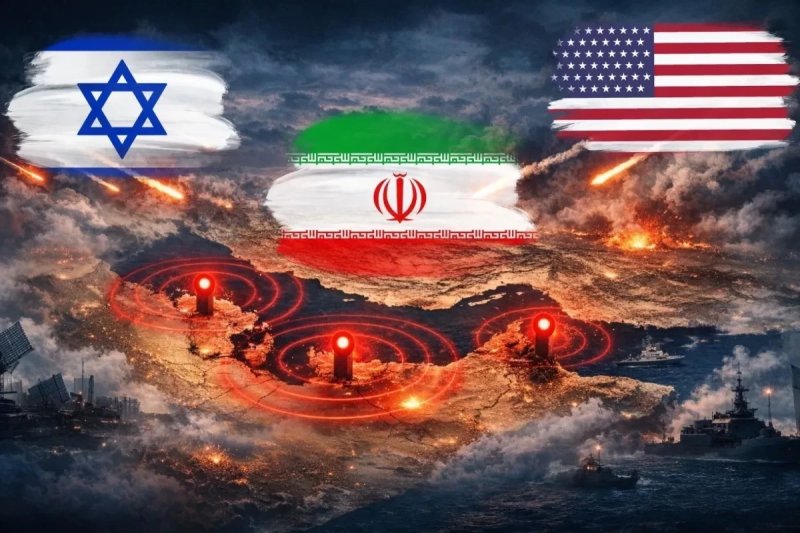
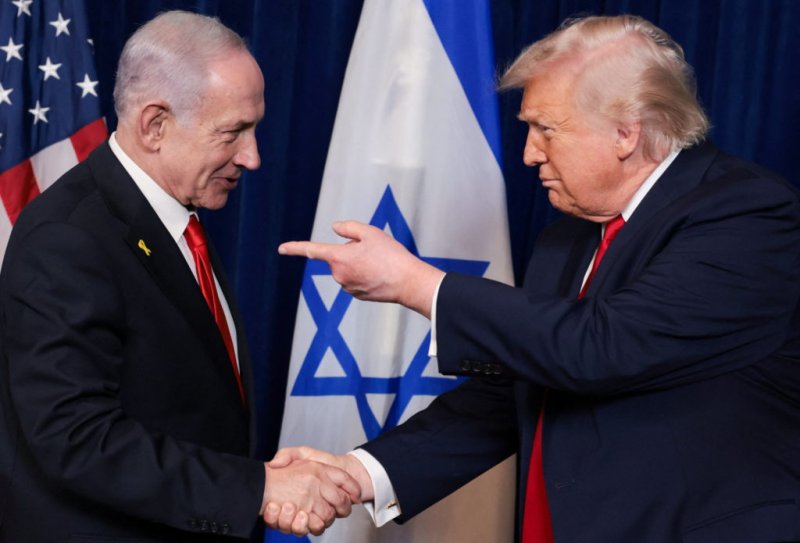
The current escalation around Iran cannot be understood without taking into account the political calendars of two key leaders: U.S. President Donald Trump and Israeli Prime Minister Benjamin Netanyahu. Both face crucial elections in November 2026.
In the United States, the country will hold the midterm elections — congressional and Senate races that take place in the middle of a presidential term. For Trump, securing a stable Republican majority in Congress is essential if he wants to continue advancing his domestic and foreign policy agenda.
Netanyahu faces his own electoral test at roughly the same time: parliamentary elections to the Knesset. For both leaders, therefore, the coming months are politically decisive. In fact, the official election campaigns in both countries will begin in roughly four to five months. In the language of modern politics, that means they begin almost immediately.
RECOMMENDED STORIES
For this reason, both Trump and Netanyahu need to approach the elections with what might be called a clear “picture of victory.” In their political narrative, that victory would be framed as a decisive blow against what they portray as the radical Islamist regime of the Iranian ayatollahs.
Yet the domestic political environments in the United States and Israel differ significantly. Netanyahu currently benefits from broad support for the actions of the Israeli government and the Israeli Defense Forces. In the United States, however, public opinion is more divided. According to polling data, more than half of Americans do not support the idea of a military attack on Iran.
 Source: AP
That means Trump faces a particular challenge: he must persuade voters that the objectives of the operation were justified and that the results exceeded expectations.
This leads us to the question of possible scenarios.
The first scenario is based on a simple political reality: neither Trump nor Netanyahu wants a long war. On the contrary, both leaders would strongly prefer a short and decisive campaign. Trump himself has mentioned a timeframe of four weeks or less. The first week has already passed, leaving roughly three weeks — perhaps even less.
The strategic objective of such an operation would be either the collapse of the Iranian regime or the infliction of such severe damage that it would be unable to restore its military and geopolitical capabilities for a long time.
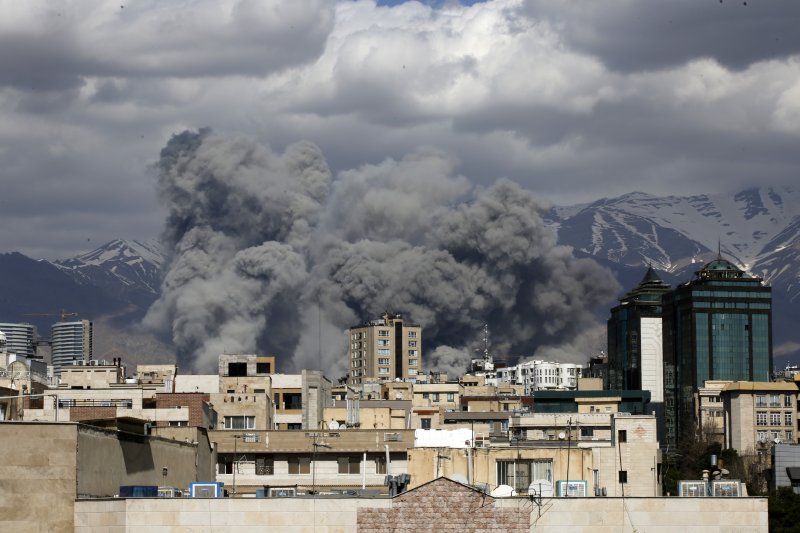
This strategy relies heavily on targeting the leadership. The first and second circles of Iran’s religious-political and military command structures have already been struck. Inside Iran, this has produced a rapid reshuffling of positions. In some cases, a person who held one post in the morning may be replaced by evening, as new appointments are made.
But the critical question is whether these newly appointed figures actually control the situation. It remains unclear whether they are capable of coordinating the actions of the Islamic Revolutionary Guard Corps, the regular army, and the country’s intelligence services.
At the same time, signs are emerging that internal pressure inside Iran is growing. Protest activity appears to be intensifying, and ethnic minorities are becoming more active. Reports have also suggested that Kurdish forces may be entering the picture, including Kurdish militias from Iraq as well as Iranian Kurdish groups.
In other words, the Iranian leadership itself is under serious time pressure. Its options are limited: either continue fighting despite the mounting risks or begin seeking a political exit.
Recent reports indicate that American and Israeli forces have begun striking not only the top leadership but also the middle layers of the command structure. In some cases, Iranian units may now be operating according to previously prepared plans that no longer correspond to the rapidly changing reality. This may explain why some retaliatory actions appear chaotic.
Ironically, these responses sometimes produce the opposite of what Tehran intends. By striking certain targets, including British military facilities in Cyprus, Iran has effectively drawn additional countries into the anti-Iran coalition.
The so-called European trio — the United Kingdom, France, and Germany — is increasingly aligning itself with that coalition. Britain has already taken a firm position. France appears to be moving in the same direction, while Germany, as the European Union’s largest economic and diplomatic power, cannot remain entirely on the sidelines.
At the same time, there are indications that Tehran is attempting to send signals to Washington through unofficial channels, suggesting the possibility of renewed negotiations. Trump, however, has publicly stated that the opportunity for negotiations may have passed. According to him, many of the individuals who were involved in earlier discussions are no longer in positions of authority.
Another key factor is the reaction of the so-called Saudi bloc, particularly Saudi Arabia and the United Arab Emirates. For these countries, the current developments appear to have come as a shock.
The UAE in particular has long served as a financial and logistical hub through which Iran was able to obtain equipment, technology, and goods despite international sanctions. Many of the supply chains and financial channels that helped sustain the Iranian economy ran through Emirati networks.
Under the new circumstances, Arab states may find it increasingly difficult to continue their previous strategy of balancing relations simultaneously with Israel, the United States, and Iran. The regional environment may be forcing them to reassess that approach.
From Trump’s perspective, the Iranian regime appears to be gradually weakening — militarily, diplomatically, and especially economically. But Washington still faces a strategic choice.
One possibility would be to escalate into a full-scale war. Yet such a war could last for years and carry serious risks. The example of the Iraq invasion in 2003 remains a powerful reminder: the United States entered Iraq quickly but struggled for many years to stabilize the situation afterward.
The alternative would be to bring the conflict to a rapid conclusion. However, this requires the existence of a credible negotiating partner inside Iran — someone capable of speaking on behalf of the system.
 Source: Anadolu Agency
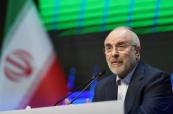
At the moment, such a figure is not clearly visible among the hardliners within the Revolutionary Guard who currently dominate the political landscape. Some observers mention Ali Larijani as a possible interlocutor. Although he has publicly stated that negotiations with the United States are impossible, it cannot be ruled out that quiet discussions may be taking place behind closed doors.
This leads to what could be described as the second scenario: an elite-level political transformation inside Iran. In such a case, a new leadership might emerge that includes not only figures from the current establishment but also elements of the opposition.
Some observers also refer to Reza Pahlavi, the son of the last Shah of Iran. He is currently based in Washington and remains a symbolic figure for parts of the Iranian opposition. However, both Washington and Jerusalem understand that he represents more of a symbol of protest than a single unifying political leader.
Finally, there is a third scenario — one that depends less on external actors and more on developments inside Iran itself.
Regardless of what major powers or regional players such as Israel, Saudi Arabia, or Türkiye may want, the decisive factor could ultimately be the Iranian people. If protests expand, involving ethnic minorities, urban intellectuals, and other social groups, Iran could experience a profound internal political shift.
Many ordinary Iranians may not be prepared to take to the streets themselves, but they may be willing to accept a new political reality if it emerges through internal political change.
In that case, the first or second scenarios — military pressure or elite political transformation — could eventually unfold within a completely new internal political framework.
For now, these three scenarios outline the broad range of possibilities shaping the current crisis around Iran.
(If you possess specialized knowledge and wish to contribute, please reach out to us at opinions@news.az).


Similar news