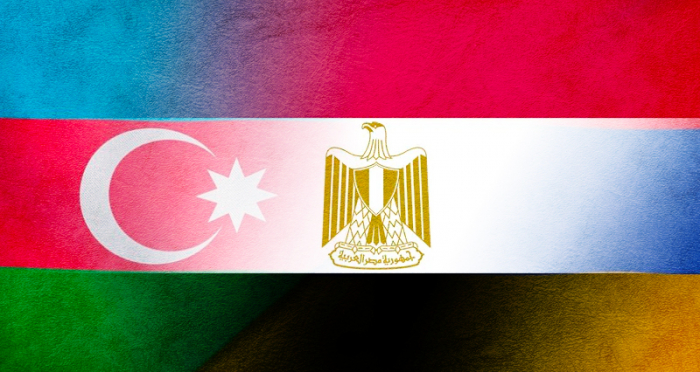
Economic cooperation between Azerbaijan and Egypt: prospects and challenges


By Zakir Gasimov
Dr Ahmed Abdo Tarabik is one of the well-known Arab writers and researchers in Azerbaijan.
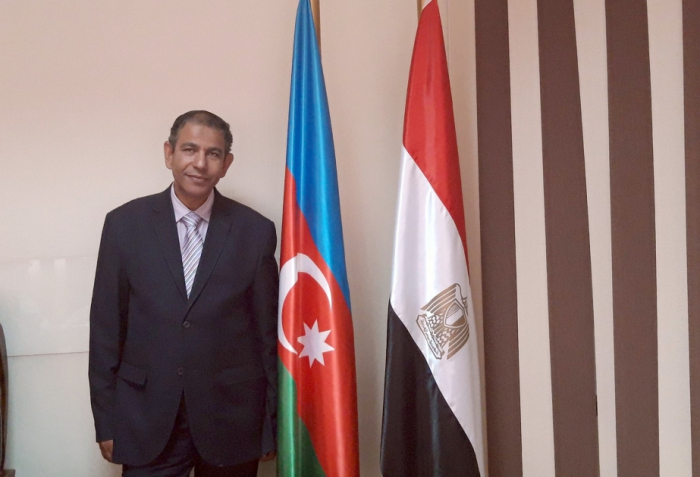
- Dr Tarabik, we would first like to know if you continue writing about Azerbaijan. What topics are you currently working on?
- I express my gratitude for this interview, which has given me the opportunity to once again communicate with the people of Azerbaijan. When I wrote my first book "Karabakh: The Path to Peace in the Caucasus", I set two goals for myself: First, to familiarize Egypt and the Arab states with the Karabakh problem. Most Arab people knew nothing about this issue; very few were familiar with it through Armenians. The reason for this was that in such Arab countries as Egypt, Lebanon, Syria, and Jordan, there are large Armenian diasporas, or they received information from Western sources. This information could be false and fabricated because these people heard or read information from the perspective of the aggressor and occupier or his patrons.
Therefore, I worked on delivering the truth to the Arab peoples. Since I am a researcher dealing with the problems of Azerbaijan, the South Caucasus, and Central Asia, I continue to write about Azerbaijan. In 2021, after the Second Karabakh War, thanks to cooperation with the Eurasia Foundation of Azerbaijan, my book "Iron Fist: The Karabakh War of 2020" was published. In this book, I describe the course of the great war that lasted 44 days and ended with a magnificent military victory. Azerbaijan's victory in this war is similar to Egypt's victory in the war with Israel in 1973. Just as Azerbaijan liberated the occupied lands as a result of the Karabakh War, Egypt was able to liberate the occupied Sinai Peninsula in the 1973 war.
We in the Islamic world were eagerly awaiting Azerbaijan's victory in the Karabakh War, because the generation of young people born after 1973 had not witnessed any military victory in the Islamic world.
Moreover, the victory in the Karabakh War was able to restore international law, which no one fought for or adhered to. Azerbaijan's victories in the Karabakh War restored the confidence of oppressed peoples around the world that they could ultimately reclaim their rights through their will, determination, and the heroism of their sons.
Last year, in 2023, I, along with the people of Azerbaijan, celebrated the 100th anniversary of the birth of Azerbaijan's national leader Heydar Aliyev. In connection with this, my book "Heydar Aliyev and His Vision of the Arab and Islamic World" was published in Cairo in cooperation with the Embassy of Azerbaijan.
I am currently working on a new book entitled "Shusha: The Cradle of Civilization in the Caucasus" in honour of the selection of Shusha as the capital of Islamic culture. In this book, I describe the role of Shusha in the development of culture and civilization throughout the Caucasus region, as well as how Shusha has historically been a great centre of culture and civilization in the region and how it is restoring its leading role as such a centre in the Caucasus.
I have also written several works on leaders of Central Asian countries who have made significant contributions to the development of their countries. Among them is the book "Nursultan Nazarbayev in the New History of Kazakhstan". Recently, I completed my work "Shavkat Mirziyoyev and the Creation of a New Uzbekistan". Therefore, I am also eagerly looking forward to writing a book about the leader of Azerbaijan, who ended the war with victory and is fighting for peace, who liberated Karabakh from occupation, and who is working on the restoration and modernization of the region, striving for great revival in his country, President Ilham Aliyev.
- Azerbaijan-Egypt relations have an ancient history. These relations reached a new level after the visit of Egyptian President Abdel Fattah el-Sisi to our country last year. As a researcher and journalist, how do you see the prospects for these relations?
- There are strong foundations uniting Egypt and Azerbaijan in various political, cultural, scientific, and economic fields. Egypt was one of the first countries to recognize the independence of Azerbaijan in 1991. The solid and stable foundations of bilateral relations were laid by the visit of Azerbaijan's national leader Heydar Aliyev to Egypt in 1994. Another important step in developing cooperation between the two countries was the visit of President Ilham Aliyev to Egypt in 2007. During this visit, it was noted with satisfaction that there was cooperation between Egypt and Azerbaijan at both the official level and in areas of mutual interest to the peoples. The necessity of deepening friendly historical ties to achieve a qualitatively new level was emphasized, and the importance of continuing work to expand cooperation and political dialogue based on the close relations established between the two countries over the years was noted.
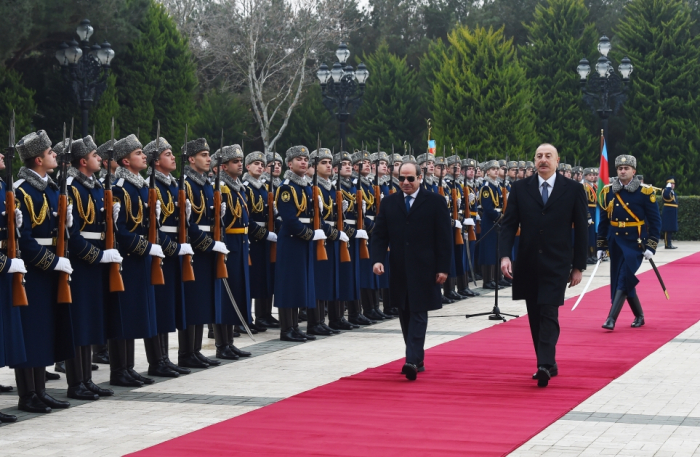
In January 2023, President Abdel Fattah el-Sisi paid an official visit to Azerbaijan. This was the first visit by an Egyptian president to Azerbaijan aimed at opening broad horizons for relations between the two countries. The President of Egypt discussed with his Azerbaijani counterpart Ilham Aliyev ways to strengthen economic ties between the private sectors in Egypt and Azerbaijan and the creation of a Council consisting of business people representing both countries. They also discussed the possibilities of strengthening cooperation in several areas. All these discussions took place against the backdrop of the potential of both countries, which can ensure cooperation in various fields.
Egypt has numerous free economic zones, such as the Suez Canal, which create effective opportunities for cooperation. There are many concessions that facilitate and simplify the activities of investors. Azerbaijan also has projects in the liberated Karabakh region that provide numerous business and investment opportunities. The development of economic relations creates broad opportunities for cooperation in political, cultural, and scientific fields.
The solid foundation laid by mutual visits at the highest level creates broad horizons for fruitful cooperation between the two countries in various fields, but the private sector plays an important role in developing this cooperation. It should be particularly noted that the existing official ties between the countries have given the green light to mutual visits by business people and intellectuals, creating appropriate conditions for them to use this opportunity to explore ways and means for further developing these relations.
- You have articles and research on cultural ties between Azerbaijan and Egypt. What can you say about this?
- Some view cultural ties as something secondary and useless for nations, arguing that only economic ties benefit countries. However, I consider this a superficial approach, as cultural ties represent the soft power that nations possess and play a role in strengthening various political, economic, and scientific ties between states. It is this soft power that illuminates the path for responsible persons, decision-makers, and business people to explore opportunities and areas of cooperation that meet the common interests of both sides.
The history of cultural ties between Egypt and Azerbaijan goes back to the period of the spread of Islam in these countries. These ties have led to the emergence of closeness and friendship between our peoples. This can be used to develop the political and economic aspects of the existing ties between our countries.
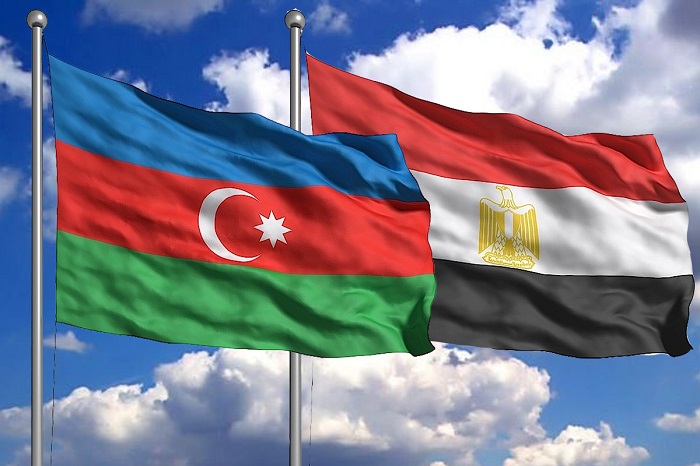
- The ties between our countries are not limited to politics and culture alone. Economic ties also come to the forefront. In your opinion, in which areas of the economy can our countries effectively cooperate?
- I share your opinion that political and cultural ties between Egypt and Azerbaijan are strong and a priority. These ties have witnessed high-level visits. However, despite their priority nature and the presence of numerous areas for solid and fruitful cooperation between the two countries, our economic relations do not match the historical ties that bind the two brotherly peoples.
According to business people, the volume of trade between Egypt and Azerbaijan is very small, which is related to high transportation costs, as there are no direct sea routes between our countries. Since sea transport is considered the cheapest and most convenient in terms of cost. However, there are many areas that can expand our economic ties, among which tourism is the most important.
Both Egypt and Azerbaijan have numerous opportunities not only for organizing tourist trips but also for cooperation in this field. Both countries can mutually promote each other's tourism opportunities in their regions. Egypt can promote Azerbaijan's tourism opportunities in the Arab world and the African continent, while Azerbaijan can promote Egypt's tourism opportunities in the South Caucasus.
Investments can become one of the most fruitful areas of cooperation between Egypt and Azerbaijan. Here, areas such as the application of innovations, alternative energy sources, information technology, education, pharmaceutical production, etc. can be noted. In these areas, one state can play the role of an economic base for the other in its region. However, all this requires mutual knowledge of each other's economic characteristics and investment opportunities, as well as the conditions created for investors. This can be achieved through the organization of economic conferences, exhibitions, etc.
Also, the opening of direct air routes between Egypt and Azerbaijan can play a significant role in the development of the tourism sector and overall economic relations between the two countries.
- Egypt is currently experiencing a very sensitive period in its history. The recent events related to Palestine directly affect Egypt, as this country is one of the main parties negotiating peace. In your opinion, how can this conflict end? What solutions can be found?
- Egypt has a long-standing historical connection with the Arab-Israeli conflict. In this conflict, many experiences have been tested in both war and negotiations. Egypt is a key part of this conflict, both as the largest Arab country and as a country bordering the Palestinian territories and Israel.
Therefore, Egypt must support the Palestinian people in their struggle for their legitimate rights and the creation of an independent state. It should be particularly noted that the Palestinian issue is the foundation for ensuring peace and stability throughout the Middle East region. Therefore, peace cannot be established in the region without the creation of a Palestinian state.
Israel, the United States, and its supporting Western countries believe that over time, the Palestinians will reconcile with the existing situation and forget about their right to create a state.
This is a great illusion.
Until the events of 7 October 2023, especially after the signing of agreements on normalization with some Arab countries, known as the "Abraham Accords," Israel and the United States believed that the Palestinian issue had already been resolved. But Israel, continuing its occupation policy, seizing new territories, creating new settlements, and attacking Al-Aqsa Mosque, touched not only the feelings of the Palestinians but also of all Muslims living in different countries of the world.
Israel believes that it can destroy the Islamic Resistance Movement Hamas by committing genocide in Gaza. This is also a kind of illusion because Hamas is not just an organization of fighters who fight the occupying Israel with primitive local weapons against the latest military technology. Hamas is an idea that has taken root in people's hearts; when one fighter becomes a martyr, ten others take his place.
History testifies to how many nations, possessing nothing but their bodies, opposed the most powerful military forces in the world and were able to defeat the occupiers because they were right, and the right ones have the will. Even in occupied Gaza, Israel was forced to retreat after numerous losses from Hamas strikes.
Therefore, the Arab-Israeli conflict cannot be resolved without restoring the legitimate rights of the Palestinian people within the framework of decisions and resolutions adopted by international organizations, primarily the UN Security Council and the General Assembly, and without creating an independent Palestinian state. The only way to ensure stability and peace in the region is through this.


Similar news