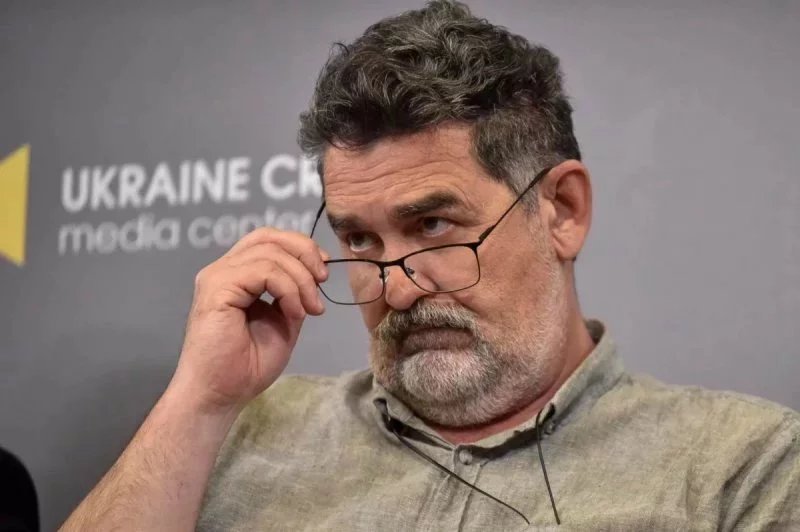
Photo:Ihor Semivolos, director of the Kyiv-based Center for Middle Eastern Studies
Amid rising tensions in the Middle East and uncertainty surrounding Iran’s political future, questions are mounting about the potential direction of Tehran’s domestic and foreign policies. The recent election of Mojtaba Khamenei as Iran’s Supreme Leader, the risk of military escalation involving the United States, and Iran’s increasingly assertive actions toward neighboring countries have intensified debates among analysts about the stability of the Iranian political system and the broader regional balance of power.
In an interview with News.Az, Ihor Semivolos, director of the Kyiv-based Center for Middle Eastern Studies, shared his assessment of Iran’s leadership transition, the likelihood of a US military operation against Iran, Tehran’s recent strikes against Azerbaijan and Türkiye, and the potential for internal unrest among Iran’s ethnic groups. He also commented on speculation about future geopolitical shifts in the region and Türkiye’s role in the evolving security landscape.
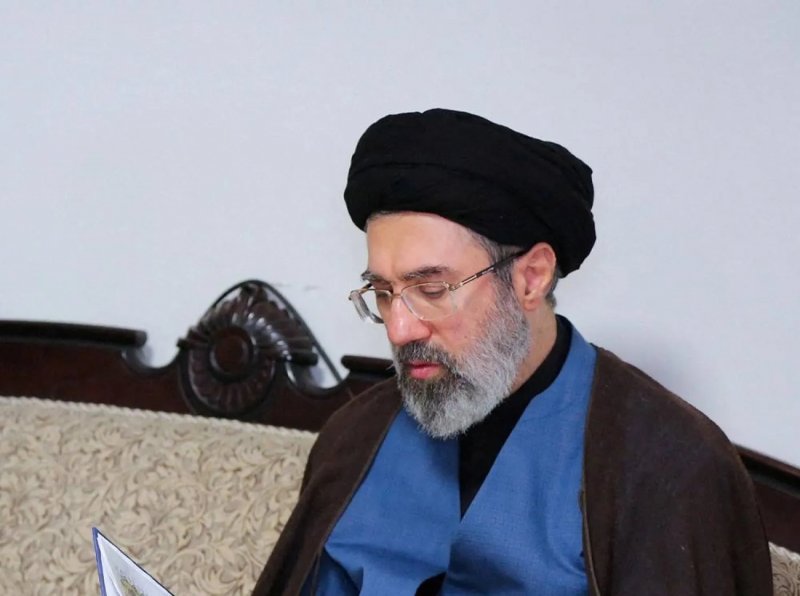
– How do you assess the election of Mojtaba Khamenei as Iran’s Supreme Leader? What changes in Iranian policy could this lead to?
– The election of Mojtaba Khamenei as Supreme Leader can be seen as an attempt to transform Iran’s theocratic republic into what is effectively a hereditary military monarchy. In essence, a shift within the ruling elites has already taken place. This development has been widely discussed in recent years, particularly in connection with growing dissatisfaction among a new generation of Islamic Revolutionary Guard Corps (IRGC) officers who entered politics in the early 2000s and began challenging the influence of the older establishment.
Unlike his father, Mojtaba Khamenei lacks strong religious authority. As a result, his position will largely depend on the support of the IRGC and the financial networks controlled by what can be described as the Guard’s economic oligarchy.
 Source: Reuters
– What are your predictions regarding potential military escalation around Iran? How likely is a US ground operation against Iran?
– Iran may become more isolated internationally and pursue a more aggressive foreign policy as a means of consolidating and legitimizing power domestically. However, such a course also increases tensions with older political factions, including figures associated with the Larijani clan, which could make the political system increasingly fragile.
At the same time, a US ground operation against Iran remains unlikely. The experiences of the wars in Iraq and Afghanistan, combined with Iran’s complex terrain and large population, would make such an operation extremely costly and risky.
A more plausible escalation scenario would involve targeted strikes on critical infrastructure. Operations aimed at key facilities — such as those on Kharg Island or certain nuclear centers — could significantly weaken the regime. In theory, damaging or seizing such strategic assets could destabilize the government without the need to deploy ground forces.
– How do you assess the incidents involving Iranian missile and drone strikes on Azerbaijan and Türkiye?
– The strikes on Azerbaijan and Türkiye can be interpreted as an expression of what might be described as Tehran’s “strategic hysteria.” In the case of Azerbaijan, these actions appear aimed at pressuring Baku over its cooperation with Israel and its plans regarding the Zangezur Corridor, which Iran perceives as a potential threat to its access to Armenia.
The situation with Türkiye is somewhat more complex. In my view, these actions are also intended to curb Ankara’s growing regional influence. For Iran, such moves demonstrate a willingness to escalate tensions — even to the level of a broader regional confrontation — in order to prevent changes to the existing geopolitical balance in the South Caucasus.
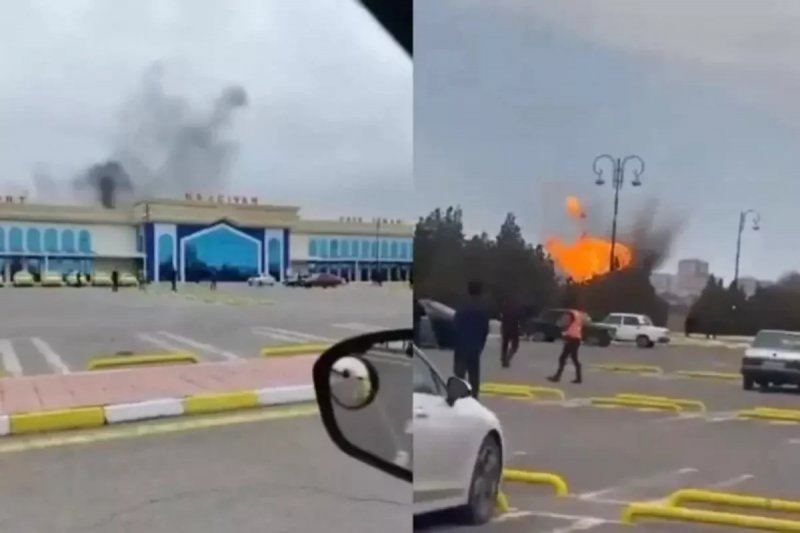 Source: Screen grab
– How likely do you think it is that ethnic groups living in Iran will rise up against the central government?
– The probability of unrest among ethnic groups is quite high, and we are already seeing early signs of this. For example, declarations of support for secular democracy and for Reza Pahlavi by Arab tribes in Khuzestan, such as Beni Kaab and Beni Temim, represent a significant political signal.
If the Arab minority living in the oil-producing regions were to resort to armed resistance, it would pose a serious threat to the regime’s economic base. The key question is whether different ethnic groups — such as the Kurds, Baloch, and Arabs — would be able to coordinate their actions with political forces in Tehran. If such coordination were to emerge, it could seriously weaken the current system.
– Many analysts claim that after a war with Iran, Türkiye could become the next target. Some theories suggest that the West and Israel might launch military action against Türkiye. How realistic are such scenarios?
– At present, theories suggesting that the West or Israel would launch a war against Türkiye appear largely unfounded. Türkiye is a crucial member of NATO and possesses the alliance’s second-largest army. A direct military confrontation with Türkiye would severely undermine the Western security architecture.
Although the West’s relations with President Recep Tayyip Erdogan are often complex, the country remains deeply integrated into the global economic and security system. For the West, Iran is widely regarded as a pariah state, whereas Türkiye, despite disagreements, is still an ally.
Moreover, if Iran were to weaken significantly or collapse politically, Türkiye could emerge as one of the main regional beneficiaries, filling the influence vacuum in areas such as the South Caucasus and Iraq.
News.Az