Russia-USA: A new era of uranium confrontation


Currently, over 40 countries are under various sanctions imposed by the UN, the EU, the USA, and several other major powers.
These countries have been sanctioned for various reasons: human rights violations, wars, revolutions, dictatorial regimes, etc. It is worth recalling that at the dawn of Soviet rule, the USSR was also under sanctions. The practice of boycotting unfavourable states continues, although it yields little effect, as the regimes targeted by these sanctions not only survive but also use this 'discrimination' to rally their populations around their leaders.Currently, the highest number of sanctions is imposed on the Russian Federation, with 6,581 sanctions, followed by Iran with 3,616, Syria with 2,608, North Korea with 2,076, Venezuela with 651, Myanmar with 510, and Cuba with 208. However, the imposed restrictions are not impenetrable, as partners willing to purchase 'sanctioned' goods at lower prices can still be found.
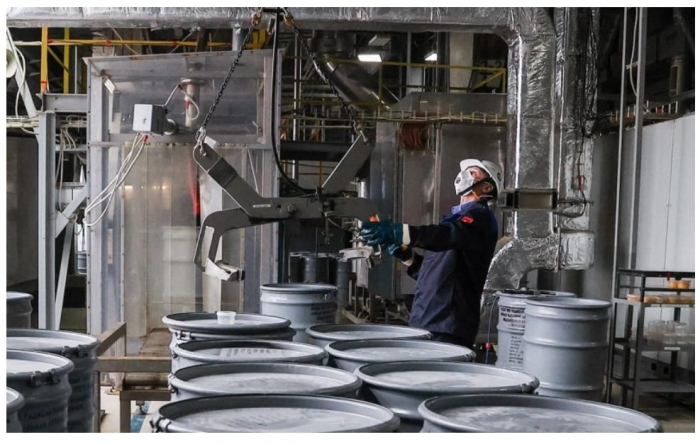
On 14 May 2024, US President Joe Biden added low-enriched uranium exports to the 'rich' list of sanctions against Russia. According to National Security Advisor Jake Sullivan, the signed law is intended to 'strengthen the energy and economic security' of the United States 'by reducing and ultimately eliminating dependence on Russia in the field of civilian nuclear energy.' The ban will take effect 90 days after the law comes into force. Exceptions are made for nuclear power plants that would have to shut down their reactors if supplies were halted. They are allowed to purchase fuel from Russia until 2028.
It should be noted that Russia ranks fourth in the world in uranium reserves, with a share of 8%. In 2023, Russia produced 2,500 tons of this metal, with 1,800 tons exported to other countries. Most of the Russian uranium was sold to the United States (702 tons), China (457 tons), and South Korea (243 tons). According to statistical data, in November 2023, the United States imported uranium worth approximately $191 million. Russia accounted for more than $96 million. In October 2023, Russia exported $63 million worth of uranium to the United States, $32 million in September, $50.4 million in August, and approximately $61 million in July. These are not very large figures, especially considering that Rosatom, with an annual production of 7,100 tons of natural uranium, ranks second in the world after Kazakhstan's Kazatomprom. In 2022, Rosatom accounted for about 14% of global production of this valuable metal. In the context of revenues that the country receives from the export of other goods, American purchases mean little. It is enough to say that revenues from uranium exports to the USA are comparable to a week's worth of oil sales. Currently, the United States operates only one uranium enrichment plant, and its capacity is insufficient to meet the needs of the American market.
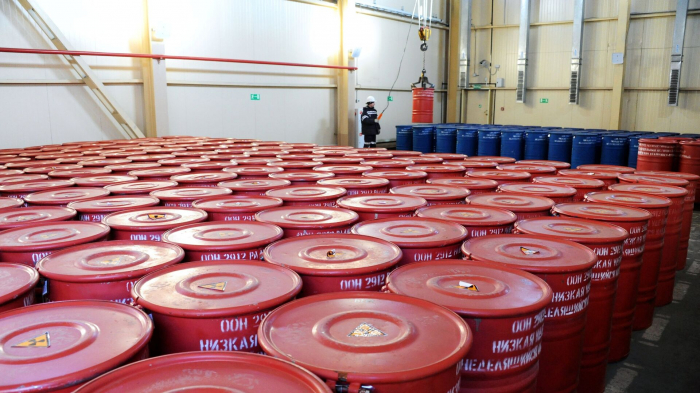 At one time, the United States curtailed its own industry due to its uncompetitiveness and environmental measures. Therefore, one possible reason for the ban, besides political ones, could be lobbying by American companies seeking funding to revive their own enrichment enterprises. But here, certain contradictions arise between producers and consumers. Managers and shareholders of American nuclear power plants, as well as those who produce fuel for them would like to receive initial nuclear materials at more favourable prices. And under equal conditions, energy uranium supplies from Russia win in this competitive struggle. This does not involve price dumping — special anti-dumping investigations have been conducted in both the USA and Europe. Unbiased nuclear experts have been able to confirm that Russia has mastered the most efficient uranium enrichment technology on an industrial scale using gas centrifuges.
This is why the leading US company in the nuclear fuel cycle, Centrus (formerly known as USEC), has already announced that it will apply to the relevant departments for the aforementioned 'exception' to continue supplying strategic material to its customers. So politics is one thing, and business and profit are another. This rule is confirmed by a number of facts. Despite the sanctions, the USA imports fertilizers from Russia worth $174 million. Platinum imports increased by 5.6%, parts for turbojet engines by 1.4 times, and plywood by almost 12 times. At the same time, the United States has increased titanium imports from Russia — their purchases tripled in early spring. Cobalt imports have resumed. But this concerns the USA. As for other countries, China buys oil worth 2 billion euros a week, and India, together with gas and coal, more than 500 million euros.
Since October 2022, the amount of Russian energy raw materials purchased by EU countries has exceeded 500 million euros a week. Hungary was one of the leading purchasers of energy resources. The EU did not refuse gas, but the largest gas pipelines, Nord Streams, were blown up, and the Yamal-Europe pipeline does not operate due to mutual sanctions.
The southern branch of the Druzhba pipeline continues to operate. Maritime oil deliveries to Bulgaria, which are exempt from sanctions until the end of 2024, are being carried out. In October 2023, STS-transshipment of Russian petroleum products was carried out in the waters of five EU countries — Greece, Malta, Croatia, Denmark, and Estonia. The average price of Russian Urals oil during the same period reached $81.52 per barrel, significantly exceeding the price cap set by the USA and the EU at $60. In addition to energy resources, Russia continued to successfully sell various types of offensive and defensive weapons. However, it was displaced from second place by France. Nevertheless, weapons are in demand and continue to be sold to a number of countries.
In recent years, Russia has become a leading food producer. For example, in 2023, Russian grain exports exceeded 66 million tons, bringing the country's budget almost $16.5 billion. The main grain purchasers remain Egypt, Turkey, Saudi Arabia, India, and China. In 2023, revenue from the sale of this staple food for the majority of the world's population amounted to $43.5 billion, which is one and a half billion more than in 2022. Thus, the attempt to stifle Russia's resurgent economic power have proven unsuccessful. Moreover, the process of restoring the military-industrial complex, which is becoming a locomotive for many related industries and innovative technologies, is underway.
(If you possess specialized knowledge and wish to contribute, please reach out to us at opinions@news.az).


Similar news