Armenia’s IVF strategy for the next generation of fighters - VIDEO


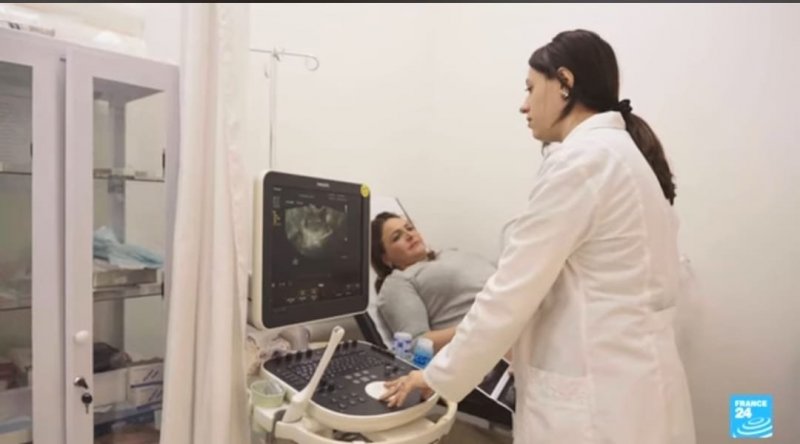
In post-war Armenia, state-backed IVF programmes for mothers of fallen soldiers are part of a growing militarised culture. With little psychological support and rising rhetoric of revenge, the country is preparing for future wars — starting with childbirth.
In Armenia, the scars of the Second Karabakh War are not fading — they are being re-opened and weaponised. As grieving families are urged to replace their fallen sons through state-funded IVF, a new generation is being born into a national narrative that values sacrifice over peace. In a society where motherhood is increasingly framed as a patriotic duty, the question arises: are children being brought into the world for life — or for war?
More than four years have passed since the end of the Second Karabakh War, a brutal conflict that cost the lives of over 4,000 Armenian soldiers. One might have expected such devastating loss to trigger a period of national reflection — a shift toward reconciliation, peace, and healing. But instead, Armenia appears to be preparing for the next war. Rather than demilitarising its mindset, Armenia is seeing a rise in militaristic rhetoric, glorification of martyrdom, and societal pressure to “continue the struggle.” What should have been a moment for introspection is being used to fuel a new cycle of confrontation.
The ideology of replacement: “More children, more soldiers”
In Armenia today, national policy and societal attitudes have converged around a dangerous narrative: that the children lost in war must be replaced — not simply as family members, but as future fighters. “If war breaks out again, I’ll send him. Aren will avenge his brother. He’ll destroy the enemy,” says one grieving mother, referring to her newborn son. Her words are not isolated — they reflect a broader, state-backed mood. Amid a growing demographic crisis, Armenian authorities have launched a state-funded IVF programme specifically targeting women who lost sons at the front. Since 2021, women up to age 53 can receive free IVF if their children died in war. Nearly 1,300 babies have been born under this initiative since 2019. But this isn’t about population growth for its own sake. In Armenia, the programme is openly framed as a way to restore the “lost gene pool.” The message is clear: if Armenian families don’t start having three or four children, the nation will face extinction. Public spending on reproductive medicine has increased twelvefold in just five years. Priority is given not to women who simply want to become mothers, but to those seen as vital to the country’s defense — mothers of fallen soldiers and families living in border regions. “They are the first to protect our land,” officials say.
Wombs as instruments of strategy
At a private clinic in Yerevan — one of five participating in the government programme — women queue for IVF procedures daily. Surrogate mothers are offered up to $13,000 in compensation, a considerable sum in Armenia. But behind the financial incentives lies a deeply personal tragedy. Many of the women undergoing these treatments are battling trauma, loss, and unresolved grief. With no access to psychological support, they carry the emotional scars of the past into new pregnancies. They aren’t simply hoping for a child — they’re yearning to bring back the son they lost. Muria, who lost her teenage son in the 2020 war, finally gave birth to another boy after seven failed IVF attempts and a miscarriage. But three months after the birth, she confesses: “I don’t love him the way I loved Arman. All my thoughts are still with my first son. This baby isn’t to blame, but I still live inside my pain.” Worse, these mothers face social stigma. “The neighbours whisper: she lost her son and now she’s had another. As if it’s shameful,” Muria says. There is no state-provided psychological care for these women. Instead, they are met with nationalist slogans and calls for duty, sacrifice, and reproduction.
From trauma to strategy
Psychologists are increasingly alarmed. Independent expert Sirenush Tavtyan warns that the programme is less about supporting women and more about creating a new generation of soldiers. “These women are being turned into incubators. Their worth is now measured by their ability to produce future fighters. We’re not addressing infertility — we’re institutionalising it through a militarised lens,” she says. The government’s criteria for eligibility reveal the intent: support is offered to the families of war dead and those living in conflict-prone areas. Not those who seek a child out of love, but those who can contribute to the national struggle. Families are even requesting the gender of their future children: boys only. Motherhood, in this context, has become a function of strategic planning — not intimacy, not personal choice. In a solemn moment at a community gathering, a woman raises a toast: “I drink standing for Arman. And now, for all our boys who gave their lives for the motherland. Their victorious souls are watching over us.” The cult of sacrifice is pervasive. After losing one son, families are ready to send another. Peace, dialogue, compromise — these ideas are almost entirely absent from public discourse.
Not for land — but for a son?
Near the end of one interview, a mother’s words cut through the noise: “I didn’t want the land. I wanted my son.” It’s a quiet, devastating truth — an indictment of a system that turns grief into policy. Her words speak not only of personal suffering but of a broader truth: no territory is worth a child’s life. No victory can resurrect the dead. But such confessions are drowned out by louder narratives — of duty, patriotism, and vengeance. The state is investing in new soldiers for the next war. And society, instead of questioning this cycle, often applauds it. The most painful paradox is this: even those who acknowledge the futility of loss, even those who say they never wanted war, are once again willing to sacrifice their next son. This is not just trauma — it is a closed loop in which private grief becomes the fuel for collective hatred. Armenia has yet to reckon with the full weight of its tragedy. In place of mourning, it has chosen revenge. In place of peace — remobilisation. And in place of a forward-looking vision, it clings to a past steeped in sacrifice. As long as this culture of martyrdom and militarised motherhood persists, new generations will be born not for life — but for death.
(If you possess specialized knowledge and wish to contribute, please reach out to us at opinions@news.az).


Similar news