BRICS in an era of change: Why Russia bets on eastern alliances – INTERVIEW


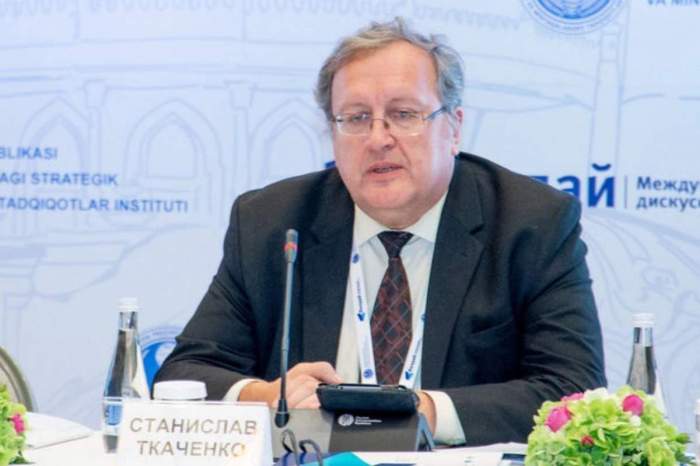
News.Az presents an interview with Dr. Stanislav Tkachenko, Doctor of Economics and Professor at St. Petersburg State University.
- What economic benefits does Russia expect from expanding cooperation within BRICS? What specific projects and initiatives are planned to achieve these goals?
- Russia aims to use the BRICS forum to establish a favorable legal and politico-economic system that is free from sanctions, restrictions, unfair agreements, and Western dominance. This system, based on mutual interests, will allow BRICS countries and companies within the bloc to interact more productively. Despite challenging economic conditions, Russia’s economy is growing faster than those of the G7 countries, underscoring the importance of a conducive business environment for further growth in industry and services. However, for Russian agriculture, which has been steadily developing since 2014, the effect of BRICS cooperation may be less pronounced.
Specific initiatives are detailed in the Kazan Declaration from the BRICS Summit (October 22-24, 2024). Key among them are Russia’s proposals to reform the international monetary and financial system, ensuring fairer power distribution in the IMF and World Bank. Efforts toward de-dollarization by Russia, India, and China are also significant, as they aim to create safeguards against economic consequences from the growth of U.S. debt and the threat of a global crisis. Planned financial initiatives will bolster the position of developing nations, and the independent BRICS Clear clearing and settlement infrastructure will be a groundbreaking addition to existing systems.
Furthermore, an independent reinsurance company, BRICS (Re)Insurance, will be established, helping BRICS countries bypass sanctions imposed by the U.S. and its allies.
- Given the economic characteristics of BRICS countries, what forms of economic interaction may be the most beneficial? Is there expected growth in mutual investments and trade among member countries?
- There is vast potential for mutually beneficial cooperation in nearly all areas — industry, agriculture, transportation, logistics, and energy. In the coming years, key areas will include establishing transport and logistics networks, energy investments, and addressing food security by creating food hubs and supporting the agricultural sector. A stable increase in mutual investments is anticipated, despite potential external shocks. After experiencing the freezing of currency reserves in the U.S. and Europe, Russia will redirect its investments toward BRICS countries and other nations of the Global South.
BRICS mutual trade is also on a steady rise: the total volume of intra-BRICS trade reached $678 billion in 2023, highlighting the need for continued governmental support. Over the last decade, global trade grew by 3% annually, while BRICS trade grew by 10.7% per year.
- Russia’s Minister of Economic Development, Maxim Reshetnikov, has mentioned signs of “cooling” in the Russian economy. How can this statement be interpreted in the context of current economic policy and potential implications for BRICS cooperation?
- Economic growth in Russia, currently at 3-4% annually, is constrained by internal inflation, a labor shortage, and rising labor costs that are not matched by productivity increases. Defense spending and investments in the military-industrial sector have driven economic growth, keeping inflation at a relatively acceptable 7-8% annually. To sustain growth, Russia needs to increase exports, develop public-private partnership projects, and attract foreign investment through import substitution. These are challenging management tasks that Russia has been successfully addressing.
- Do you believe that reducing BRICS countries’ dependence on the dollar could make their economies more resilient and secure? What steps are being taken to achieve this goal?
- Reducing dollar dependence and defending against the political use of the U.S. dollar is essential for BRICS countries. The projected increase in U.S. debt to $90-95 trillion by 2050 and the overheating of the U.S. stock market are prompting these nations to protect their financial systems. BRICS countries are already developing a mutual settlement system in national currencies and are working on digital currencies and a cryptocurrency payment system.
These efforts aim to replace SWIFT, which has lost trust in Russia and other BRICS countries due to its control by the U.S. Treasury.
- India, as one of the largest BRICS members, is cautious about reducing reliance on the dollar. How might India’s position impact the group’s strategy in decreasing dependence on the U.S. currency?
- Abandoning the dollar was never set as a political goal within BRICS, and Russia is not opposed to its use by private businesses if discriminatory measures from the U.S. are lifted. Russia understands India’s cautious approach, considering India’s restrictive currency regime and the periodic challenges faced by the rupee. It’s also worth noting that Russian-Indian trade is growing rapidly, reaching $65 billion in 2023, so stability in the Indian market aligns with Russian interests. In the long run, Russia has doubts about the dollar’s stability, a position openly shared with India as part of their strategic dialogue.


Similar news