AnewZ releases documentary “TARGET: Yerevan” based on alleged secret recordings - VIDEO


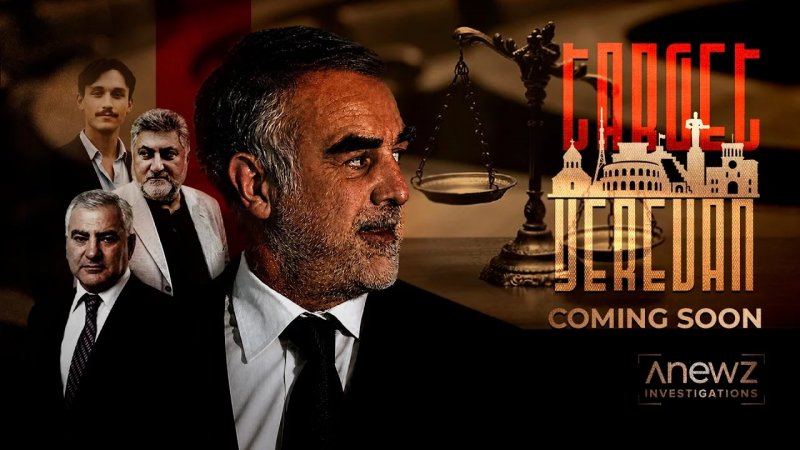
AnewZ has released a new documentary, TARGET: Yerevan, which builds its claims on exclusive secret recordings previously published by Minval Politika.
In the recordings, former International Criminal Court Chief Prosecutor Luis Moreno Ocampo explains why he became involved in the South Caucasus conflict, News.Az reports.
RECOMMENDED STORIES
- From Hormuz to the Caspian: What the US–Iran deal means for the South Caucasus
- Baku and Riga discuss the Azerbaijan–Armenia peace process
- Will Azerbaijani gas replace Russian gas for Armenia? Realities and possibilities
- Election is over, real choice begins: Will Pashinyan keep his promises or come to regret his re-election?
He looked at the situation following the Prague agreements, concluded that the issue of the so-called ‘Artsakh’ was dead and would be buried, and decided he had to ruin the show.
He did not act alone. Ocampo was allegedly bankrolled by Russian-Armenian oligarchs, directing a coordinated social media offensive to corner European leaders and manipulate the Armenian elections. The objective was not merely diplomatic pressure; it was the removal of Armenian Prime Minister Nikol Pashinyan. Pashinyan’s normalisation agreements with Azerbaijan threaten to sever Moscow’s historical control over the region, making his administration what the film describes as a primary target for Russian hybrid warfare.
The recordings purportedly expose a shadow network of legal mercenaries, oligarchs, and Washington lobbyists operating as a unified front. At the top of the financial chain sits Samvel Karapetyan, a Russian-Armenian billionaire. Eduard Melikyan, Karapetyan’s political coordinator, described his employer on tape as the “big boss” in Russia, claiming their political party had access to limitless resources. Karapetyan currently faces serious criminal cases in Armenia linked to the state electricity networks.
Using this alleged funding, Ocampo built an asymmetrical information war. He admits on tape to receiving funds from Armenians living in Russia to pay three young operatives who managed his social media output. They invented specific hashtags, “COP29, Stop the Genocide, Free Armenian Hostages”, and mobilised 6,500 diaspora Armenians to post them daily. The campaign was engineered to catch the attention of mainstream media and force the hand of European politicians. Ocampo even claims on tape to have placed a former legal adviser to Josep Borrell on his payroll inside the European Parliament to directly pressure Commissioner von der Leyen.
The documentary asserts that the operation in Europe matched a mirrored offensive in the United States. Ara Papian, a former ambassador acting as a Washington lobbyist, coordinated with Ocampo to align the Armenian diaspora’s political weight. They reportedly targeted U.S. Senators, specifically discussing financial and voter support in exchange for political backing. The Armenian National Committee of America (ANCA), aligned with the Armenian Revolutionary Federation (Dashnaktsutyun), applied intense grassroots pressure to disrupt the U.S.-brokered peace agreements.
The obvious objection to this framing is that domestic opposition to Pashinyan is entirely organic. Protesters in Yerevan demand his resignation, shouting that he is a traitor. This anger is real, but the recordings reveal that this domestic grief is being weaponised. The documentary argues that Russian intelligence and pro-Russian factions exploit these internal divisions, amplifying radical views through covert social media manipulation to keep the society fractured. Russia needs the conflict. If peace and normalisation take hold, Russian influence in the South Caucasus slowly vanishes.
The Armenian Church has also become a critical battleground. Melikyan noted that Karapetyan heavily funded the church, claiming it ensured its leadership remained loyal to his directives. When the political climate heated up, the head of the church explicitly asked for protection. Pashinyan responded by aggressively targeting clerics who campaigned against the government, with Ocampo noting that the Prime Minister imprisoned bishops he believed were working for Russia.
The alleged network initially targeted May, with Ocampo outlining a strategy to hijack the major European Union meeting in Yerevan. But with that summit now in the past, the entire machinery has pivoted to the upcoming elections. The strategy remains the same: mobilise protests demanding the rights of the Nagorno-Karabakh people, create a binary choice for the electorate, and force a constitutional crisis. The documentary suggests the ultimate goal is to install a pro-Russian coalition that will block the peace treaty.
Pashinyan knows exactly who is coming for him. He publicly named the old elites, warning figures like Samvel Karapetyan and Robert Kocharyan that they are living the last month of their political lives and will sit in prison for years. The citizens of Armenia now face a stark choice between Pashinyan’s difficult peace and the old guard’s promised conflict. The recordings indicate that the people promising to save Armenia are being paid by the country that refuses to let it go.
By Ulviyya Salmanli


Similar news