How Hamas reshaped the Middle East


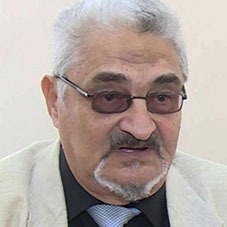

Editor's note: Moses Becker is a special commentator on political issues for News.Az, a PhD in political science and an expert on interethnic and interreligious relations. The article expresses the personal opinion of the author and may not coincide with the view of News.Az.
History is full of paradoxes, where minor groups or even individual terrorists have had the power to radically alter the destiny of entire regions. This is precisely what happened with the radical Islamist movement Hamas, which, until recently, few took seriously. No one could have foreseen that the unprovoked attack by Hamas militants on Israel on October 7, 2023, would lead to the collapse of the Shiite empire that Iran had spent decades building.
As a proxy of the ayatollah regime, Hamas—through its reckless and aggressive actions—unleashed a political tsunami that swept away Hezbollah in Lebanon, severely undermined the regime of Syrian dictator Bashar al-Assad, weakened the influence of Shiite factions in Iraq, and pushed Yemen’s Houthi movement, Ansar Allah, to the brink of survival. Even Qatar, which had previously provided substantial financial support to Hamas—investing hundreds of millions of dollars into Gaza—has begun to distance itself from the organization.
This shift became particularly evident following the dramatic and consequential visit of U.S. President Donald Trump to the Middle East. Thanks to Washington’s diplomatic efforts, momentum has grown behind the initiative proposed by the President’s Special Envoy, Steve Witkoff, to expand the Abraham Accords. Notably absent from this new regional framework are Turkey and Iran. It appears these once-prominent players are being deliberately sidelined from shaping the future of the Middle East.
A new axis of power is emerging before our eyes, built on the convergence of Israeli technological innovation and the vast natural resources of the Arab Gulf states. There are also plans to involve Azerbaijan—and even Armenia—in this architecture, with the ultimate goal, according to analysts, of encircling and containing Iran. As for Turkey, it seems likely to retain its traditional positions, albeit with diminished influence in the region’s new configuration. This is reflected in the noticeably softer rhetoric of President Erdogan, likely a result of political fatigue and limited resources for an ambitious foreign policy.
Following President Trump’s visit, one question is being asked with increasing frequency: why did the U.S. President not visit Israel, and what is the true nature of his relationship with Prime Minister Benjamin Netanyahu? It is safe to say that rumors of Trump’s dissatisfaction with the Israeli leadership are unfounded. As the President himself has emphasized, Israel is a sovereign state with the right to independently determine its national security policies.
Moreover, a bilateral agreement has been reached between Washington and Jerusalem to provide humanitarian assistance to Gaza’s civilian population, facilitated by U.S. companies operating in designated zones. This is yet another testament to the strength of the strategic partnership between the two nations. During a hearing before the U.S. Senate Foreign Relations Committee, Secretary of State Marco Rubio stated that the United States had reached out to a number of countries to discuss the possibility of temporarily relocating Palestinians from Gaza. He clarified that this would apply only to those who voluntarily and willingly agreed to leave.
On May 5, Prime Minister Netanyahu announced the launch of Operation "Gideon’s Chariot," which began shortly after Trump’s departure from the region. Simultaneously, American officials initiated talks with Libya and Syria regarding the potential relocation of up to one million Gazans to those territories. All of this forms part of a broader vision to restructure the Middle East—free from terrorism, war, and radicalism.
Back on February 5, during a press conference at the White House, President Trump declared: “The U.S. will take control of the Gaza Strip, and we will transform it... We will take that land and develop it.” On February 9, he elaborated: “We intend to own Gaza, to take it.” Then, on February 11, during a joint appearance with King Abdullah II of Jordan, Trump stated: “We’re not going to buy anything. We’ll just take Gaza and keep it.” It is clear that this plan has received tacit support from several countries ready to invest in the development of the territory.
The first step toward implementation is the removal of Hamas from the humanitarian aid distribution process—now to be managed by the U.S.-based Gaza Humanitarian Fund. According to Israeli Defense Minister Israel Katz, the fund will begin distributing aid starting May 24. This move strips Hamas of one of its primary tools of influence: food distribution.
In addition, the Israeli Defense Forces have successfully eliminated several top Hamas leaders during the conflict, including Ismail Haniyeh, Mohammed Deif, Yahya Sinwar, and others. The group’s only remaining leverage is the hostages it has held under inhumane conditions for nearly two years.
It remains unclear what Hamas leadership expects to achieve as it stubbornly clings to power and refuses all calls for disarmament.

Source: ndtv
One thing is certain: following Trump’s Middle East visit, no rational regional leader is willing to defend an organization that has dragged its own people into a spiral of suffering and destruction. Recently, anti-Hamas protests have begun to emerge within Gaza itself, with citizens defying repression to demonstrate against the group’s dominance.
It is difficult to believe that Hamas still hopes for support from Yemen’s Houthis, whose rockets and drones are largely outdated—or that anyone genuinely expects a ground invasion of Jerusalem by Iran’s “mighty” military, which struggles even to defend its own borders. Questions abound, yet one truth remains clear: the obstinate defiance of Hamas leadership only deepens sectarian and ideological divisions.

Yaron Lischinsky had bought a ring and was due to propose marriage to Sarah Milgrim next week
Under the influence of anti-Semitic propaganda, a tragic event unfolded in Washington, D.C., where two employees of the Israeli embassy—Yaron Leshinsky and his fiancée Sarah Milgram—were shot and killed outside the Jewish Museum. The assailant, Elias Rodriguez, a 30-year-old pro-Palestinian activist and member of the far-left Maoist group Chicago Chapter, was apprehended while shouting “Free Palestine!” Israeli President Isaac Herzog urged the public not to politicize the tragedy, stating that Rodriguez was driven by “anti-Semitism and deep-seated hatred.”
European Union and British leaders condemned the attack. Notably, Azerbaijan was the first Muslim-majority country to offer condolences to Israel and denounce the killings.
Thus, it is with deep regret that we must acknowledge: in today’s restless and increasingly fragmented world, even a seemingly localized event can unleash a cascade of unpredictable consequences capable of bringing humanity to the brink of catastrophe. The Middle East, once again, serves as a litmus test for global geopolitical transformation—where decisions made by isolated actors reverberate far beyond the region. Our world has grown too interconnected to ignore the fallout of such conflicts. Humanitarian crises trigger waves of migration, radicalization deepens societal fractures, and rising tensions erode international trust. A new reality is emerging—one where traditional norms of diplomacy and international law are weakening, while fragile new alliances form based on interests rather than shared values.
This is why the actions of organizations like Hamas represent not just the tragedy of one people but a direct threat to the broader international security system. If humanity fails to recognize the urgency of collective action to curb extremism and violence, the consequences of our inaction may soon become irreversible.
(If you possess specialized knowledge and wish to contribute, please reach out to us at opinions@news.az).


Similar news