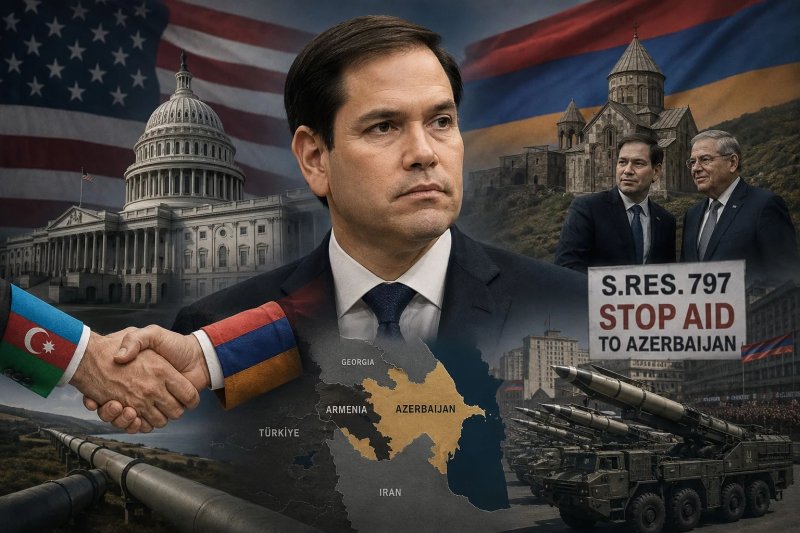
Marco Rubio and the Armenian lobby: Why Baku has grounds to question U.S. balance


Editor’s note: Seymur Mammadov is a special commentator for News.Az and the director of the international expert club EurAsiaAz. The article reflects the author’s personal opinion and does not necessarily represent the views of News.Az.
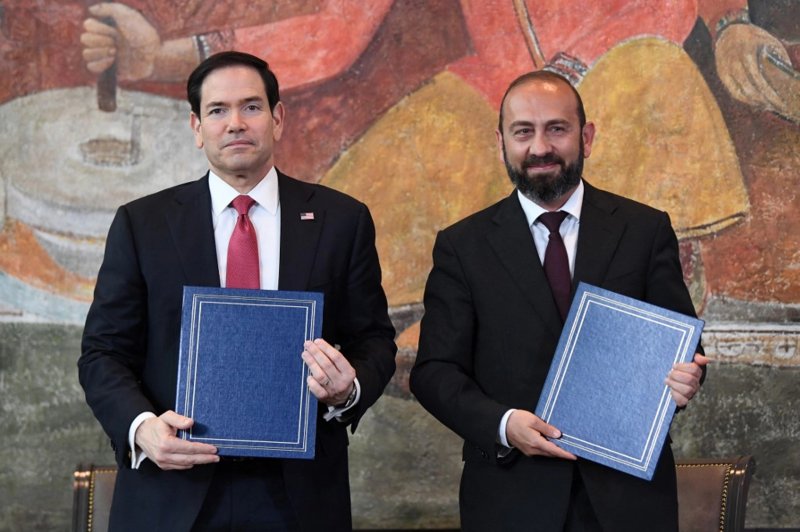
U.S. Secretary of State Marco Rubio’s recent visit to Armenia, which was not accompanied by a trip to Azerbaijan, has once again raised questions about the balance of American policy in the South Caucasus. The issue takes on particular significance against the backdrop of foreign-made weapons displayed in Yerevan, Armenia’s deepening military and political cooperation with Western countries, and Rubio’s long record of engagement with Bob Menendez and influential Armenian-American organizations.
Washington officially states that it is interested in establishing a lasting peace between Azerbaijan and Armenia. However, the role of a mediator requires not only appropriate rhetoric but also visible diplomatic impartiality. When the head of American diplomacy visits only one of the two countries involved in the peace process, it inevitably raises questions on the other side.
RECOMMENDED STORIES
The military dimension is an additional source of concern. At a parade held in Yerevan on May 28, 2026, Armenia displayed a broad range of foreign-made weapons. Open sources primarily reported Indian, French, Russian and allegedly Iranian systems, as well as domestically produced Armenian weaponry. American weapons systems were also among the equipment presented at the parade.
The United States should refrain from pursuing policies capable of altering the military balance in the South Caucasus or creating the impression that one party to the conflict is being granted special military and political guarantees. Even when supplied equipment is officially described as defensive, its appearance in the region may be perceived as part of a broader transformation of the strategic architecture.
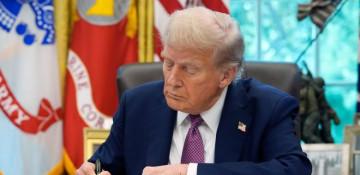
 Source: AFP
For Azerbaijan, this issue is inseparable from Marco Rubio’s personal political record. Before becoming secretary of state, he served for many years in the Senate and repeatedly joined initiatives aimed at restricting U.S. cooperation with Azerbaijan and openly supported by Armenian lobbying organizations.
The Menendez-Rubio political alliance
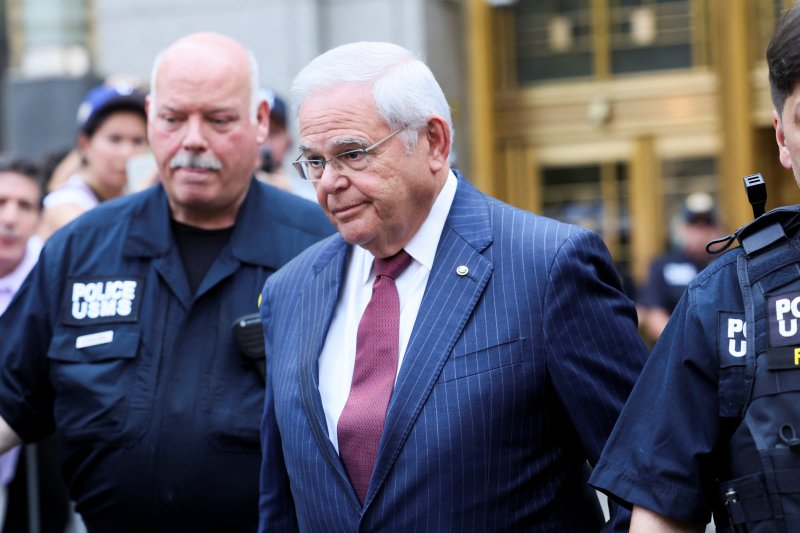
For many years, Bob Menendez was regarded as one of the most active advocates of Armenian interests in American politics. Representing New Jersey, home to an influential Armenian community, he consistently promoted recognition of the events of 1915 as genocide, restrictions on assistance to Azerbaijan, enforcement of Section 907 of the Freedom Support Act and sanctions against Azerbaijani officials.
Marco Rubio represented a different party and a different state. Nevertheless, on a number of issues involving Armenia, Azerbaijan and Türkiye, he repeatedly acted alongside Menendez.
Their cooperation was politically advantageous to Armenian lobbying structures. Menendez secured support among Democrats, while Rubio’s participation allowed the relevant initiatives to be presented as a bipartisan foreign policy position rather than the agenda of a single ethnic group or political party.
Rubio therefore played an important role in legitimizing Menendez’s initiatives. His involvement enabled supporters of these measures to claim that demands to end assistance to Azerbaijan were backed by both Democrats and Republicans.
 Source: Reuters
The 2014 vote
One of the first notable episodes came during a vote in the Senate Foreign Relations Committee in April 2014.
The committee, then chaired by Bob Menendez, approved Resolution S.Res.410, calling for official recognition of the events of 1915 as the Armenian genocide. Marco Rubio was among the Republicans who supported the measure.
The resolution was approved by 12 votes to five. Alongside Menendez and most Democrats, Republican senators Marco Rubio and John McCain voted in favor.
This episode became one of the earliest documented cases in which Rubio supported an initiative led by Menendez and welcomed by Armenian organizations.
The resolution itself did not directly concern Azerbaijan. However, it demonstrated Rubio’s willingness to cooperate with Menendez on issues that occupied a central place in the political agenda of the Armenian-American lobby.
The resolution was positively received in Armenia and among the Armenian diaspora. Letters of gratitude were sent to Menendez, while Armenian organizations separately highlighted the committee members who had supported the measure.
A shared position on recognition of the 1915 events
In 2019, Bob Menendez and Republican Senator Ted Cruz became leading sponsors of a resolution recognizing the events of 1915 as genocide. After several attempts to block it at the request of the U.S. administration, the Senate unanimously adopted the measure in December 2019.
Rubio was not the principal sponsor of the resolution, but he publicly supported its introduction and said he was proud to join Menendez, Cruz and other senators.
This once again demonstrated that, on an issue of central importance to the Armenian diaspora, Rubio belonged to the same political coalition as Menendez.
In March 2021, Menendez led a joint letter signed by 38 senators urging President Joe Biden to become the first U.S. president formally to recognize the events of 1915 as the Armenian genocide.
Rubio signed the letter. The signatories included members of both parties, but Menendez was the political organizer of the appeal. The Armenian Assembly of America widely publicized the initiative and listed Rubio among the senators supporting the Armenian community’s demand.
This episode confirms the consistency of their political cooperation on Armenian-related issues.
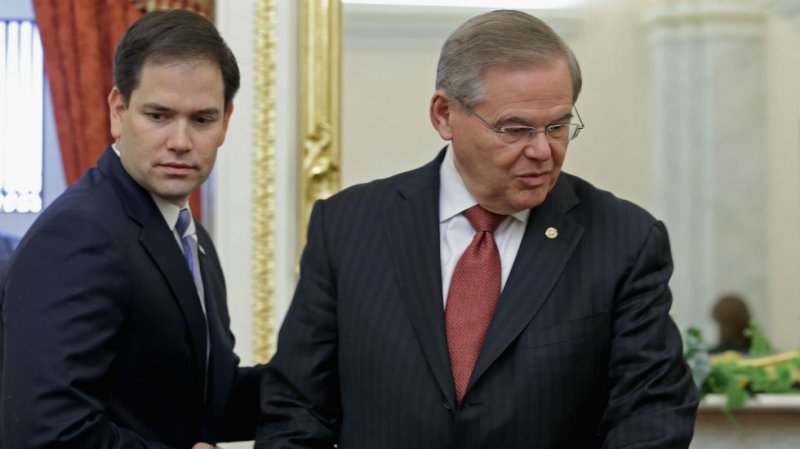 Source: The Hill
S.Res.797: Direct action against Azerbaijan
The most significant joint step taken by Menendez and Rubio came in September 2022.
Following armed clashes on the Armenian-Azerbaijani border, the two senators jointly introduced Resolution S.Res.797. Unlike earlier measures concerning the events of 1915, this initiative directly targeted Azerbaijan and U.S.-Azerbaijan cooperation.
The resolution called on the U.S. administration to immediately end security assistance to Azerbaijan. Its sponsors demanded full enforcement of Section 907 of the Freedom Support Act, which restricts U.S. government assistance to Azerbaijan.
The document also called for consideration of sanctions against Azerbaijani officials, expanded assistance to Armenia and the Armenian population of Karabakh, and increased pressure on Baku.
What matters is not only the text of the resolution, but also the way it was presented by Armenian lobbying organizations.
The Armenian National Committee of America, or ANCA, openly welcomed the initiative. The organization’s executive director, Aram Hamparian, thanked Menendez and Rubio for their “decisive leadership” in seeking the enforcement of Section 907 and an end to U.S. military assistance to Azerbaijan.
The Armenian Assembly of America also praised the measure. The organization specifically noted that Menendez had “led” the bipartisan initiative together with his committee colleague Marco Rubio.
The Armenian organizations themselves therefore acknowledged that Menendez was the political initiator, while Rubio served as his principal Republican partner.
This formula is particularly important in understanding the nature of their cooperation. It was not simply a case of two senators casting identical votes. They jointly introduced the measure, worked together to end assistance to Azerbaijan and gave the demands of Armenian organizations bipartisan standing.
ANCA endorsed Rubio in the election
Following the introduction of S.Res.797, Rubio’s cooperation with Armenian organizations received not only public approval but also direct political recognition.
In October 2022, ANCA included Rubio among the candidates it endorsed in the Senate elections.
In its statement, ANCA emphasized that Rubio had worked with Menendez to end U.S. military assistance to Azerbaijan. The organization directly linked its support for Rubio to his involvement in S.Res.797, his demands for the enforcement of Section 907 and his calls for increased assistance to Armenia and the Armenians of Karabakh.
This went beyond a conventional expression of gratitude. One of the most influential Armenian-American organizations publicly encouraged its supporters to back Rubio, explicitly tying that endorsement to his actions against assistance to Azerbaijan.
It would be wrong to claim on this basis that Rubio was under ANCA’s financial control. No reliable evidence of direct financial dependence or special arrangements has been presented. It is, however, possible to speak of a political exchange of interests: Rubio supported initiatives that were priorities for ANCA, while the organization publicly backed his political career and presented him to its supporters as an ally of the Armenian community.
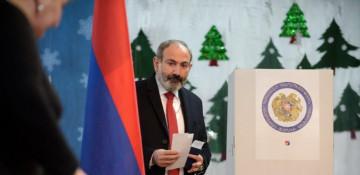
 Source: Getty Images
The Padilla-Rubio initiative and Menendez’s involvement
In June 2023, Marco Rubio and Democratic Senator Alex Padilla introduced another resolution focused on the situation surrounding the Lachin road.
It once again called for an end to U.S. assistance to Azerbaijan, enforcement of Section 907 and consideration of sanctions against representatives of the Azerbaijani leadership.
Bob Menendez was among the original co-sponsors of the measure. The political alliance established in 2022 therefore continued into 2023.
This time, Padilla and Rubio were formally the leading sponsors, but Menendez immediately joined the initiative. ANCA presented it as a measure supported by the organization and once again thanked the senators for promoting sanctions and restrictions against Azerbaijan.
The resolution included a comprehensive set of demands:
an end to military assistance to Azerbaijan;
full enforcement of Section 907;
consideration of sanctions against Azerbaijani officials;
an international investigation into the situation;
expanded assistance to the Armenian population;
and increased diplomatic pressure on Baku.
The initiative once again demonstrated that Rubio was not merely expressing general humanitarian concern. He was supporting specific legislative mechanisms aimed at limiting U.S. cooperation with Azerbaijan.
The Armenian Protection Act
In the autumn of 2023, Rubio became one of the key co-sponsors of S.3000, the Armenian Protection Act.
Senator Gary Peters was the principal sponsor, while Rubio joined the legislation as one of its original co-sponsors. The bill sought temporarily to strip the U.S. president of the authority to waive Section 907 restrictions on assistance to Azerbaijan.
Following the terrorist attacks of September 11, 2001, successive U.S. administrations had exercised their authority to waive Section 907 restrictions annually, citing national security interests and cooperation with Azerbaijan. The Armenian Protection Act was intended to end that practice for fiscal years 2024 and 2025.
The Senate passed the bill without objection. Rubio publicly stated that U.S. taxpayer funds should not be provided to Azerbaijan and called on the House of Representatives to approve the legislation as well.
The Armenian Assembly of America welcomed the bill’s passage and described Rubio as a consistent supporter of Armenian causes.
ANCA also cited the Armenian Protection Act as one of Rubio’s principal achievements in advancing the Armenian agenda.
This episode is important because the initiative was no longer directly linked to Menendez. By that time, Menendez’s influence in the Senate had weakened because of the criminal case against him, and he had stepped down as chairman of the Senate Foreign Relations Committee.
Rubio nevertheless continued along the same political line: restricting assistance to Azerbaijan, enforcing Section 907 and viewing relations with Baku primarily through the prism of Armenian demands.
This suggests that Rubio was not merely a temporary supporter of Menendez’s initiatives. Some of the positions they had promoted together had become part of Rubio’s own foreign policy outlook.
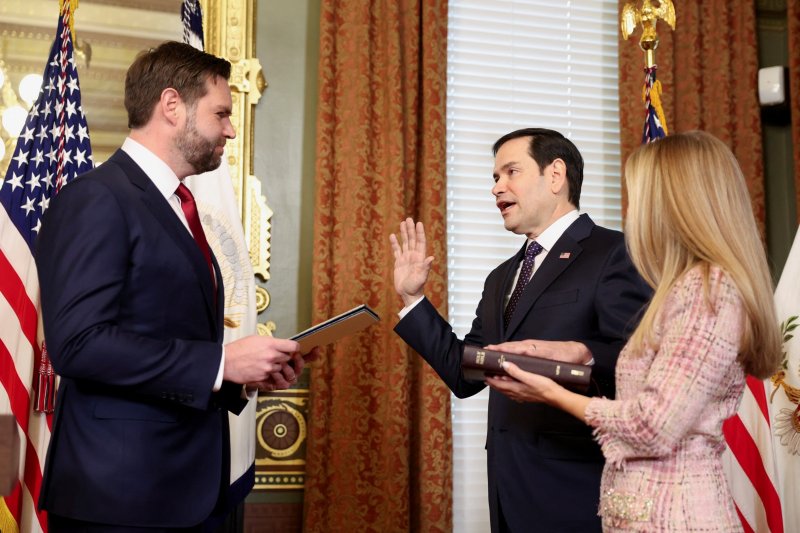 Source: ABC News
Rubio as Secretary of State
Rubio’s transition from the Senate to the State Department fundamentally changed his status. A senator may take account of the preferences of his electorate, support particular civic organizations and participate in political coalitions. A secretary of state represents the foreign policy of the United States as a whole and must consider the country’s strategic interests. His decisions are no longer evaluated as the actions of one of 100 senators, but as official signals from the U.S. government.
That is precisely why Rubio’s decision to visit only Yerevan raises legitimate questions. During his time in the Senate, he repeatedly supported initiatives directed against Azerbaijan. After becoming the head of American diplomacy, Rubio traveled to Armenia and signed strategic documents there, but did not visit Baku or hold parallel talks with the Azerbaijani leadership.
Against the background of his previous political record, the secretary of state’s one-sided itinerary is difficult to regard as a neutral technical detail. Rubio’s decision to limit his trip to Armenia creates the impression that his earlier Senate positions continue to influence his actions as head of the U.S. State Department.
Other Western officials chose a more balanced approach
Rubio’s approach appears particularly striking when compared with the visits of other Western leaders and senior officials.
During his regional trip, U.S. Vice President JD Vance visited both Armenia and Azerbaijan. He held talks in both capitals, demonstrating that developing relations with Yerevan does not require the diplomatic exclusion of Baku.
Italian Prime Minister Giorgia Meloni traveled to Azerbaijan after visiting Armenia and met with the Azerbaijani leadership.
The European Union’s High Representative for Foreign Affairs and Security Policy, Kaja Kallas, also visited both countries.
Such an approach does not imply mechanically equating the positions of Baku and Yerevan on every issue. Its significance lies elsewhere: an external power seeking to act as a partner or mediator demonstrates its readiness to listen to both sides.
Rubio sent no such signal.
If the secretary of state’s trip concerned projects directly connected with regional communications and Azerbaijan, Baku’s absence from the itinerary becomes even more difficult to understand.
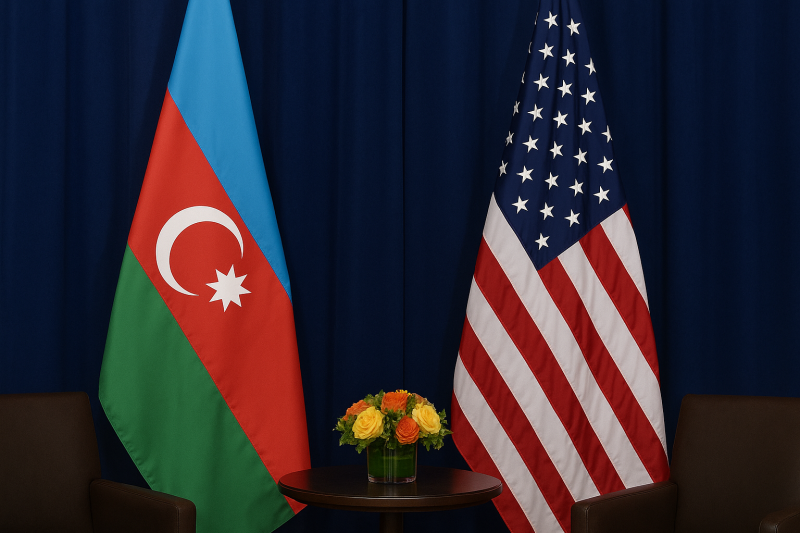 Source: Azernews
Why the United States needs Azerbaijan
A one-sided approach is also inconsistent with the practical interests of the United States itself.
Azerbaijan occupies an important position in Europe’s energy security system. Routes crossing its territory make it possible to deliver energy resources while bypassing Russia and Iran. The country plays a central role in the development of the Middle Corridor, linking Central Asia, the Caspian region, the South Caucasus, Türkiye and Europe.
Azerbaijan is also an important partner for the countries of Central Asia, Türkiye, Georgia and a number of European states. Major trans-Caspian transport and energy projects cannot be implemented without its participation.
Any attempt to build a new American strategy in the South Caucasus primarily through Armenia will therefore inevitably encounter geographical, economic and political limitations. Washington may strengthen its relations with Yerevan, but this should not be done by creating an imbalance or disregarding Baku.
For many years, Rubio acted as one of the leading Republican partners of Armenian lobbying organizations. On the toughest initiatives directed against Azerbaijan, he worked with Bob Menendez, giving those initiatives bipartisan status.
Now that he has become secretary of state, Rubio must demonstrate that he is capable of moving beyond his former Senate alliances and pursuing a policy consistent with U.S. strategic interests and the principle of regional balance.
The clearest proof of this would be a full political dialogue with Azerbaijan, including a visit to Baku, high-level consultations and an unambiguous position against any steps capable of disrupting the military balance in the South Caucasus.
The United States cannot credibly claim the role of an honest mediator when its diplomatic actions create the impression that it favors one side. Neutrality is determined not by declarations, but by the consistency of practical steps.
The examples of JD Vance, Giorgia Meloni and Kaja Kallas show that it is possible to strengthen relations with Armenia while simultaneously maintaining a full political dialogue with Azerbaijan.
Rubio has not yet demonstrated a comparable level of balance. Given his long-standing cooperation with Menendez and his political relationship with Armenian lobbying organizations, Baku has every reason to expect more convincing evidence of impartiality from the head of American diplomacy.
(If you possess specialized knowledge and wish to contribute, please reach out to us at opinions@news.az).


Similar news