INTERVIEW: Russia seeks to capitalize on anti-Pashinyan protests, Moldovan expert


News.Az presents an interview with Ruslan Sevcenco, Moldovan expert and deputy director of the Institute for Effective Politics, Chisinau.
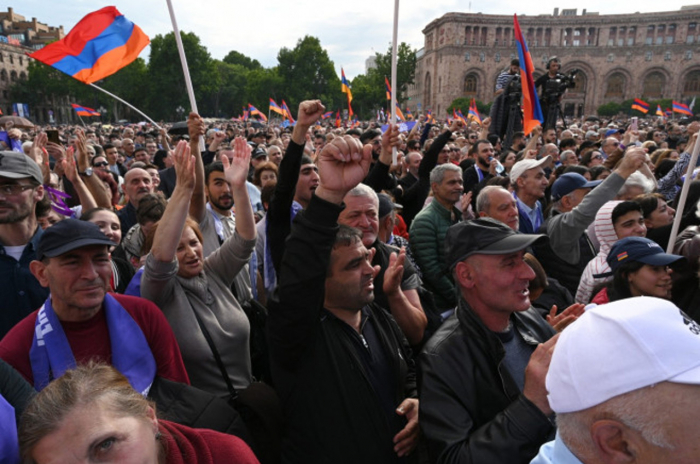
- How do you assess the potential of the current protests in Armenia? Is there a likelihood that they will lead to a change of power in the country?- The protests against Armenia's return of several of the villages it captured during the First Karabakh War, as well as the de facto annexation of Azerbaijani enclaves established during the Soviet era within Armenia's territory were not unexpected for the authorities. This is one of the few topics that can seriously stir Armenian society, and local Russian agents attempted to capitalize on it. They realized that Kocharyan, Sargsyan, and other figures from the "Karabakh clan", whom Russia had relied on for decades, are now completely outdated and do not inspire the population to rally under their leadership, even for the cause of reclaiming "territories unjustly taken by Azerbaijan by the right of the strong," as they are referred to in Armenia. Since other anti-Pashinyan opposition figures are even less significant in the eyes of the Armenian electorate, Russia decided to play another strong card from those still available.
For centuries, the Armenian Church has been a battleground for pro-Russian factions against several pro-Western ones, but pro-Russian figures have generally been in the majority here, represented by the current Catholicos Garegin II, who has repeatedly criticized Pashinyan for his policy of "ceding historical Armenian lands" to Azerbaijan. To renew the leadership of their supporters and make them more appealing to ordinary Armenians, Russia, with the full support of Catholicos Garegin II, put forward Archbishop Bagrat Galstanyan as the leader of the "people's resistance to the policy of national betrayal" allegedly pursued by Pashinyan. It appears that, with the personal consent of the Catholicos, Galstanyan was allowed to completely abandon all his duties as an archbishop and focus solely on the political aspect.
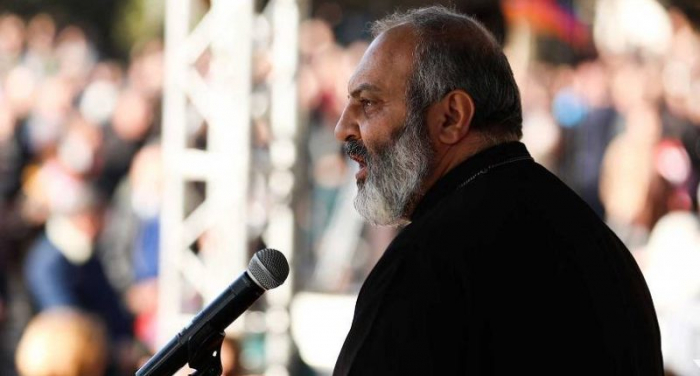
Interestingly, this move overlooked the fact that in 2018-2019, Galstanyan considered himself a supporter of Pashinyan and was happy to be photographed next to his idol. The main task set for Galstanyan by his Kremlin handlers was to unite the entire opposition for the sake of "reclaiming lost Armenian territories," not just preventing the signing of a peace treaty with Azerbaijan that would recognize the Soviet borders of Armenia and Azerbaijan but also reclaiming Karabakh and other "captured Armenian lands."
However, the shortcomings of the newly minted "political leader" quickly became apparent. Galstanyan, with no political experience and falsely assuming he represented at least the majority of the Armenian people dissatisfied with the "traitor" Pashinyan, issued an insane ultimatum demanding Pashinyan's voluntary resignation within an hour (!). When no resignation occurred, he began organizing the population against Pashinyan.
It should be noted that part of Armenian society is indeed dissatisfied with the return of the remaining villages to Azerbaijan and the prospect of signing a peace treaty that will formalize Armenia's complete renunciation of territorial claims against Azerbaijan. But the pro-Russian opposition and their Russian puppeteers once again miscalculated, expecting a powerful wave of discontent that would "sweep Pashinyan into the dustbin of history," as one protester put it. The protests turned out to be quite manageable by the authorities. Even the multi-kilometer marches of opposition supporters through Yerevan and other settlements did not evoke the expected fervent response.
Finally, the US and several EU ambassadors unequivocally voiced their support for Pashinyan. Western countries expressed readiness to help Pashinyan with their protest suppression experts. All this puts Galstanyan, Garegin II, and their local opposition and Russian intelligence sponsors in a difficult position. Realizing that this plan to remove Pashinyan is failing, Russia's supporters in Armenia, with substantial financial resources, may resort to bribing deputies of the Civil Contract party to deprive the Armenian premier of political support and collapse the government. However, for now, the authorities are managing to counter these opposition intentions. Protests against Pashinyan are gradually degrading to levels Armenia has experienced repeatedly in recent years, eventually fizzling out. This same outcome is quite likely this time as well.
- How realistic do you find the Armenian leadership's statement that a peace treaty may be signed with Azerbaijan by the end of the year?
- Pashinyan has repeatedly stated that there are no fundamental disagreements with Azerbaijan regarding the signing of a peace treaty and the recognition of "Soviet" borders. However, it should also be remembered that the Armenian leadership and Pashinyan himself have previously named specific dates for the signing of a peace treaty with Azerbaijan, including "by the end of 2023." Each time, these deadlines were missed for various reasons. It would be prudent for Pashinyan and his team not to rush with such promises, especially in a situation where the country is experiencing, albeit not very active, but still massive opposition protests. Moreover, the very news that a peace treaty will be signed imminently could intensify the protests.
First, Pashinyan needs to safeguard himself from the potential consequences of such statements to ensure that local extremists, of which there are always plenty in Armenia, do not harm him just before the signing of the peace treaty. Second, the text of the treaty must be fully agreed upon to avoid any unforeseen surprises at the last moment. Only after that, can a public announcement of even an approximate signing date for such a crucial document as the peace treaty with Azerbaijan be made.
- What are the chances of Armenia joining the European Union?
- Today, this is a rather distant prospect for Armenia for several reasons. First, the absence of a peace treaty with Azerbaijan hinders normal socio-economic development and creates uncertainty regarding Armenia in the West. Second, Armenian legislation does not meet many of Brussels' requirements. Rectifying these discrepancies will take many years. Third, strong pro-Russian sentiments remain in Armenia. If Armenia were to declare that joining the EU is the primary goal of its foreign policy, proponents of these sentiments would immediately claim that Armenia is being "dragged into Turkish-Azerbaijani slavery" by severing its historical ties with Russia. This would incite fears of increasing Turkish business influence in Armenia (ignoring Armenians' Turkophobia would be a grave mistake), and fears that the West would promote LGBT rights, moral decay, and the destruction of social norms. Armenia's population, which is fundamentally traditionalist, would be very receptive to such messages, potentially sparking new mass protests.
For this reason, even supporters of Armenia's European integration, including Pashinyan, avoid talking about EU membership and prefer discussing the "diversification" of foreign policy, i.e., expanding ties not only with Russia but also with the West. Therefore, Pashinyan's supporters often refrain from directly accusing Russia of provoking current mass opposition protests, preferring to criticize only certain individuals (Galstanyan, Kocharyan, Garegin II, etc.) but not Russia as a whole.
Fourth, Armenia is not even a candidate for EU membership today, unlike Moldova or Ukraine. There are no approximate dates for its EU accession, as indicated for Moldova and Ukraine (tentatively 2030). This means that under current circumstances, Armenia's accession to the EU, even under very favorable conditions, cannot occur before 2035-2040, or in the worst case scenario, even later.
- What could be the consequences for Armenia if the country ultimately turns towards the West?
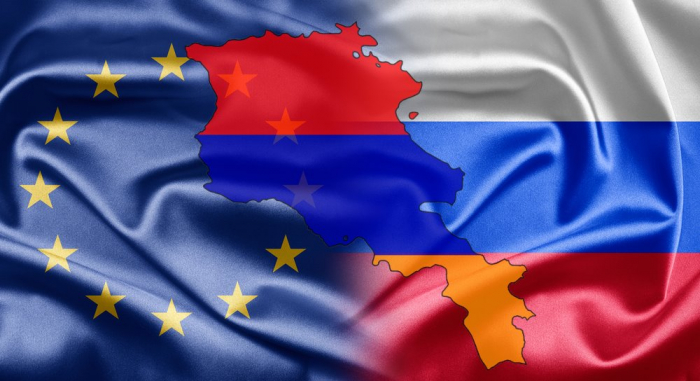
- If Armenia turns decisively towards the West, aside from the traditional significant influence of Russia in the religious sphere and among the population, the enormous economic presence of Russia in the country must be considered – about half of Armenia's exports currently go to Russia, and this volume has even increased since the war in Ukraine. Russia is the main supplier of natural gas and fuel for the Metsamor Nuclear Power Plant. Replacing gas and nuclear fuel suppliers, as evidenced by the examples of Ukraine and Moldova, is a difficult, long, and costly process, as it would require building new gas pipeline branches from existing ones in the region or connecting to the latter. Since Russian gas is significantly cheaper, supplies from other sources would lead to a substantial increase in gas prices within Armenia. Replacing nuclear fuel from Russia with that from other countries is even more complicated. It would have to be purchased from Turkey, where it is also noticeably more expensive than in Russia.
Moreover, Russia's military base in Gyumri, which, according to the agreement, can remain there until 2041, indicates that Russia has a basis for military intervention in some form if the Armenian opposition manages to win over a significant portion of the population. All this means that a final turn towards the West would bring severe economic problems for Armenia, lasting for many years, and would exacerbate internal political tensions, as the pro-Kremlin opposition would exploit such an opportunity. How the Armenian authorities handle these complex challenges will largely determine the success of Pashinyan's plans for Armenia's final turn towards the West.
- How can Iran's policy towards the South Caucasus, Turkey, and Russia change after a new president is elected?
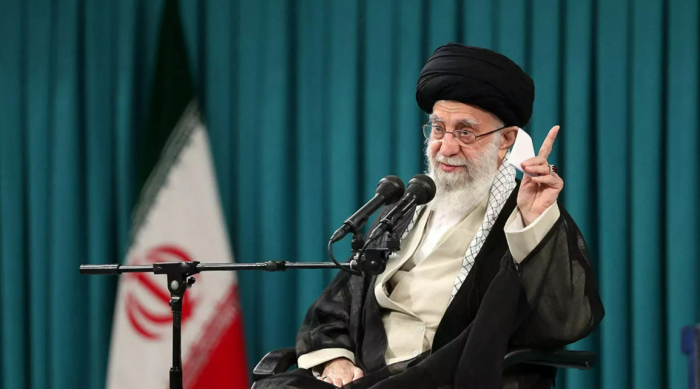
- In Iran's political system, the President's role is not pivotal. No one can assume this position without prior approval from the Supreme Leader (Rahbar) and the actual head of Iran, Ayatollah Ali Khamenei, and the leadership of the IRGC (Islamic Revolution Guard Corps). The new President of Iran will implement their will and can only exhibit autonomy within the confines of his more official than real powers. Therefore, it can be confidently said that Iran's policy towards the South Caucasus, Turkey, Russia, and other countries will not undergo significant changes with a new President, regardless of who assumes the position. Any substantial changes in such policy should be expected only if Donald Trump wins the US presidency, i.e., not before the end of 2024 or early 2025, and these changes will be determined by Rahbar Ali Khamenei, not the new official head of Iran.


Similar news