INTERVIEW: Financial analyst on the future of the ruble and inflation in Russia


Photo: Shutterstock
News.az presents an interview with Igor Yushkov, the Leading Analyst of the National Energy Security Fund and an Expert at the Financial University under the Government of the Russian Federation.
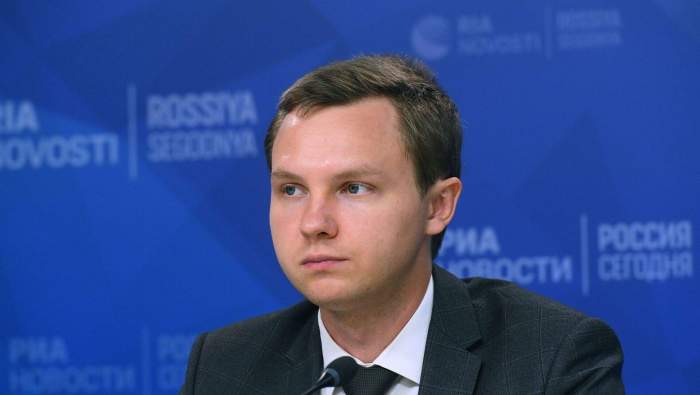
Photo: Sputnik
- What fundamental reasons for the weakening of the ruble, in your opinion, are the most significant and why?
- On the Russian stock exchange, we observed a certain level of panic when the ruble fell against the dollar, euro, and even the yuan. This is undoubtedly related to the sanctions imposed by the U.S. on several Russian financial institutions, including Gazprombank. They targeted banks and financial instruments that allowed Russia to receive foreign currency. Gazprombank was a key element of this system.
Gazprombank was used for settling payments for Russian goods exported abroad and for importing products into Russia. Since spring 2022, it has been involved in the so-called ruble payment scheme for pipeline gas supplied to unfriendly countries. The essence of the scheme is that foreign companies were required to transfer foreign currency, such as dollars or euros, depending on the contract terms, to Gazprombank. The bank would convert the foreign currency into rubles and transfer them to Gazprom. For foreign companies, this changed almost nothing: they continued to pay in foreign currency, and the pricing formula remained the same. Thus, the exchange rate did not matter to foreign partners. However, Gazprom is obliged to accept payments exclusively through Gazprombank under a presidential decree.
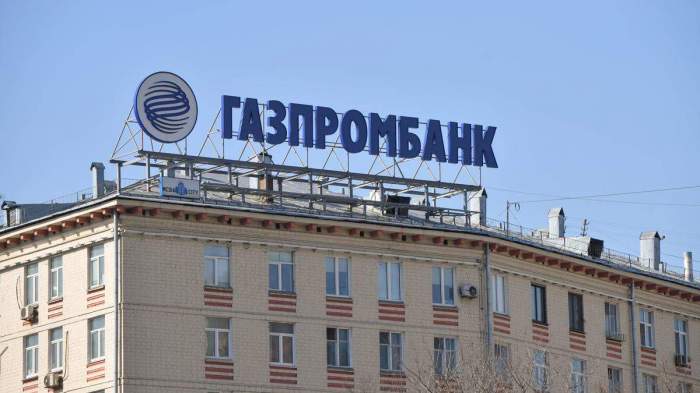
Photo: RBC
The U.S. sanctions raised concerns that less foreign currency would flow into Russia, as the gas payment scheme might become unfeasible. If Russia does not amend the presidential decree, foreign currency inflows from gas exports to Europe, which amount to approximately 30 billion cubic meters, could cease. This caused panic in the market.
U.S. sanctions require the termination of all transactions with Gazprombank by December 20. Although there is still some time left, expectations of a currency shortage have already impacted the market. The ruble fell sharply as players began buying up foreign currency en masse while it was still relatively cheap, aiming to sell it at a higher price later. This led to changes in the exchange rate.
The Central Bank of Russia has so far adopted a wait-and-see approach. In theory, it could sell foreign currency from its reserves to support the ruble, but this would not halt the panic and would deplete reserves. Currently, the currency market remains in free float, and the ruble exchange rate is shaped by market forces.
- What measures could the Central Bank or the Russian government take to stabilize the ruble under limited resources?
- The Central Bank of Russia has refrained from large-scale currency interventions, allowing market panic to subside naturally. At least, it has not carried out such interventions in significant volumes. The market has had an opportunity to stabilize on its own, and the situation has improved for now. Of course, the ruble’s exchange rate remains higher than before the sanctions against Gazprombank were introduced, but there has been a significant correction.
Gazprombank, for its part, announced a temporary halt in purchasing foreign currency for its reserves. This means that the bank will not create additional demand for foreign currency, which could further drive up the dollar, euro, and yuan. By doing so, Gazprombank aims to avoid additional pressure on the ruble. These measures have contributed to a degree of market stabilization.
- How do current trade flow dynamics and the decline in the trade balance surplus affect the ruble's prospects and inflation in Russia?
- The Central Bank stated that it does not intend to artificially restore the ruble’s exchange rate to previous levels. The exchange rate is a dynamic value, and a slight devaluation can benefit the state. Russia, as an export-oriented economy, earns revenues in foreign currency but drafts its budget in rubles. Devaluation simplifies budget balancing and deficit reduction. This is especially critical as the country exports hydrocarbons, raw materials, and industrial goods. Current exchange rate changes make budget planning for future periods more sustainable. As such, the government does not see the need to return the exchange rate to its previous levels at any cost.
However, devaluation does have some impact on inflation. The weakening ruble makes imported goods more expensive, driving up prices in the domestic market. The Central Bank has already taken steps to combat inflation, including raising the key interest rate. This decision is aimed at slowing inflation in the long term.
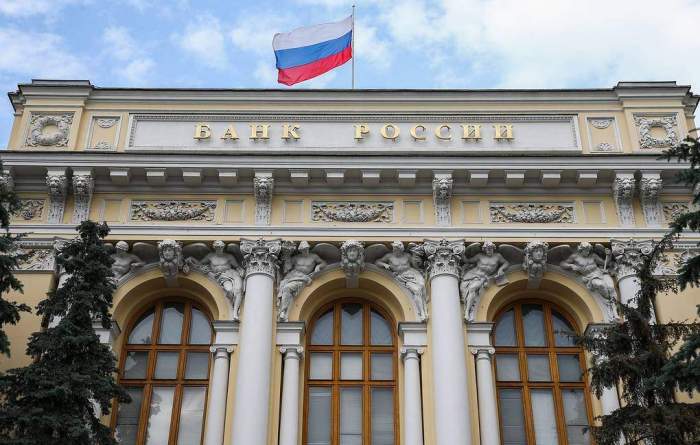
Photo: TASS
- Can stagflation be considered an inevitable scenario for the Russian economy given the current challenges, and are there ways to avoid it?
- No, I do not think we will face stagflation. More likely, we will experience inflation, but its growth rate will be somewhat lower than it is now. Even the Central Bank acknowledges that reaching the target inflation rate of 4% by 2025 will not be possible. It is more realistic to expect inflation to remain within 5.5–6% at best, and more likely at 6.5–7%. This is a more realistic forecast.
Thus, the likelihood of stagflation is low. Perhaps you mean an economic recession? However, I believe that the Russian economy will continue to grow, albeit at a slower rate of GDP increase. Nevertheless, I expect gradual growth to persist.


Similar news