Lebanon: The Gordian Knot of the region


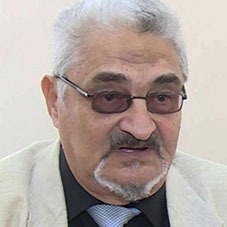
Editor's note: Moses Becker is a special commentator on political issues for News.Az, a PhD in political science and an expert on interethnic and interreligious relations. The article expresses the personal opinion of the author and may not coincide with the view of News.Az.
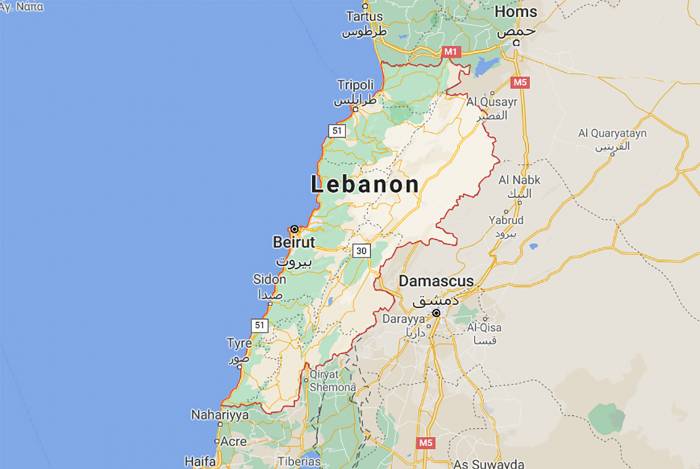
It’s always fascinating how history intertwines with geography. Lebanon, a small Middle Eastern country lacking natural resources, military strength, or significant economic potential, with a modest population and a small army, suddenly finds itself at the heart of regional politics. Divided along ethno-confessional lines, Lebanon has become a hostage of a fragile, contradictory, and deeply unstable political system. In 1943, the National Pact was adopted, enshrining these confessional principles in the country's executive and legislative branches.The legislative power was vested in the National Assembly, where seats were distributed based on the representation of religious communities. As Sunni Muslims and Maronite Christians formed the largest confessional groups, they took leading roles. The executive branch followed a similar pattern: the president had to be a Maronite, while the prime minister and finance minister had to be Sunnis. This arrangement left Shiites and Druze in a weaker political position.
The Lebanese Civil War from 1975 to 1989, which claimed over 100,000 lives, marked a turning point for Lebanon's political system. During the conflict, the power dynamics among Lebanon's communities shifted: Shiites and Druze gained influence, while the Christian population weakened, and the Alawite community, aligned with Syria, emerged. After the war, Lebanon aimed to dismantle political sectarianism, adopt new electoral laws, decentralize administration, and implement overdue reforms.
Although the highest offices remained tied to confessional groups, the principle of religious representation was formally abolished across government institutions, the judiciary, the military, and security agencies. However, for top-tier officials (from department directors and above), equal representation between Christians and Muslims was maintained. Powers were redistributed between the president and the government. The war significantly strengthened the Shiite community, previously the most disadvantaged. Their numbers grew, and their adherence to traditional patriarchal structures made them deeply loyal to their sheikhs. Amid this demographic shift, the armed group Hezbollah emerged in Lebanon in July 1982, becoming heavily dependent on Iran, with its fighters trained by Iran’s Islamic Revolutionary Guard Corps (IRGC).
This gave rise to a “state within a state” in Lebanon, with Hezbollah holding the country in an unrelenting grip. Neither other militias nor even the Lebanese army could match the military strength of the Shiite forces. Bolstered by financial and military aid from Iran, Hezbollah became a proxy force for the Iranian regime, posing a threat to neighboring countries. In 1992, with approval from Iran’s Supreme Leader Ali Khamenei, Hezbollah entered politics, participating first in parliamentary and later in municipal elections. Interestingly, its party lists included Christians and Sunni Muslims, and it became a leading pro-Syrian force in Lebanese politics.
In essence, Hezbollah has brought Lebanon under its full control. As a result, diplomatic engagement with Lebanon’s nominal leaders has proven futile. This explains why U.S. envoy Amos Hochstein has failed to achieve meaningful results, and the same applies to French diplomatic efforts. Hezbollah's military wing, the "Islamic Resistance of Lebanon," is now the world’s largest and best-equipped non-state military force. In 2021, the late Hassan Nasrallah claimed it had 100,000 fighters. U.S. military analysts estimate Hezbollah's army consists of 40,000 to 50,000 fighters, while the Israel Defense Forces (IDF) assess it at 20,000 to 25,000 with hundreds of thousands in reserve.
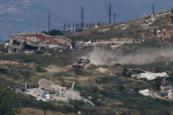
Hezbollah’s arsenal is estimated at 150,000 rockets and missiles, mostly short-range ground-to-ground rockets launched from Katyusha platforms. Additionally, it possesses around 400 long-range missiles, including the Fateh-110 and Zelzal-2, with ranges between 180 to 700 kilometers, primarily of Iranian origin. Following Hamas’s attack on Israel on October 7, 2023, Hezbollah began shelling northern, southern, and central parts of Israel. In response, Israel launched strikes on Hezbollah positions in Lebanon, displacing 150,000 civilians on both sides of the border. After Hezbollah's attack on the Golan Heights in July, killing 12 people, Israel retaliated by eliminating senior Hezbollah commander Fuad Shukr.
On September 17, 2024, over 2,000 Hezbollah commanders were wounded following pager explosions. By September 23, Israel had escalated military operations, and the IDF reported eliminating several top Hezbollah commanders, including Ibrahim Muhammad Qubaisi, the head of rocket forces; Muhammad Hussein Srour, commander of air forces; and Ibrahim Aqil, leader of special operations. Lebanon reported hundreds of civilian casualties from Israeli strikes. After the deaths of Nasrallah and his successors, Hezbollah expressed willingness to negotiate a ceasefire independently from Gaza, likely attempting to salvage what remains of the organization.
As of now, Israel claims to have destroyed about half of Hezbollah's medium- and long-range missile stockpile. Although the group continues to launch attacks on Israeli territory, the intensity has decreased. Reinforcements from Iraq have arrived to support Hezbollah. Reports suggest that the Israeli army has advanced into Syrian territory near Quneitra.
A significant turning point occurred on October 12, when Ayatollah Khamenei appointed Brigadier General Mahmoud Reza Falakhzadeh, deputy commander of the IRGC’s Quds Force, as Hezbollah’s new leader. This decision has sparked outrage in Lebanon, with many viewing it as further evidence of Hezbollah’s transformation into an instrument of Iranian occupation. The future of both Hezbollah and the Shiite community in Lebanon now looks uncertain.
Israel’s actions are likely to reshape Lebanon into a confederation similar to Switzerland, where each community governs its own territory, with weak central authority. This fragmentation could set a precedent, potentially influencing other countries in the region.
(If you possess specialized knowledge and wish to contribute, please reach out to us at opinions@news.az).


Similar news