After ten years of cold relations: Why China sent Wang Yi to Canada


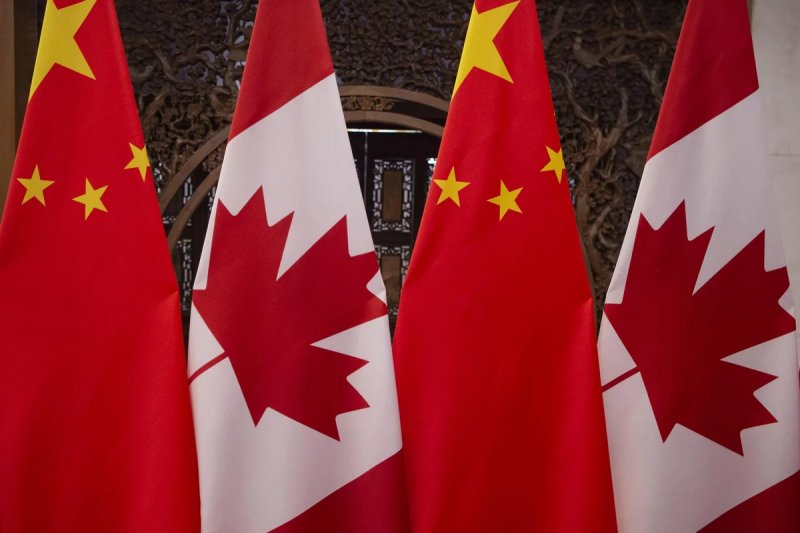
Chinese Foreign Minister Wang Yi’s visit to Canada from May 28 to 30 has become one of the most telling diplomatic signals of the week. Formally, it is a working visit at the invitation of the Canadian side and includes talks with Foreign Minister Anita Anand. But behind the dry diplomatic language lies a much larger story: Beijing and Ottawa are cautiously trying to move beyond nearly a decade of political chill, mutual distrust, and trade disputes.
This is the first bilateral visit by a Chinese foreign minister to Canada since June 2016. That detail alone explains the depth of the pause that has shaped relations between the two countries. Over the past several years, China and Canada have gone through one of the most difficult periods in their modern relationship. Ties deteriorated sharply after the 2018 arrest in Canada of Huawei Chief Financial Officer Meng Wanzhou and the subsequent detention of two Canadian citizens in China. That crisis turned bilateral relations into one of the clearest symbols of mistrust between Beijing and Western capitals.
Yet the economic dimension never disappeared from the relationship. On the contrary, trade remains the main reason why China and Canada cannot afford to keep relations completely frozen. According to the Government of Canada, China was Canada’s second-largest trading partner among individual countries in 2025. Bilateral merchandise trade reached C$124.8 billion. Canadian exports to China stood at C$34.1 billion, while imports from China reached C$90.6 billion. This means the trade balance remains sharply unequal: Canada buys far more from China than it sells to the Chinese market.
For comparison, bilateral trade between Canada and China stood at C$118.7 billion in 2024. In other words, despite political tensions and tariff disputes, the overall volume of trade increased in 2025. This is an important fact: diplomatic relations remained cold, but economic interdependence did not disappear. China remains one of the key suppliers of goods to the Canadian market, while for Canadian producers the Chinese market still matters, especially in agriculture, raw materials, and food exports.
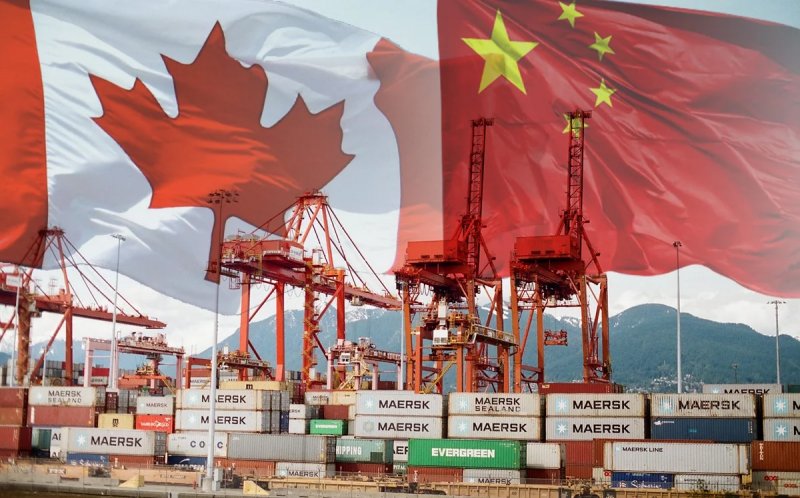
Photo credit: ottawalife.com
Canada is interested in exporting wheat, canola, peas, pork, seafood, timber, mineral resources, and other products to China. China, in turn, supplies Canada with a wide range of industrial goods, electronics, equipment, consumer products, machinery, components, and higher value-added products. This trade structure also explains the key imbalance: Canada mainly sells raw materials and food products to China, while buying a far broader range of industrial goods from China.
Recent years have shown how vulnerable these links have become. One of the main irritants has been Canada’s tariffs on Chinese electric vehicles. In 2024, Canada followed the United States and the European Union by imposing a 100% tariff on imports of Chinese electric vehicles, as well as additional measures targeting Chinese steel and aluminum. Beijing responded by striking at sensitive areas of Canadian exports. China imposed 100% tariffs on Canadian canola oil, canola meal, and peas, as well as 25% tariffs on pork and certain seafood products. For Canada, this was a painful signal, as agricultural exports remain politically and economically important for the country’s western provinces.
That is why Wang Yi’s trip should not be seen as an ordinary diplomatic visit. It is an attempt to test whether relations can be brought back into a more manageable framework. Neither China nor Canada is ready to speak of a full reset. Too many grievances have accumulated on both sides. But both understand that a complete freeze no longer serves their interests.
For China, Canada matters for several reasons. First, Beijing wants to show that its relations with Western countries are not limited to confrontation with the United States. Against the backdrop of growing rivalry with Washington, Chinese diplomacy is trying to work more actively with individual Western states, using their economic interests and political nuances. Canada is a useful case in this regard: it remains a close U.S. ally, but it is also interested in expanding foreign economic ties and reducing excessive dependence on one direction.
Second, China wants to reduce trade tensions. The Canadian market matters for Chinese companies, especially at a time when Western countries are raising tariff barriers against Chinese electric vehicles, steel, aluminum, and high-tech products. Beijing does not want Canada to become yet another market fully closed to Chinese business. Even if Ottawa keeps restrictions in strategic sectors, China wants to restore at least part of the economic dialogue.
Third, the visit comes amid Beijing’s broader diplomatic activity. Before travelling to Canada, Wang Yi took part in events in New York and chaired a meeting of the UN Security Council. This allows China to present itself not only as a regional power, but also as an active player in global diplomacy. Beijing is trying to show that it can speak simultaneously with the UN, developing countries, neighbors, and Western states.
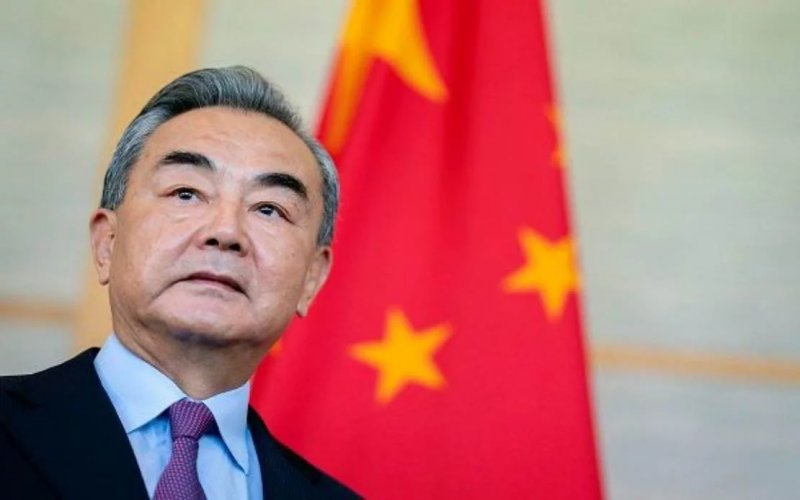
Photo credit: bernama.com
For Canada, the visit also has practical significance. Ottawa cannot ignore China — the world’s second-largest economy and one of the key players in global trade. At the same time, Canada is not ready to return to the old model of relations, in which economic interests often pushed security concerns into the background. The current approach can therefore be described as cautious pragmatism: Canada needs to talk to China, but without illusions.
The domestic political factor is also important. Canada’s leadership must show that dialogue with Beijing does not mean concessions on national security, human rights, or alliance commitments. Any rapprochement with China will be closely scrutinized at home, especially after past controversies over alleged foreign interference. That is why Anita Anand is unlikely to adopt an overly soft tone. Her task is to keep the doors open without creating the impression that Canada is ready to forget previous crises.
China, for its part, will try to project a different picture: that relations are moving toward improvement and that the time has come to expand contacts and build a new format of engagement. But Beijing will have to take into account that Canada has changed. Ottawa has become far more cautious about Chinese investments, technologies, and political influence. What could have been seen ten years ago as a normal economic agenda is now automatically filtered through a security lens.
The main intrigue of Wang Yi’s visit is whether the two sides can move from symbolic warming to practical agreements. For Canada, the priorities include access for agricultural products to the Chinese market, the removal or easing of trade restrictions, protection for Canadian businesses, and the preservation of export opportunities. For China, the key issues are tariffs, technology restrictions, treatment of Chinese companies, and the overall political climate around China in Canada.
Still, the room for compromise remains limited. Canada cannot build relations with China separately from the United States. Any serious rapprochement with Beijing will be constrained by the broader North American strategic context. In addition, many contentious issues remain unresolved — from Taiwan and cybersecurity to human rights, electric vehicles, steel, aluminum, and agricultural trade.
Therefore, the main meaning of Wang Yi’s visit is not that China and Canada have suddenly decided to become close partners. Rather, it is an attempt to unfreeze a diplomatic channel that has remained trapped in deep mistrust for too long. The economic figures show that both countries have something to lose: bilateral merchandise trade worth C$124.8 billion is too large to ignore. But the political risks are too serious for either side to simply return to the old format of relations.
After ten years of cold relations, China and Canada are taking a cautious first step. But this step does not yet mean spring has arrived. It only shows that even amid global confrontation, diplomacy and trade remain tools that neither Beijing nor Ottawa is ready to abandon.
(If you possess specialized knowledge and wish to contribute, please reach out to us at opinions@news.az).
By Ulviyya Salmanli

Similar news