South Asia on edge: Kashmir tensions flare again


.png)

Tensions between Pakistan and India, two nuclear-armed neighbors, have once again flared as both sides exchanged fire along their disputed border in the Kashmir region. The skirmishes, which erupted in recent days, have drawn widespread international attention, with the United Nations calling for "maximum restraint" from both nations in a bid to prevent further escalation.
The exchange of artillery and small-arms fire occurred in the disputed region of Jammu and Kashmir, where both India and Pakistan claim territorial rights. According to military officials from both countries, the clashes began after a series of cross-border shelling incidents, with each side accusing the other of initiating the violence.
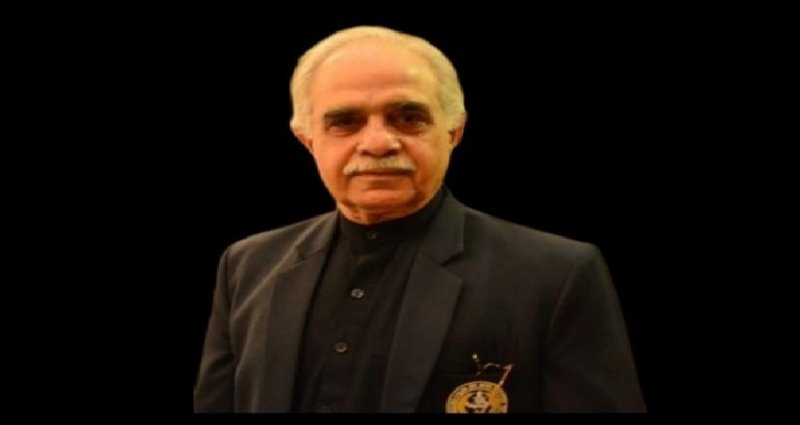
To understand the ongoing tensions between India and Pakistan, News. Az addressed Pakistani Lieutenant-General Ghulam Mustafa, a war veteran who commanded various military formation,s including a Corps and Army Strategic Forces Command (ASFC), to look beyond the surface and into the historical and ideological narratives that have shaped the identities of both nations since their independence in 1947.
According to Pakistani Lieutenant-General Ghulam Mustafa, the roots of the conflict lie not only in political miscalculations but also in contrasting worldviews and social hierarchies embedded within the region’s history.
“India's society has long been shaped by the caste system,” Mustafa explains. “Hinduism is not just a religion—it is a social order built around strict hierarchies, where lower castes, especially Dalits or ‘untouchables,’ were denied dignity, mobility, and rights.” At the top of this structure were the Brahmins, who held not only religious authority but also dictated social norms and controlled the cultural narrative across the Indian subcontinent.
This deeply entrenched system began to fracture with the arrival of Islam in South Asia. “Islam’s message of equality appealed strongly to the oppressed,” Mustafa notes. “For many lower-caste Hindus, conversion to Islam was a path to dignity and social justice.” This spiritual and social shift challenged the supremacy of Brahmin elites and altered the balance of power in Indian society.
By the time British colonial rule ended and the subcontinent was divided into India and Pakistan, the social fabric was already under strain. India declared itself a secular republic, but critics have long argued that this secularism was more performative than genuine. “The Indian National Congress, under Nehru, considered Pakistan an ‘unnatural’ creation—something that would not last,” Mustafa says. “This belief became part of the nationalist mindset, especially as the traditional social order in India was eroding.”
Source: Geo.tv
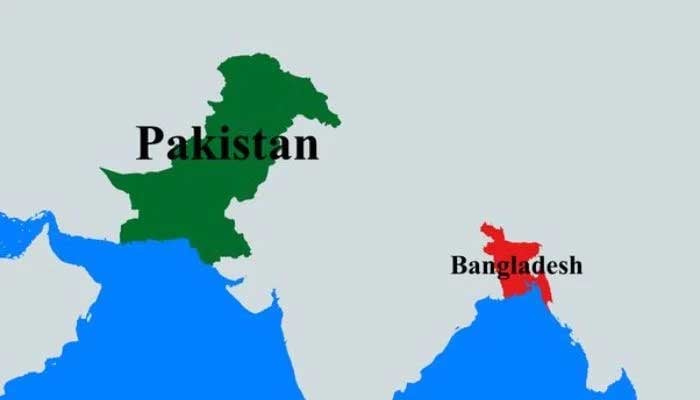
The events of the 1971 war, which led to the secession of East Pakistan and the creation of Bangladesh, further empowered Indian nationalism. “The military defeat of Pakistan was viewed as a validation of India’s ideological and strategic dominance,” he adds. It was within this emerging landscape that the Bharatiya Janata Party (BJP) began to gain influence, pushing a more assertive Hindu nationalist agenda.
“This ideology—what some critics refer to as ‘Brahmin Zionism’—blends religious supremacy with nationalism,” says Mustafa. “It draws parallels with other religious-nationalist movements around the world, particularly those that tie identity to territory and seek cultural homogeneity.” The rise of the BJP, in his view, marked a shift from symbolic secularism to overt cultural majoritarianism.
Nowhere has this ideological shift been more visible than in Kashmir. The region, which was a Muslim-majority princely state at the time of Partition, was expected—by logic of geography, demography, and popular sentiment—to join Pakistan. However, political calculations and military interventions changed that course. “India claims that the Maharaja of Kashmir signed the Instrument of Accession on October 26, 1947,” Mustafa recounts. “But the reality is far murkier. Indian troops were already being moved into Kashmir, and the signature came under questionable circumstances.”
Even before Pakistan’s independence on August 14, 1947, Mustafa alleges that Indian leaders, in cooperation with British colonial officials, had begun stationing forces in Kashmir, particularly in Srinagar. “This was a strategic move,” he says. “They wanted to block any possibility of Kashmir aligning with Pakistan.”
Aiding this effort was the controversial Radcliffe Award, which granted several Muslim-majority districts in Punjab to India. “This gave India direct access to Kashmir,” Mustafa explains. “Before that, there was no straightforward land route from India to Kashmir.” He views this as a deliberate maneuver to change the territorial equation.

Source: Wyoming Public Radio
As tensions escalated, Pakistani tribal volunteers and Kashmiri fighters began moving toward Srinagar. Meanwhile, British planes in Delhi were being loaded with Indian troops, waiting only for a formal accession to legitimize deployment. “The Maharaja was not even in Srinagar at the time—he was in Jammu,” Mustafa says. “But after a 24-hour delay, Indian officials unilaterally announced that the treaty had been signed and airlifted their troops in.”
The intervention halted the advance of the tribal forces just short of Srinagar Airport and effectively placed Kashmir under Indian military control. This prompted Nehru to take the issue to the United Nations, internationalizing the dispute but failing to resolve it.
The core of the Kashmir conflict, then, is not just territorial—it is existential. It is about two opposing visions of nationhood. For Pakistan, Kashmir represents an unfinished chapter of Partition, a Muslim-majority region that logically belongs within its borders. For India, Kashmir has become a symbol of national unity and sovereignty—especially under the current Hindu nationalist leadership.
“Hindu nationalism today seeks to redefine India’s identity in religious terms,” Mustafa warns. “This is not just about politics; it’s about reshaping society itself. And Kashmir is the frontline of that ideological battle.”
The legacy of Partition continues to cast a long shadow over South Asia. The decisions made in 1947—often in haste, often under foreign influence—still shape the lives of millions. The Kashmir dispute is both a symptom and a symbol of these unresolved legacies. Without a willingness on both sides to confront these foundational grievances, Mustafa suggests, “peace will remain a distant hope.”
In a region where history, identity, and ideology are so deeply interwoven, any meaningful resolution must begin not with artillery, but with truth. Until then, Kashmir will remain not just a conflict zone, but a mirror reflecting the unresolved tensions between two nations born from the same rupture.
Tensions in South Asia are not merely the result of episodic military confrontations but are instead rooted in a deep-seated ideological divide and historical legacy that has continued to shape regional geopolitics since 1947. As Pakistan and India again find themselves locked in confrontation over Kashmir, the broader strategic ambitions behind Indian policy warrant closer examination.
Lieutenant-General Ghulam Mustafa (Retd) asserts that “the origins of this enduring hostility are not only political but ideological, flowing from India’s self-image and the strategic aspirations of its ruling elite.” According to him, the expansionist vision of Akhand Bharat—a notion embedded within the concept of Brahmin Zionism—has served as the underlying framework for India's territorial and ideological maneuvers.
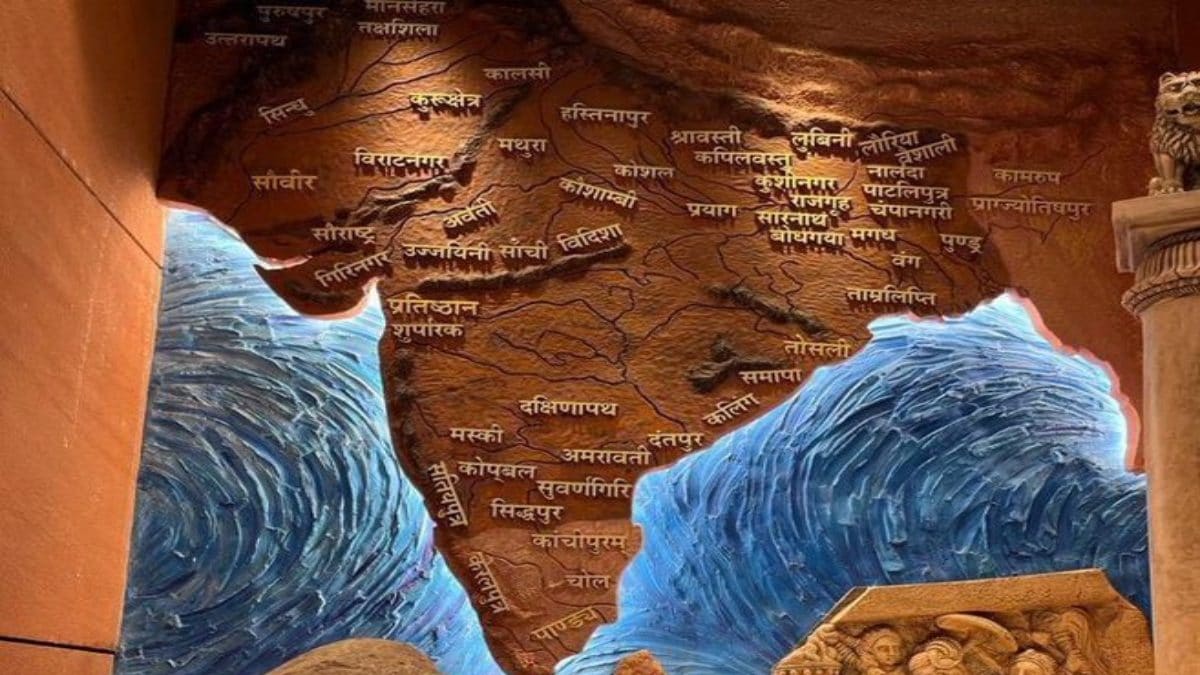
“If you look at the map of India as it existed on the evening of August 14, 1947, and compare it to today,” Mustafa observes, “you’ll see a consistent territorial expansion. This isn’t random—it’s the result of a strategic ideology that refuses to accept the legitimacy of its neighbors, especially Pakistan.”
Since Partition, India has expanded its territory by approximately 30 to 35%. This geographic growth, according to Mustafa, is emblematic of an ideology that sees India not as a postcolonial nation-state, but as the inheritor of a civilizational mandate. This mandate, driven by notions of Hindu supremacy, promotes India’s historical or divine right to assert control over Kashmir, parts of Pakistan, Bangladesh, Nepal, and even areas of Afghanistan and the Indian Ocean.
“Akhand Bharat is not a fringe fantasy anymore,” Mustafa warns. “It’s a mainstream idea in India’s political discourse, particularly under the Bharatiya Janata Party (BJP).” The ideology implicitly demands alignment—nations within the region are either expected to follow India’s strategic line or face isolation. This worldview has, in Pakistan’s eyes, elevated the India-Pakistan rivalry from a territorial dispute to an existential confrontation.
From the very beginning, the Indian National Congress refused to recognize the legitimacy of Pakistan. In fact, Mustafa claims, “policies were actively crafted to pressure Pakistan and reduce it to a compliant neighbor. But Pakistan never accepted that status—and that resistance became the basis of Indian hostility.”
The 1971 war, which saw the creation of Bangladesh from East Pakistan, was not simply a geopolitical event, but a trauma that reshaped Pakistan’s strategic priorities. It was a moment that validated India’s strategy of territorial fragmentation and psychological warfare. The scars of that conflict still shape Pakistan’s national defense doctrine and its posture towards India.

Source: History Pak
Fast forward to 2019, when the Indian government unilaterally abrogated Article 370, stripping Jammu and Kashmir of its special status. This move, Pakistan believes, was not merely administrative—it was strategic and ideological. “The Indian Parliament’s declaration that Gilgit-Baltistan and Azad Jammu & Kashmir are part of India—and that they must be taken by force—is a clear statement of intent,” Mustafa points out.
Statements from senior Indian military leaders, such as a commander from the Northern Command who declared the army was “waiting for the political go-ahead,” reinforce this perception. For Pakistan, these are not rhetorical flourishes—they are threats that must be deterred. And the burden of deterrence, for Islamabad, has fallen on its nuclear capability.
“This is why we became a nuclear power,” Mustafa asserts. “Not out of aggression, but necessity. We do not seek to rule India or claim its lands. But we must protect our sovereignty and our people.”
Pakistan’s perception of existential threat is not limited to military build-up. There is also the issue of demographic engineering, which has a long and bloody history in the region. In late November 1947, over 100,000 Muslims were massacred in Jammu in what Mustafa calls “one of the earliest and most brutal examples of demographic manipulation.” This atrocity—largely forgotten in the mainstream global narrative—shifted Jammu’s demographic balance and remains a wound in the collective memory of Pakistan.
Today, similar efforts to reshape the population dynamics are underway in the Kashmir Valley and Ladakh. The aim, according to Mustafa, is “to dilute the Muslim identity of Kashmir and integrate it forcibly into India’s cultural mainstream.” The Kashmiri identity—rooted in “Kashmiriyat,” a unique blend of spiritual and cultural tradition—remains at odds with the centralizing, majoritarian vision of New Delhi.
Pakistan, for its part, continues to seek peace—but not at the cost of sovereignty or dignity. “We want to live in peace,” Mustafa says. “And we want others to live in peace. But we will not accept subjugation.”
Yet regional peace remains elusive, in part due to larger geopolitical alignments. India’s emergence as a favored partner of the West, especially the United States, has altered the balance of power. “India now serves as the region’s factory floor and strategic ally in countering China’s presence in the Indian Ocean,” Mustafa notes. “This external support emboldens India’s regional policies and reinforces its expansionist ambitions.”
Source: Times of India
In this context, Pakistan’s limited trade ties with India are not simply a matter of economics—they are rooted in mistrust and historical trauma. The regional order, it seems, has become hostage to one nation’s strategic ambitions and another’s struggle to survive.
This geopolitical tension also echoes earlier imperial designs. “Remember the ambitions of the Russian Czars,” Mustafa reminds us, “who declared their goal to reach warm waters through Central Asia and Pakistan. That ambition never faded—it returned with the Soviets, and it was countered by Britain’s own empire.”
This cycle of intervention and resistance defines much of Pakistan’s historical memory. Figures like the Shamal and Khmel brothers, who resisted foreign domination, are remembered not just as heroes but as symbols of a national ethos that refuses to surrender.
“Pakistan stands where many powers have fallen,” Mustafa concludes. “Because we are not just defending borders—we are defending a vision of justice, identity, and dignity. We do not want war, but we will not accept domination. That is the core of our position.”
In the end, what’s playing out in Kashmir—and in broader South Asia—is not just a contest of territory. It is a struggle over identity, legitimacy, and power in a postcolonial world still shaped by the scars of Partition. Without a reckoning with history and a commitment to genuine regional equality, the subcontinent will continue to orbit around conflict, rather than peace.
Tensions in South Asia are not merely the result of episodic military confrontations but are instead rooted in a deep-seated ideological divide and historical legacy that has continued to shape regional geopolitics since 1947. As Pakistan and India again find themselves locked in confrontation over Kashmir, the broader strategic ambitions behind Indian policy warrant closer examination.
Lieutenant-General Ghulam Mustafa (Retd) asserts that “the origins of this enduring hostility are not only political but ideological, flowing from India’s self-image and the strategic aspirations of its ruling elite.” According to him, the expansionist vision of Akhand Bharat—a notion embedded within the concept of Brahmin Zionism—has served as the underlying framework for India's territorial and ideological maneuvers.
“If you look at the map of India as it existed on the evening of August 14, 1947, and compare it to today,” Mustafa observes, “you’ll see a consistent territorial expansion. This isn’t random—it’s the result of a strategic ideology that refuses to accept the legitimacy of its neighbors, especially Pakistan.”
Since Partition, India has expanded its territory by approximately 30 to 35%. This geographic growth, according to Mustafa, is emblematic of an ideology that sees India not as a postcolonial nation-state, but as the inheritor of a civilizational mandate. This mandate, driven by notions of Hindu supremacy, promotes India’s historical or divine right to assert control over Kashmir, parts of Pakistan, Bangladesh, Nepal, and even areas of Afghanistan and the Indian Ocean.
“Akhand Bharat is not a fringe fantasy anymore,” Mustafa warns. “It’s a mainstream idea in India’s political discourse, particularly under the Bharatiya Janata Party (BJP).” The ideology implicitly demands alignment—nations within the region are either expected to follow India’s strategic line or face isolation. This worldview has, in Pakistan’s eyes, elevated the India-Pakistan rivalry from a territorial dispute to an existential confrontation.
From the very beginning, the Indian National Congress refused to recognize the legitimacy of Pakistan. In fact, Mustafa claims, “policies were actively crafted to pressure Pakistan and reduce it to a compliant neighbor. But Pakistan never accepted that status—and that resistance became the basis of Indian hostility.”
The 1971 war, which saw the creation of Bangladesh from East Pakistan, was not simply a geopolitical event, but a trauma that reshaped Pakistan’s strategic priorities. It was a moment that validated India’s strategy of territorial fragmentation and psychological warfare. The scars of that conflict still shape Pakistan’s national defense doctrine and its posture towards India.
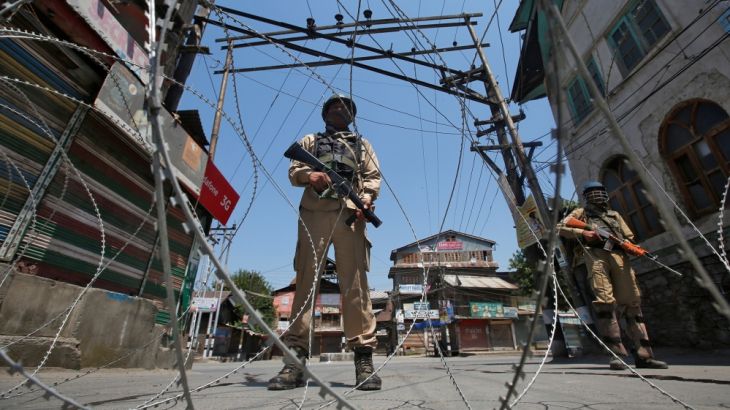
India’s 2019 unilateral revocation of Article 370—removing Jammu and Kashmir’s special status—was another major turning point. This constitutional change stripped away the protections that had preserved the region’s unique demographic and cultural identity. Previously, non-Kashmiris could not purchase land in the region, preserving the identity of Kashmiris. Now, that safeguard is gone.
Pakistan perceives this move as a step toward complete demographic engineering, and one that echoes earlier actions taken in Jammu in 1947. At that time, an orchestrated massacre resulted in the deaths of over 100,000 Muslims, changing the region's demographic profile. “This wasn’t just ethnic violence—it was a deliberate strategy,” Mustafa says. “And now, similar policies are being implemented in the Kashmir Valley and Ladakh.”
Beyond political maneuvers, brutal tactics have been reported. Young Kashmiri boys—some as young as eight—have allegedly been removed from their homes and taken to “education camps” where, according to various human rights organizations, they face indoctrination and torture. Simultaneously, the Indian government has opened the region to domestic and foreign investment, a move designed to flood the territory with outsiders and gradually erase its native character.
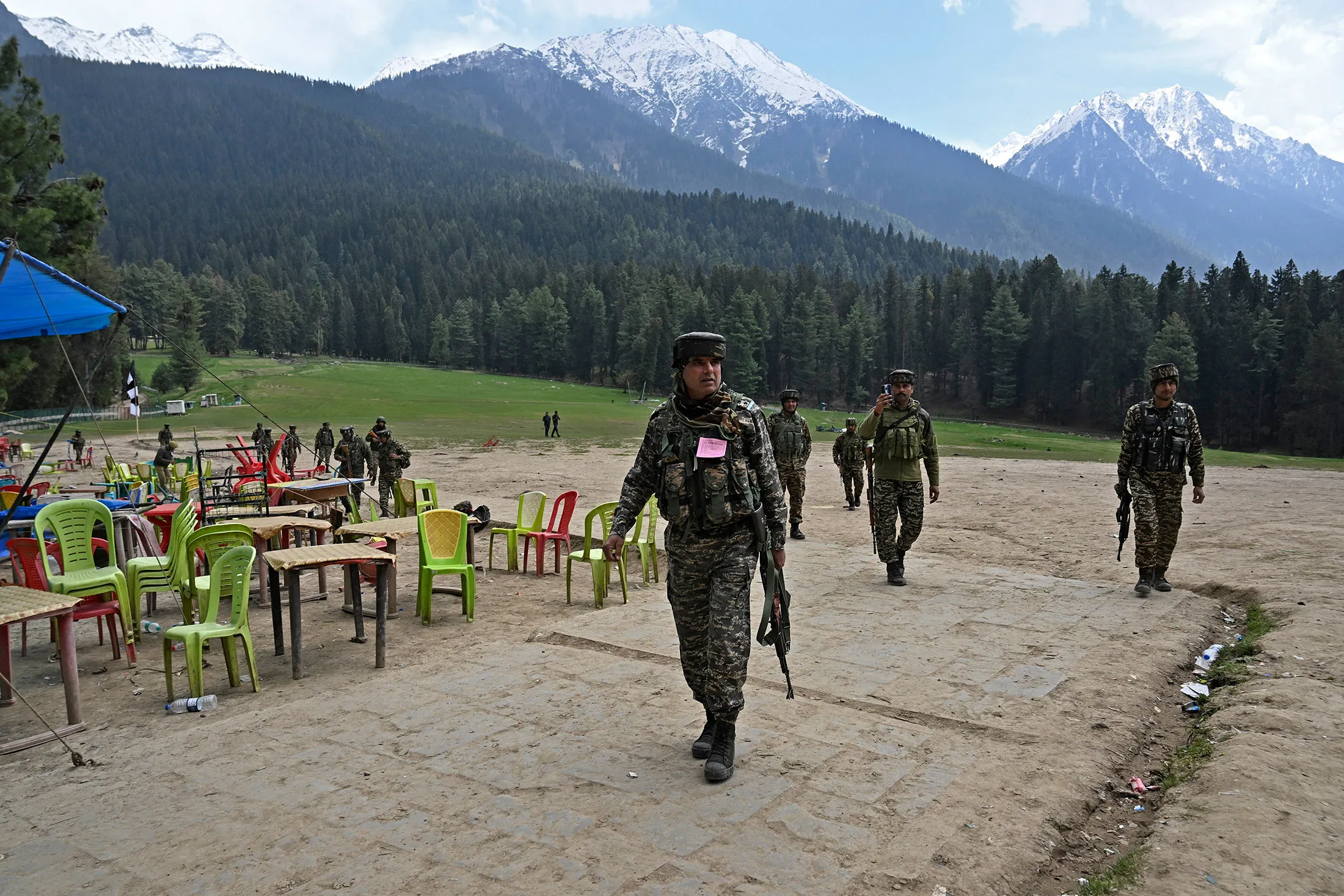
India maintains an occupation force of 800,000 to 900,000 troops in the region—a massive military presence by any standard. “Rather than subduing the population, this occupation has only deepened resistance,” Mustafa says. “The Kashmiri people are not terrorists. They are fighting for dignity, identity, and self-determination.”
India often blames Pakistan for this resistance, framing it as a cross-border conflict. But Mustafa insists, “Pakistan has never militarily intervened in Kashmir. Our support has been moral and diplomatic. The freedom struggle belongs to the Kashmiris.”
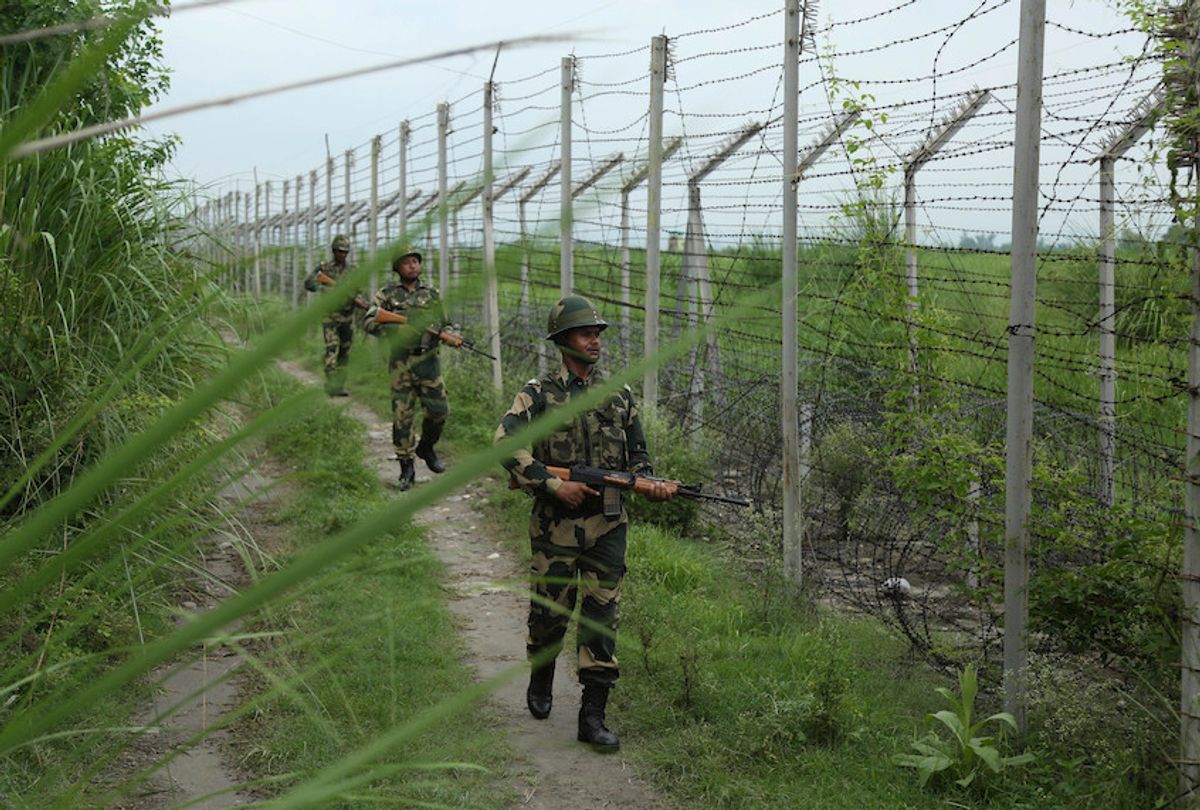
This resistance is complicated further by the situation along the Line of Control (LoC). India has erected barbed wire fences and pushed Muslim communities out of areas within 500 meters of the LoC, effectively creating a militarized buffer zone. These forced relocations have fueled grievances, while false flag accusations—like the widely questioned 2008 Mumbai attacks—have been used to justify crackdowns and international posturing.

Source: API
“I remember watching the news in 2008,” Mustafa recalls. “Within hours, Indian media already knew the terrorists’ route, the boats they came on—but not the locations of the actual attacks until much later. It was bizarre. These inconsistencies raise serious questions.”
Yet the threat to Pakistan hasn’t come only from the east. Afghanistan, too, has historically maintained a hostile posture. “From day one, Afghanistan refused to recognize Pakistan,” Mustafa notes. “In the 1960s and 70s, it even launched armed incursions. We had to train for a two-front war: India in the east, Afghanistan in the west.”
The fear of encirclement intensified during the Cold War. As the Soviet Union began consolidating Central Asia, Pakistan recognized the threat of a southern push through Afghanistan toward the Indian Ocean. “That’s why we aligned with the U.S. in defense pacts,” he explains. “It wasn’t ideological—it was about survival.”
During the Soviet invasion of Afghanistan in the late 1970s, that fear nearly became reality. “I was a young major at the time,” Mustafa recalls. “If the Soviets had crossed into Pakistan, and if India joined them, we would’ve been trapped. We weren’t prepared for that kind of onslaught.”
Source: Bloomberg News
Though the Soviet Union eventually retreated, the aftermath shaped South Asia’s security landscape for decades. India, closely allied with Moscow, saw a shift in regional power dynamics. Pakistan, meanwhile, intensified its nuclear program. “After the trauma of 1971, it became clear—we needed a deterrent. India’s Pokhran test in 1974 only confirmed that.”
In the broader strategic game, Pakistan has often been portrayed as a reactive power—but its actions, as Mustafa points out, were driven not by expansionism, but existential threat. “We’re not trying to redraw borders. We just want security and sovereignty.”
Yet the strategic ambitions of regional and global players often overshadow Pakistan’s security concerns. India, backed by its growing economy and Western partnerships, has positioned itself as a regional hegemon. Its alignment with the U.S. in the Indo-Pacific strategy aims to curtail Chinese access to the Indian Ocean—an area of increasing strategic value.
“Pakistan is caught in the middle,” Mustafa concludes. “We are a nuclear power not because we wanted to be—but because we had to be. The threat is real. And so is our resolve to survive.”
Ultimately, South Asia’s volatile status quo is a product of unresolved history, asymmetrical power, and competing ideologies. Until there is a recognition of each state’s sovereignty, and a genuine commitment to regional equality, the specter of conflict will continue to loom over the subcontinent.
According to Mustafa, another troubling development occurred when Indian police officer Mr. Kurkuri—who had been investigating the attacks—was shot in the head by an unidentified gunman. His probe had uncovered possible links to cross-border activity. Despite the lack of conclusive evidence, Indian media quickly blamed Pakistan and identified a so-called “mastermind” without proper investigation.

Source: Crisis Group
A similar pattern emerged after the attack on the Pathankot airbase. Once again, Pakistan was accused, but Indian police investigations later disproved claims that the attackers had come from Pakistan. A key officer involved in the case was mysteriously shot and killed while traveling back to Delhi, further casting doubt on the official narrative.
The 2019 Pulwama attack followed the same script. India immediately blamed Pakistan without presenting clear evidence. The attack took place in a highly secured area under Indian control. Strangely, the attackers reportedly identified victims based on religion—sparing Muslims and targeting Hindus—though later reports confirmed that Muslims were among the victims. Despite the proximity of Indian forces, no immediate response or aerial surveillance was launched, raising serious questions.
India used the Pulwama incident to escalate tensions, with Indian media—largely influenced by the intelligence agency RAW—quickly calling for retaliation. This narrative, heavily amplified by the media, lacked conclusive evidence but served to fuel anti-Pakistan sentiment.
This type of media manipulation has long been used to justify aggressive policies against Pakistan and promote fear and hostility. India appears to exploit such events for political gain, painting Pakistan as the perpetual aggressor on the global stage.
Pakistan, by contrast, consistently emphasizes peace and diplomacy. However, India’s ongoing provocations and the media’s inflammatory role hinder the peace process.

Source: Politico.eu
Indian media often aligns with the state’s strategic interests, calling for punitive diplomatic actions against Pakistan. Yet such measures rarely impact Pakistan directly. Since bilateral trade is limited, any disruption mainly affects Afghanistan, which depends on trade routes through Pakistan.
India’s suspension of diplomatic missions and meetings also breaches international norms. One example is the Indus Waters Treaty, brokered by the World Bank, which prohibits upper-riparian countries from restricting water flow in ways that harm downstream nations. Attempts by India to limit Pakistan’s water access could be seen as acts of war.
In response to these provocations, Pakistan has taken several diplomatic steps—halting trade, downgrading diplomatic relations, and banning Indian airlines from its airspace. These moves intensified following India’s revocation of Article 370.
Source: Reuters
Despite this, India has continued its aggressive rhetoric. Statements from Indian leaders, including PM Modi, have implied intentions to destabilize what remains of Pakistan—further hardening Pakistan’s resolve to protect its sovereignty.
Pakistan’s defense doctrine focuses on deterrence rather than open conflict. A conventional war would be costly and unsustainable due to India’s superior numbers. Instead, Pakistan relies on a credible nuclear deterrent to maintain strategic balance. Its military is geared toward protecting national borders, while India expands its naval presence in the Indian Ocean in coordination with global powers.
Though Pakistan cannot match India in conventional military strength, it maintains a highly trained and capable air force. If the situation deteriorated beyond repair, Pakistan could resort to its nuclear capabilities—ranging from tactical to strategic weapons—to restore the balance.
Pakistan understands that its defense rests primarily in its own hands. This reality was underscored in a recent National Security Committee meeting, which confirmed that any attack on Pakistan’s sovereignty would be treated as an act of war. The country reserves the right to respond by any means necessary, including nuclear deterrence.
This firm stance was demonstrated during heightened tensions in February 2021, when Pakistan took decisive measures to defend its position. In the face of escalating threats, Pakistan remains prepared, resolute, and committed to defending its independence—regardless of external pressures.


Similar news