Spring offensive: Scenarios and strategic priorities


Editor's note: Sergey Markov, Russian political scientist, public and state figure. He is known as an active commentator on political events, often appears in the media and on television, expressing his position on issues of domestic and foreign policy of Russia. The article expresses the personal opinion of the author and may not coincide with the view of News.az.
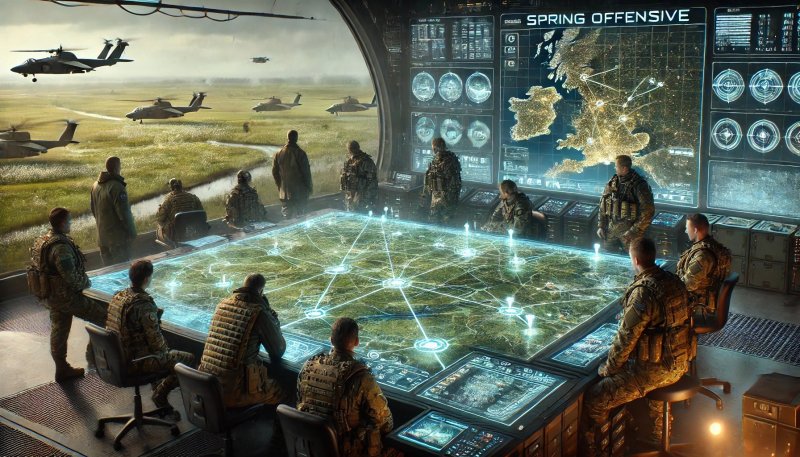
In the spring of 2025, the Russian army is expected to launch major offensive operations. Although there is broad consensus on the inevitability of such an advance, experts and analysts remain divided on its exact timing—whether it will begin in April or May—and on the direction of the main thrust. Three key scenarios are currently being discussed, each carrying distinct strategic significance.
One possible scenario involves a strike in the direction of Zaporizhzhia, which has traditionally been viewed as a critical strategic point. If successful, Russian forces could advance toward the cities of Zaporizhzhia and Dnipro. These cities play a vital role in Ukraine’s defense architecture, and their loss would deliver a significant blow to the Ukrainian Armed Forces. A breakthrough into central Ukraine, particularly into regions like Dnipropetrovsk, could create conditions for applying further pressure on administrative and logistical hubs, potentially altering the overall balance of power in the conflict.
Another option under consideration is a renewed offensive toward Pokrovsk. In 2024, Russia achieved noticeable successes in this area. Should Moscow decide to concentrate its efforts there again, a victory could result in the liberation of a significant part of the Donetsk. Strategically, this would help reinforce Russia’s positions in Donbas. However, the distance to major cities and key Ukrainian infrastructure would remain considerable, meaning this direction would represent a limited campaign focused more on securing Donbas than on dominating the entirety of Ukraine.
A third scenario involves an offensive in the southern part of the Kharkiv region. In this case, the objective would not be Kharkiv itself, but rather the cities of Sloviansk and Kramatorsk. Like the Pokrovsk option, this plan centers on the struggle for Donbas. Capturing these cities would strengthen Russian control over the region, but the operation would still remain limited in both territorial reach and strategic depth, as it does not extend to Ukraine’s central regions.
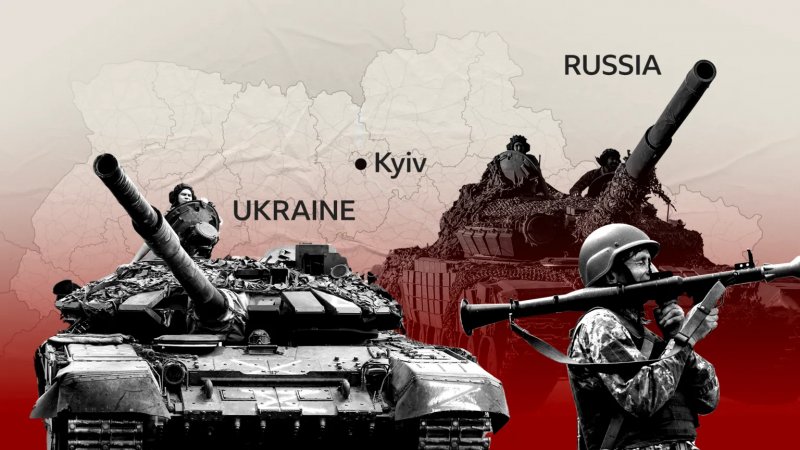
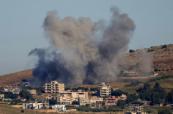
Image: BBC
As for Russia’s broader strategic goals in the spring of 2025, if peace talks were to collapse, many analysts believe Moscow would focus on consolidating the territories it already controls. In this context, the primary objective would be to secure the regions that have been formally incorporated into the Russian Federation. Such a strategy would serve several purposes. First, it would allow Moscow to solidify its gains and build a long-term presence, establishing political and military stability in the newly integrated areas. Second, it would help set the stage for renewed negotiations. From the Kremlin’s perspective, a successful military campaign that strengthens Russia’s hold on these regions could be used as leverage at the negotiating table. The liberation of the DPR, in particular, is seen as a key prerequisite for returning to diplomacy, with Moscow potentially open to compromise-based discussions.
The spring offensive is thus shaping up to be a complex and multi-dimensional operation. The timing and direction of the main attack remain subjects of speculation, but Zaporizhzhia stands out as the most strategically impactful direction—one that could shift the overall dynamics of the war in Ukraine. At the same time, alternative routes such as Pokrovsk and the southern Kharkiv region remain relevant, as they offer the possibility of localized gains in the ongoing struggle for Donbas.
In the event that peace negotiations fail, Russia is likely to aim at reinforcing its hold on already annexed territories and preparing the ground for future talks. Moscow has signaled its willingness to consider a ceasefire, but under strict conditions. Chief among them is the demand that any truce must not be used by the West to rearm Ukraine or to rescue the Ukrainian military from its current state of crisis following months of heavy fighting.
For this reason, Moscow is not prepared to accept the unconditional ceasefire currently proposed by the United States and Europe. There is a strong likelihood that peace talks in the spring will prove unsuccessful. If so, spring and summer will likely see renewed Russian military operations. The results of these offensives will provide a clearer picture of how much the Russian army has strengthened, how much the Ukrainian forces have weakened, and whether the balance of power on the front lines has shifted.
Based on the outcomes of these campaigns, a new round of negotiations could be expected in the fall or winter of 2025.
(If you possess specialized knowledge and wish to contribute, please reach out to us at opinions@news.az).


Similar news