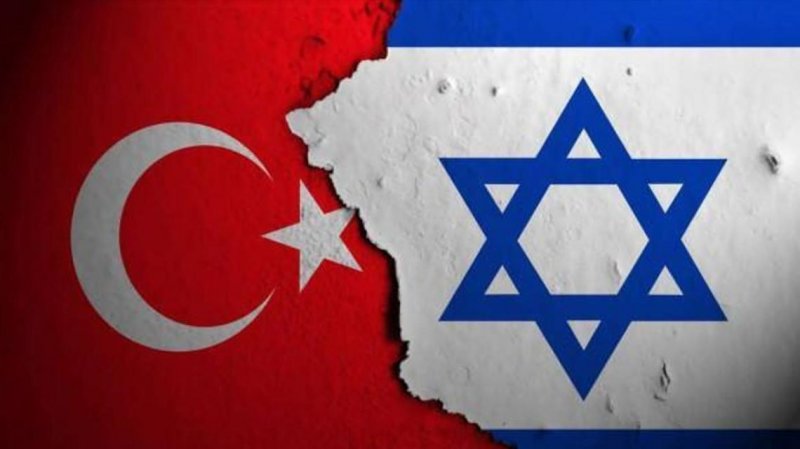
Syria could ignite a Türkiye-Israel clash—Is the U.S. ready?


Editor's note: Teymur Atayev is an Azerbaijani publicist, historian, political scientist, and host of the program "Aspects of Foreign Affairs" on the Azerbaijani CBC TV channel (broadcasts in Russian). The article expresses the personal opinion of the author and may not coincide with the view of News.Az.
Undoubtedly, amid the formation of a new world order unfolding before our eyes, the relationship between the United States and Türkiye stands out as one of the key nodes of global geopolitics. It is precisely in this context that Washington’s renewed consideration of allowing F-35 fighter jet deliveries to Ankara should be viewed.
Moreover, this development is accompanied by discussions around lifting CAATSA (Countering America’s Adversaries Through Sanctions Act) restrictions on Türkiye—provided that Ankara fully abandons the Russian-made S-400 air defense systems it previously acquired. Reports even suggest the U.S. has expressed willingness to receive the S-400 systems at its Incirlik Air Base. As a reminder, U.S. sanctions were imposed on Türkiye in 2019 due to its purchase of the S-400s, resulting in Türkiye's exclusion from the F-35 program—a move the Turkish authorities described as both unfair and unlawful.
According to Turkish sources, this recent thaw in bilateral relations was discussed during a meeting held just days ago between Turkish Foreign Minister Hakan Fidan and U.S. Secretary of State Marco Rubio. Following the talks, both sides reportedly demonstrated their political will to overcome existing obstacles, aligning with Fidan’s earlier characterization of the United States as “a key strategic partner of Türkiye” and his expression of hope that the Trump administration would resolve ongoing issues—particularly the CAATSA-related sanctions.
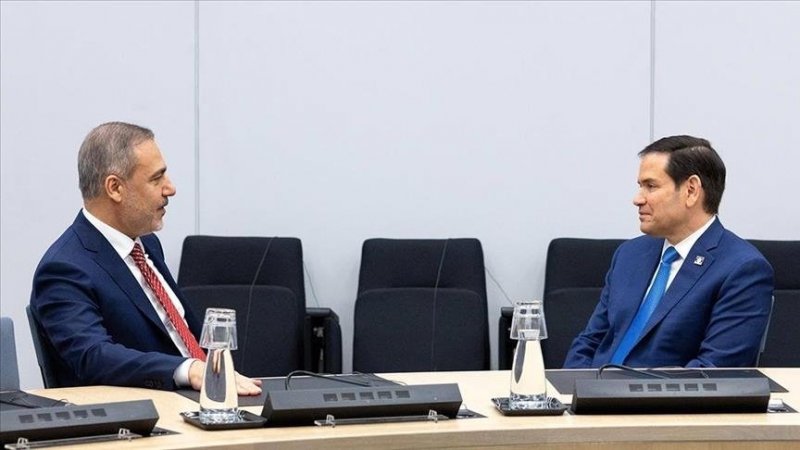 The top Turkish and US diplomats met in Brussels on March 3, 2025. Photo: Turkish Foreign Ministry
However, while this narrative focuses on U.S.-Türkiye relations, several analysts suggest it is just one component of a broader geopolitical package, particularly as it relates to the evolving situation in Syria—where, in addition to Türkiye and the United States, Israel is emerging as a prominent factor.
In this light, experts point to recent reports indicating that Türkiye is considering establishing a military training base in Syria “to enhance the combat capabilities of the Syrian army.” Turkish sources underscore that Ankara views the preservation of Syria’s territorial integrity as a top priority, along with the extension of government control across the entire country and the restoration of peace and security—developments that are of “great importance to Türkiye.”
It is worth noting that Syrian President Ahmed al-Sharaa made his first official overseas visit to Türkiye this past February. Following the establishment of a transitional government in late March, Ankara welcomed this step as a demonstration of the Syrian leadership’s commitment to a “Syrian-led and Syrian-owned political transition process based on an inclusive approach.” Türkiye also declared continued support for this process, viewing it as essential to achieving peace and stability in Syria. In line with this, Ankara has called for the unconditional lifting of sanctions on Syria and the launch of reconstruction efforts.
At the same time, many observers have highlighted Israel’s fundamentally different approach to this issue. Israel continues to maintain a military presence in Syria, holding positions it has occupied since early December 2024. Last month, major international media outlets reported that Israel had been lobbying Washington to allow continued operation of Russian military bases in Syria—arguing that this would help “weaken Türkiye’s growing influence in the Middle East.” Israel has also informed Washington of the potential threat posed by the new Syrian leadership, which it claims is “backed by Türkiye.” According to some sources, Israel opposes the U.S. stance that NATO-member Türkiye serves as “the best guarantor of Israel’s security.”
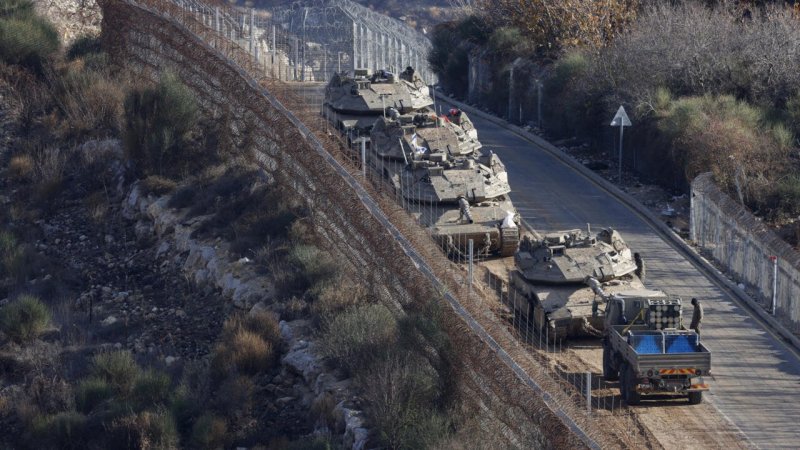 Israeli tanks take position on the border with Syria on the day Benjamin Netanyahu said he ordered the seizure of a buffer zone. Photo: Jalaa MAREY / AFP
Interestingly, a recent list of U.S. demands submitted to Damascus on March 30—intended as conditions for easing sanctions—omitted the previously stated requirement that Russia be denied access to its military facilities in Tartus and Khmeimim.
Against this backdrop, the Israel Defense Forces (IDF) have continued to strike military targets at Syrian bases, stating that these operations will persist “to eliminate any threat to Israeli citizens.” Damascus, for its part, has sharply condemned the airstrikes and shelling by Israeli forces in southern Syria in late March, calling them a “dangerous escalation” and a “flagrant violation of international law and Syrian sovereignty.” Meanwhile, Turkish President Recep Tayyip Erdoğan recently declared that Türkiye would take “necessary steps to influence Israel’s policy on Syria and ensure it adheres to international law.”
Just three days ago, Israeli sources reported that the Prime Minister’s Office was preparing a new security cabinet meeting focused specifically on Türkiye’s presence in Syria. This followed reports that the Syrian military had handed over a base in the Tadmur (Palmyra) area of Homs province to the Turkish Armed Forces in exchange for economic, military, and political assistance—news that has sparked “serious concern” in Israel.
On April 1, Israeli officials further voiced alarm over a “troubling trend” in Syria, citing the recent release of all Hamas and Islamic Jihad activists previously detained under Bashar al-Assad’s rule. A senior official from Israel’s security services described President Ahmed al-Sharaa as “an enemy, not a dialogue partner”—an “Islamist in a suit and tie” attempting to sell the West a new image while allegedly working to undermine Israeli security.
These developments are more than enough to illustrate just how divergent Türkiye and Israel’s views are regarding Syria. Moreover, the United States appears to play a subtle, yet significant role in shaping the dynamics—visible to some, implicit to others. Türkiye and Israel also differ fundamentally in their visions for Syria’s political structure. Israeli Foreign Minister Gideon Sa’ar stated in February that Israel envisions a “stable” Syria only if it is federalized. This stands in direct contrast to President al-Sharaa’s stated commitment to restoring “a unified Syria governed by a single central authority.”
Türkiye, for its part, has welcomed the formation of the new Syrian government and reaffirmed its intention to support a “comprehensive and inclusive political process in Syria as one of the pillars for achieving peace and stability.” President Erdoğan also remarked that forces attempting to provoke ethno-religious conflict in Syria to sow instability for their own purposes would ultimately fail—an indirect message that many analysts interpreted as a veiled warning to Israel.
In light of recent developments, some media outlets are fueling speculation about a potential direct military confrontation between Türkiye and Israel in the near future. This narrative was further amplified by a statement reportedly made by a “senior official in Israel’s defense ministry,” who described such a clash as “inevitable” on Syrian soil.
Nevertheless, given that President Trump declared at the start of his second term that one of his top priorities is to bring peace to global conflict zones, it is unlikely the White House would sit idly by in the face of escalating tensions between Türkiye and Israel. At this historic juncture, it appears Washington is already engaged in behind-the-scenes talks with all key stakeholders in the Syrian file in an effort to prevent the armed escalation that certain actors seem intent on provoking.
In this broader context, the recent revival of discussions between Washington and Ankara over F-35 deliveries and lifting CAATSA sanctions appears anything but coincidental.
(If you possess specialized knowledge and wish to contribute, please reach out to us at opinions@news.az).


Similar news