Is Rome becoming India’s new gateway to Europe?


Editor’s note: Zaur Nurmamedov is a journalist and a graduate of the Faculty of Political Science at the Academy of Public Administration under the President of the Republic of Azerbaijan (1993–1999). He previously served as first deputy editor-in-chief of the Vesti.Az news portal (2009–2023). The views expressed in this article are his own and do not necessarily reflect the position of News.Az.
The results of Indian Prime Minister Narendra Modi’s visit to Italy continue to be actively discussed in Rome, New Delhi and European capitals. Formally, the visit centred on bilateral talks between Modi and Italian Prime Minister Giorgia Meloni. In substance, however, it went far beyond a routine diplomatic agenda.
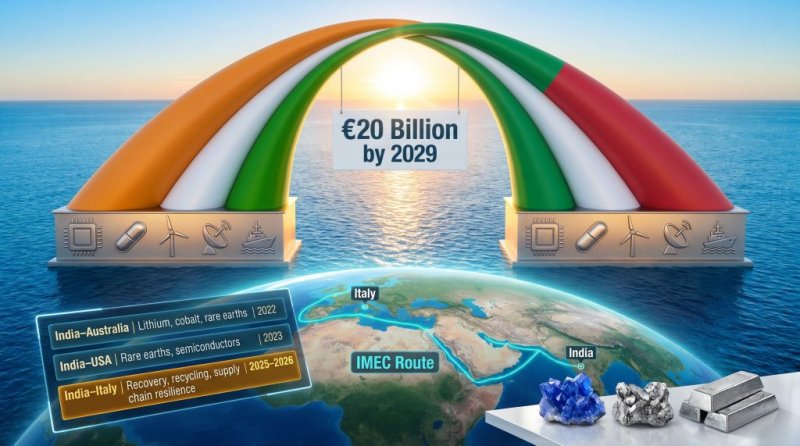
India and Italy are moving into a new phase of relations by elevating their partnership to the level of a special strategic partnership. This means the two countries intend to expand cooperation not only in trade, but also in logistics, technology, maritime transport, critical minerals, education, agriculture, the defence industry and new global transport routes. According to Reuters, the two sides aim to increase bilateral trade from more than 14 billion euros in 2023 to 20 billion euros by 2029.
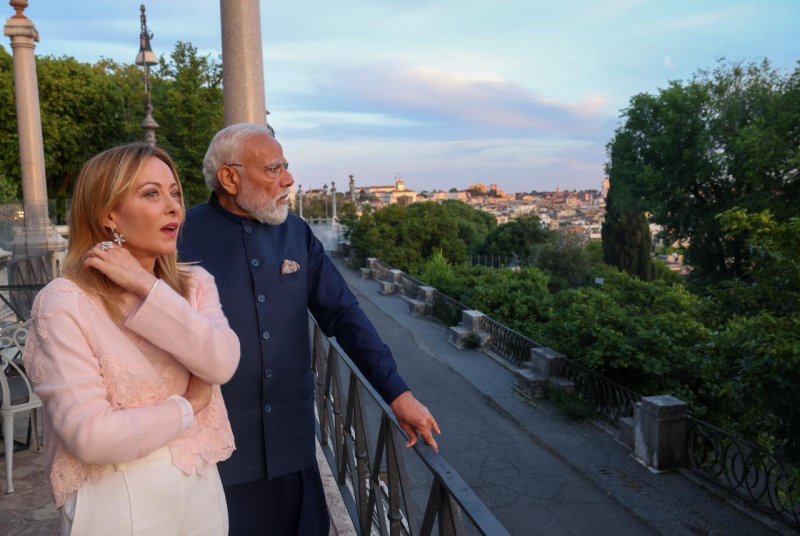
The main feature of this visit is that it highlights India’s evolving role in global politics. New Delhi no longer seeks to be viewed solely as a large market or a regional power in South Asia. It is increasingly promoting its own model of international connectivity, positioning itself as an independent centre of power between the West, the East, the Middle East and the Global South. Italy occupies a special place in this strategy. It is not only one of the largest economies in the European Union and a member of the G7, but also a country located at the heart of the Mediterranean. Through Italy, India can secure a more stable gateway to European markets, while Rome can strengthen its role as a transit and industrial hub between Europe, Asia and the Middle East.
At the centre of the talks between Modi and Meloni is the India–Middle East–Europe Economic Corridor, known as IMEC. The corridor was announced in 2023 as a strategic infrastructure initiative designed to connect India with Europe via the Gulf states. Its importance has grown amid instability along traditional maritime routes, tensions in the Middle East, attacks on shipping, competition around the Suez Canal and broader rivalry among major powers over supply chains. For India, IMEC offers an opportunity to reduce dependence on established routes and speed up access to European markets. For Italy, it presents a chance to become one of the main European entry points for the corridor.
Italy has long sought to reassert its role as a central player in the Mediterranean. Giorgia Meloni’s government views the region not only through the lens of migration and security, but also as a space for trade, energy, port infrastructure and industrial integration. If IMEC is implemented in full, Italian ports and logistics hubs could gain a new role in trade between India, the Middle East and Europe. This is particularly significant at a time when European countries are seeking alternative supply routes and aiming to reduce vulnerability to geopolitical shocks.
For India, the partnership with Italy also fits into a broader diversification strategy. New Delhi maintains relations with Russia, expands cooperation with the United States, works closely with Gulf states, strengthens ties with Japan, France and Germany, and at the same time seeks to avoid rigid dependence on any single bloc.
India does not aim to be a junior partner to the West, China or Russia. Its goal is to become an independent centre capable of engaging with all sides while acting in accordance with its own national interests. In this context, Italy is a convenient and promising partner: European, industrially advanced, politically influential, and relatively flexible in its approach.
The economic component of the visit is no less significant than the political one. The target of increasing bilateral trade to 20 billion euros by 2029 shows that both sides are seeking to give the relationship a more practical and measurable dimension. For Italy, India represents a vast market with a growing middle class and rising demand for technology, industrial equipment, luxury goods, mechanical engineering, agrotechnology and infrastructure solutions. For India, Italy offers access to technology, investment, engineering expertise, industrial design, food-processing know-how and European manufacturing standards. If cooperation expands in logistics, maritime transport and critical minerals, trade could grow not only in volume but also in quality.
Critical minerals are becoming an especially important area of cooperation. The world has entered a period of intense competition for resources needed for electric vehicles, batteries, semiconductors, defence industries, renewable energy and digital infrastructure. Lithium, cobalt, nickel, rare earth elements and other strategic materials are becoming the foundation of the future economy. Europe is seeking to reduce dependence on China, while India aims to integrate into emerging supply chains not as a peripheral actor, but as an industrial and technological centre. Strengthening cooperation on critical minerals therefore adds a more strategic dimension to the India–Italy partnership.
The defence-industrial component is also significant. Both sides are exploring deeper cooperation in defence production, technology and potential joint development projects. For India, this aligns with its broader push to localise defence manufacturing and reduce import dependence. For Italy, it provides an opportunity to strengthen the position of its defence and aerospace industries in one of the world’s largest markets. Such cooperation could also expand Italy’s role in the Indo-Pacific, where European countries are increasingly seeking engagement without direct confrontation.
Technology and education are emerging as key elements of the new agenda. Cooperation in higher education could strengthen links between universities, research centres, engineering schools and industry in both countries. India seeks talent, technology and access to advanced scientific ecosystems, while Italy is looking for new markets, skilled professionals, research partnerships and opportunities in a fast-growing Asian economy. In the long term, educational and scientific ties may prove as important as trade agreements, as they provide a stable foundation for technological cooperation.
Agriculture is another area of potential cooperation that may appear secondary but is strategically important. India is one of the world’s largest food producers, while Italy has strong expertise in agrotechnology, food processing, irrigation systems, branding and quality control. Joint projects could cover sustainable farming, storage, processing, food security and climate adaptation. At a time when food security is increasingly treated as a strategic issue, this sector carries growing importance.
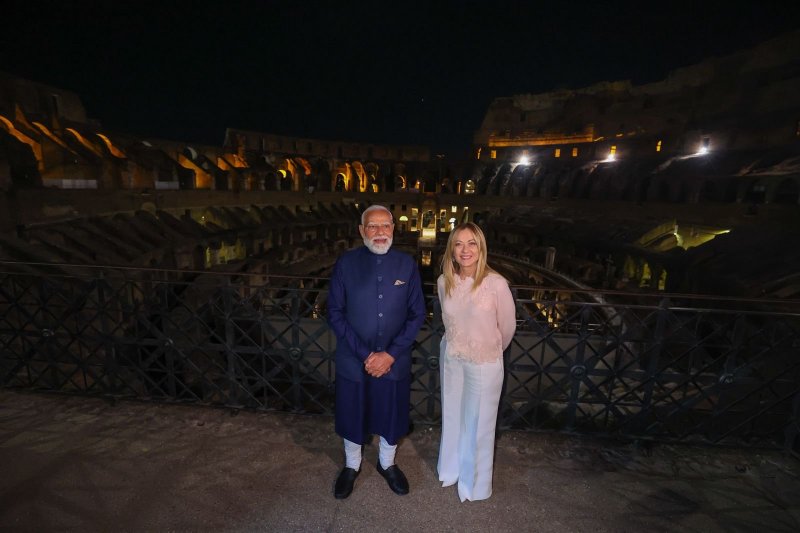
The political impact of the visit is reinforced by the personal dynamic between Modi and Meloni. Their interaction has attracted considerable attention in international media. While personal diplomacy does not replace strategic interests, it can facilitate decision-making and create a more favourable environment for agreements. In the case of India and Italy, political chemistry appears to complement converging national interests.
For the European Union, the implications are also significant. Italy could emerge as one of the key advocates of deeper EU cooperation with India. Europe needs new partners in Asia amid competition with China, tensions involving Russia and the need to restructure supply chains. India, in turn, seeks access to European technology, capital, markets and political support. If Rome succeeds in using its relationship with New Delhi to advance a broader EU–India agenda, Italy would strengthen its position within the bloc.
Modi’s visit to Italy illustrates how the emerging global economy is increasingly organised around corridors, ports, technologies and strategic resources. This is not only about trade in goods, but also about control over routes, data, energy systems, industrial chains and political alignments. In this evolving system, India seeks to act not as an object of external strategies, but as one of their architects.
Italy, for its part, is aiming to position itself not only as part of European policy, but also as a bridge between Europe, the Middle East and Asia.
As a result, the implications of the Modi–Meloni meeting could be long-term. If the special strategic partnership is translated into concrete projects, India and Italy could establish one of the most promising cooperation formats between Asia and Europe. IMEC, the 20 billion euro trade target, critical minerals, maritime logistics, education, agriculture and defence industry cooperation all form part of a broader strategic picture. Rome and New Delhi are seeking to build a new bridge between regions that will help shape global trade, energy and geopolitics in the 21st century.
(If you possess specialized knowledge and wish to contribute, please reach out to us at opinions@news.az).


Similar news