The future of the ruble: what awaits the Russian currency in the coming months? - INTERVIEW


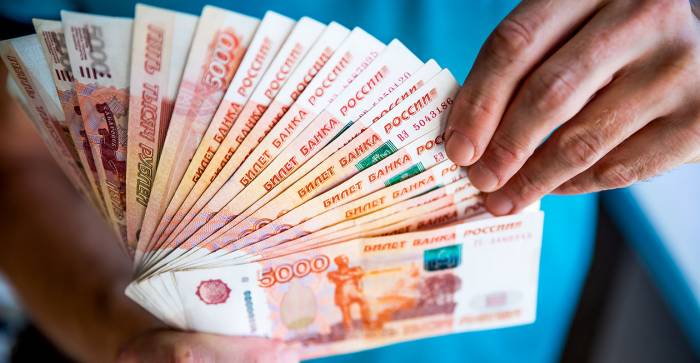
Photo: iStock
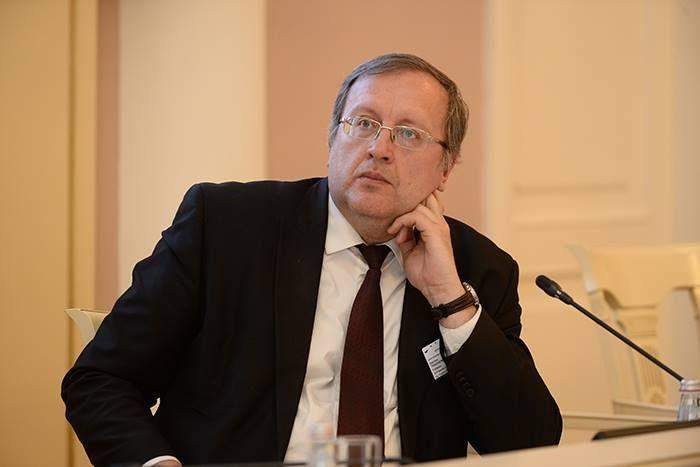
An interview by News.Az with Doctor of Economics, Professor at St. Petersburg State University, and Russian political scientist Stanislav Tkachenko.
- In your opinion, what factors were decisive in the sharp decline of the ruble's exchange rate in recent weeks?
- The factors that influenced the sharp negative dynamics of the ruble's exchange rate against global currencies can be divided into two categories: fundamental and short-term. The main fundamental factor weakening the ruble today is the sharp increase in budget expenditures to achieve the objectives of the Special Military Operation. It would be incorrect to consider only the growth of military procurement or expenditures on maintaining the armed forces.
Significant budget funds are allocated to tasks such as import substitution, the expansion of production capacities in the defense sector, and increased wage expenditures across the national economy due to a record-high level of employment and minimal unemployment. The Russian economy is being infused with liquidity, and this kind of "monetary overhang" negatively affects the ruble's exchange rate.
Among long-term factors, we should also consider the sanctions war waged by the West against the Russian economy and finances, which has complicated traditional business operations. As a result, the increase in non-productive costs within the economy affects the national currency's exchange rate.
As for short-term factors, some are overtly speculative or take the form of special operations by Russia's adversaries, carried out on trading platforms in unfriendly states, to which the Russian monetary authorities, represented by the Central Bank of Russia, currently have virtually no access.
- How significantly have sanctions against Gazprombank affected Russia's financial system and its ability to finance government expenditures?
- These sanctions are an example of a short-term negative factor for Russia's financial system and the exchange rate of its currency. Russia used Gazprombank to conduct a wide range of settlement operations for export-import transactions. Funds credited to this bank by Russian exporting companies were later transferred to the state budget in the form of tax payments or used by private companies—clients of Gazprombank—to finance their activities.
A substantial portion of the currency supply on Russia's domestic financial market previously flowed through this channel. Its partial blockade, caused by U.S. sanctions, has created certain difficulties for the entire Russian financial system. However, it is important to note that Russian businesses, in this case, faced inconveniences that can be overcome by establishing alternative financial channels outside Gazprombank. Judging by recent statements from Hungary's Foreign Minister, whose country is a major partner of Russia in the energy sector and conducted its transactions through the aforementioned bank, new settlement routes have already been established, minimizing the negative impact of these sanctions on both Hungary and Russia.
- How do you assess the actions of the Russian Central Bank in halting the purchase of foreign currency? How effective are such measures in strengthening the ruble?
- These measures are significant for the Russian foreign exchange market and have undoubtedly helped to alleviate the panic that gripped market players, as well as some Russian citizens, last week. The Russian Central Bank was one of the largest buyers of foreign currency in the national economy, and its withdrawal from this segment of the market has reduced demand for certain currencies (primarily the U.S. dollar and the euro).
As a result, we are already seeing a noticeable appreciation of the ruble against these currencies. Between December 2 and 4 alone, the ruble's exchange rate against the U.S. dollar on the over-the-counter market rose by nearly 7%, while the growth rate against the euro was even higher. This demonstrates the effectiveness of the measures taken by the Bank of Russia. It is essential to remember, however, what has been noted above—even the most decisive support measures by the Central Bank cannot entirely mitigate the negative impact of long-term factors that adversely affect the ruble's exchange rate.
- Considering the rise in defense spending and inflationary pressures, how likely is it that the Russian economy could overheat?
- This is a highly relevant scientific and practical issue widely discussed within Russia’s expert community and business circles. Traditionally, inflation is considered to lead to economic cooling in the medium term, as it reduces business investment activity and slows economic growth. Currently, "overheating" in the Russian economy is only evident in certain sectors, the main one being the labor market. With Russia demonstrating the highest employment level in its history and record-low unemployment, it has become extremely difficult to align wage growth with productivity increases. Russian companies are forced to raise labor costs to maintain production capacity and their market positions.
Naturally, this leads to both wage growth and rising inflation. At the same time, Russia currently lacks typical examples of economic overheating, such as an investment boom or a surge in large-scale industrial or transport-logistics projects by private businesses. Therefore, the main issue facing the economy today is not overheating but the lag in productivity growth compared to wage increases.
- How will the ruble's decline impact the standard of living in Russia and the future dynamics of consumer prices?
- Thanks to the already implemented and highly effective measures by the Government and the Bank of Russia to dedollarize the national economy, the negative impact of the ruble's depreciation against leading global currencies is less pronounced now than during similar crises in 1998, 2008, and 2014. At that time, exchange rate depreciation was the main driver of inflation spikes in the domestic market. Such a scenario is now unlikely. The Russian economy has significantly "decoupled" from the U.S. dollar. A modest inflation increase can be expected for this reason, but it will largely be explained by speculative factors and attempts by private Russian businesses to hedge against risks associated with sharp currency fluctuations.
- What lies ahead? How will the ruble behave in the future?
- I believe the ruble will return to an exchange rate of 100 rubles per dollar and will remain at this level for a considerable period.


Similar news