Uber's strict policy in Azerbaijan: At what cost to drivers and entrepreneurs?


Photo: Shutterstock
By Asif Aydinly
Since the beginning of 2024, Uber’s taxi service in Azerbaijan has lowered ride fares for customers. This move seems logical amid growing competition, as companies aim to attract more passengers. However, following significant reforms in Azerbaijan's taxi industry, passengers' interests are increasingly prioritized over those of drivers and service providers.
Yet, there’s another side to the coin—drivers and taxi service entrepreneurs are facing serious challenges. Complaints indicate that the lower fares have negatively impacted drivers’ earnings while increasing operational costs for taxi entrepreneurs. Reduced tariffs make vehicle maintenance an overwhelming financial burden, especially following last year’s fleet upgrades, which involved the acquisition of newer, more expensive vehicles that demand higher upkeep costs.Adding to these difficulties are new regulations implemented on July 1, 2024. Under these rules, vehicles must not be older than eight years, and those imported after the specified date must be either white or red. These changes have elicited mixed reactions from service providers, drivers, and passengers. As a result, ordering a taxi in Baku has become noticeably more challenging.
The introduction of these new standards has significantly increased costs for entrepreneurs. Two years ago, a Toyota Prius could be purchased for 10,000–12,000 AZN. Now, the new requirements force them to buy newer models, with prices starting at 20,000 AZN. Meanwhile, international ride-hailing companies continue their low-price strategies, dealing financial blows to both business owners and drivers.
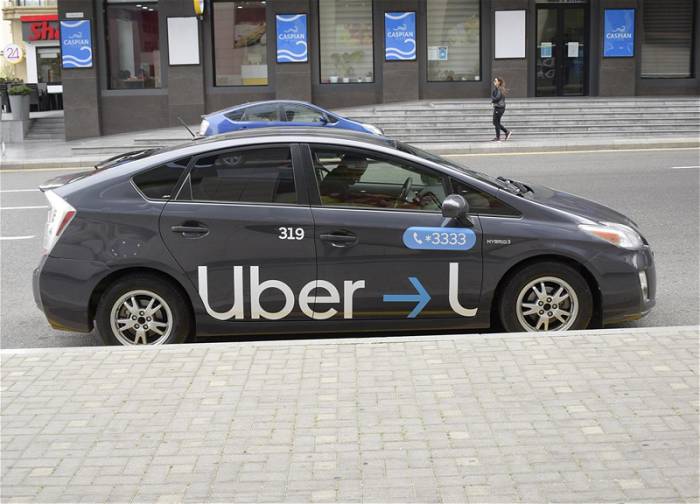
Photo: 1News.az
Entrepreneurs complain about rising expenses for upgrading their fleets. If Uber is unwilling or unable to raise ride fares, it should consider increasing bonuses for drivers. Currently, drivers receive only 135 AZN for completing 150 trips, whereas they previously earned 150 AZN for the same number of trips. Perhaps it is time to reconsider Uber’s bonus policy? Increasing bonuses to 200–250 AZN could offer much-needed support for drivers while allowing Uber to retain its customer base. After all, if Uber doesn’t want to lose its passengers, supporting drivers seems like a logical step forward.
This brings to mind an earlier interview with the head of Bolt in Azerbaijan , published under the headline: “When the number of taxis decreases, it’s natural for fares to rise.” Yet, reality has proven otherwise. The number of taxis has indeed dropped significantly, but this has not resulted in the expected fare increase.

Azerbaijan's Deputy Minister of Digital Development and Transport Rahman Gummatov Photo: AZERTAC
In July 2024, Deputy Minister of Digital Development and Transport Rahman Gummatov stated during a briefing on transportation reforms: “Previously, there were around 65,000–70,000 taxis operating in Baku, but now the number is approximately 35,000. This figure is derived from the electronic system. Regulation of the taxi industry will continue.”
Entrepreneurs rightly point out that the goal of any business is to make a profit. Without profitability, what’s the incentive? However, Uber’s policies deny drivers this opportunity. Furthermore, drivers express dissatisfaction with Uber’s rigid schedules, which become even less appealing when coupled with low incomes.
After the February 7, 2022 presidential decree “On Improving Transport Management in the Administrative Territory of Baku City,” local taxi companies proposed forming an association. This initiative aimed to strengthen the position of local companies and enable them to compete with international corporations. Representatives of local services emphasized that they were not seeking to push out foreign competitors but were merely striving for fair competition, unified rules and criteria, and equal conditions for all. The association was envisioned as a safeguard against market monopolization by international giants.
However, the new taxi regulations have failed to improve service quality noticeably. The number of taxis has decreased, and ordering a ride during peak hours has become a real challenge. Customers face long wait times and frequent cancellations, as drivers have become more selective. Securing a ride sometimes requires multiple attempts.
This situation raises serious questions. Perhaps the new rules were insufficiently thought out. Traffic congestion has not decreased, and environmental conditions have shown no significant improvement.
Both sides—passengers and drivers—deserve understanding. Low fares hurt drivers, while fare increases hit customers’ wallets. A potential compromise could involve raising driver bonuses provided by the management company. For now, much depends on Uber’s decisions.
P.S. When making decisions, Uber should consider the interests of all parties—passengers, drivers, and entrepreneurs. Entrepreneurs have invested heavily in upgrading their taxi fleets, taking significant financial risks by purchasing expensive vehicles, particularly Chinese cars, which come with the added burden of costly and hard-to-find spare parts. Meanwhile, drivers are forced to work longer hours to make ends meet, yet their incomes continue to decrease. Balancing the needs of all stakeholders is essential for creating a sustainable and equitable system.


Similar news