Ocampo, oligarchs and the battle for Armenia’s future


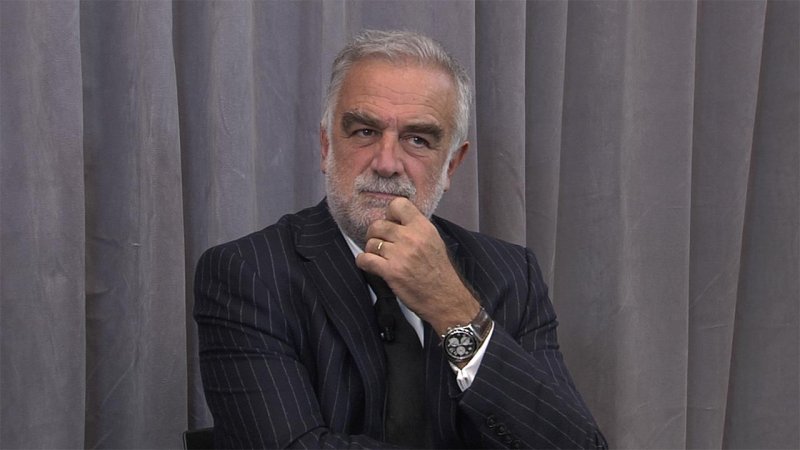
The new AnewZ documentary TARGET: Yerevan, based on secret recordings previously published by Minval Politika, effectively takes the story surrounding Luis Moreno Ocampo, the former Chief Prosecutor of the International Criminal Court, beyond the limits of an ordinary media scandal. This is no longer only about the anti-Azerbaijani campaign Ocampo has conducted in recent years under the banner of defending Armenians from Karabakh. A much broader issue now comes into focus: an attempt to exert external influence on Armenia’s domestic politics, put pressure on European institutions, mobilize the Armenian diaspora, and shape the struggle surrounding Armenia’s upcoming parliamentary elections on June 7.
According to the filmmakers, Ocampo entered the South Caucasus agenda at the moment when it became clear that the former separatist project in Karabakh, which had existed for decades under the name “Artsakh,” had effectively lost its political future after the Prague agreements and subsequent developments. The film notes that the former ICC prosecutor saw this not as the end of the conflict, but as an opportunity to become part of a new pressure campaign — one directed not only against Azerbaijan, but also against the normalization process between Baku and Yerevan.
RECOMMENDED STORIES
AnewZ reports that the documentary is built around secret recordings in which Ocampo explains his motives and methods. In these materials, he reportedly speaks about contacts, financing, and an information campaign aimed at putting European politicians under pressure and forcing them to respond to the Armenian agenda in the desired way.
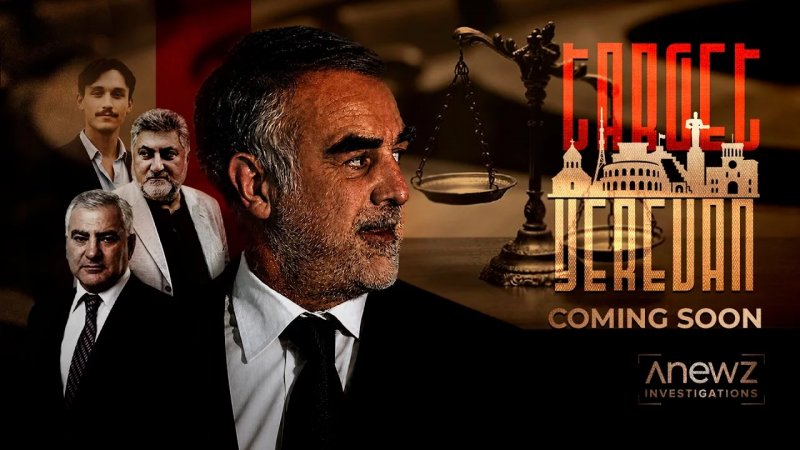
The central thesis of the film is that Ocampo’s campaign was not spontaneous human rights activism, but part of an organized political and information operation. Among the alleged financial patrons named are Russian-Armenian oligarchs, first and foremost Samvel Karapetyan. The materials also mention Eduard Melikyan, who describes Karapetyan as the “big boss” in Russia. He notes that Karapetyan is linked to political structures with virtually unlimited resources.
This context is especially important given that Samvel Karapetyan has already become one of the key figures in Armenia’s election campaign. Reuters previously reported that his Strong Armenia party is taking part in the elections as part of the pro-Russian opposition camp, while Karapetyan himself is on trial on charges of publicly calling for the overthrow of the government. He denies the accusations and says the case is politically motivated.
According to AnewZ, one of the most revealing details of the investigation is Ocampo’s recorded admission that he received money from Armenians living in Russia to pay for the work of three young specialists who handled his social media. This group reportedly promoted the hashtags COP29, Stop the Genocide, and Free Armenian Hostages, while mobilizing around 6,500 members of the Armenian diaspora every day to post on social media. The aim was not merely to create informational noise, but to trigger a response from major Western media outlets and European politicians.
Azerbaijani media had already drawn attention to this line of activity long before the film was released.
In this sense, TARGET: Yerevan shows the evolution of one and the same campaign. At first, it was aimed at discrediting Azerbaijan ahead of COP29. Then it shifted toward pressure on European institutions. Now, according to the film, its ultimate target is Armenia itself — more precisely, Nikol Pashinyan’s government. In one of its previously published reports, Report.az, citing The Center of Analysis of International Relations (AIR Center), stated that the recordings point to attempts by Ocampo’s network to interfere in Armenia’s electoral processes and influence normalization in the South Caucasus.
The main political intrigue lies in the fact that Pashinyan is currently advancing a course that objectively weakens Moscow’s traditional levers of influence in the region. Armenia is moving toward deeper relations with the West, discussing European integration, participating in new transport projects, and trying to break out of the geopolitical dependence in which it had remained for decades. Reuters reported that on May 26 in Yerevan, U.S. Secretary of State Marco Rubio and Armenian Foreign Minister Ararat Mirzoyan signed a strategic partnership agreement, as well as documents on critical minerals and the Trump Route for International Peace and Prosperity (TRIPP) transport corridor, which is expected to connect Azerbaijan with Nakhchivan and Türkiye. This approximately 43-kilometer route is of strategic importance because it reduces the dependence of regional logistics on Russia and Iran.
This is precisely why the struggle against Pashinyan goes beyond ordinary domestic political competition. His opponents accuse him of “surrendering Karabakh,” making concessions to Azerbaijan, and breaking with Armenia’s traditional allies. For Moscow, however, the problem with Pashinyan is deeper: if a peace treaty between Armenia and Azerbaijan is finalized and transport communications are opened, Russia risks losing its role as the main arbiter in the South Caucasus. The Guardian notes that Armenia’s June 7 elections are taking place against the backdrop of a struggle between Pashinyan’s course toward turning Armenia into a “bridge, not an obstacle” and pro-Russian nationalist forces, among which Samvel Karapetyan plays an important role.
The AnewZ film also notes that the European dimension of Ocampo’s campaign was supplemented by an American one. The materials mention former ambassador Ara Papian, who, according to the investigation, coordinated his actions with Ocampo and tried to use the political weight of the Armenian diaspora in the United States. Separately, the film refers to pressure on U.S. senators and the activity of structures linked to the Armenian National Committee of America (ANCA) and the Armenian Revolutionary Federation — Dashnaktsutyun. The logic of this campaign, as reported in the film, was to turn the Karabakh issue into an instrument for blocking peace agreements.
At the same time, it would be wrong to assume that dissatisfaction with Pashinyan inside Armenia is entirely artificial. It is real. Armenian society carries a deep trauma after the events of 2020 and 2023. There are tens of thousands of people for whom the Karabakh issue remains a personal tragedy. There is also the Armenian Apostolic Church, part of the old elite, former Karabakh clans, and nationalist forces for whom any compromise with Azerbaijan is seen as capitulation. But this is precisely why, as the film emphasizes, this pain becomes a convenient material for external manipulation. There is no need to create a split from scratch — it is enough to amplify already existing lines of internal conflict.
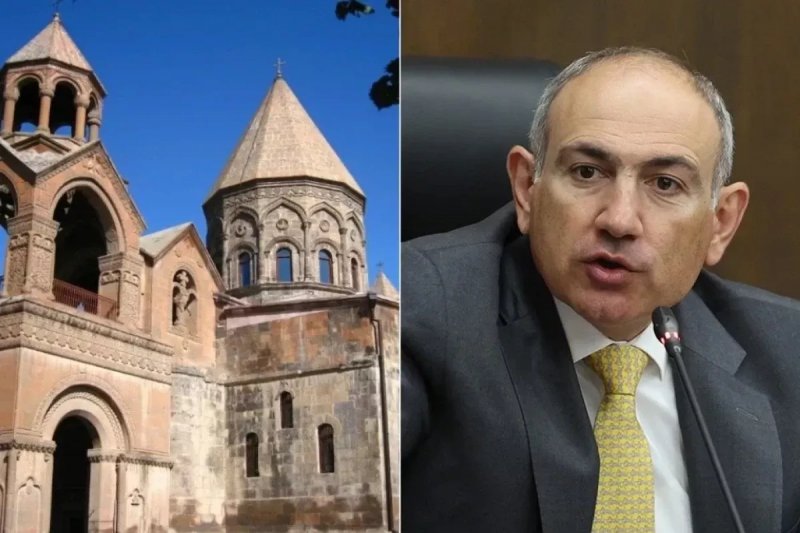
The Armenian Apostolic Church occupies a special place in this story. The investigation says Karapetyan actively financed church structures, which, according to individuals featured in the recordings, gave him influence over part of the spiritual leadership. Against the backdrop of rising political tensions, Pashinyan entered into a sharp confrontation with church figures whom his government associates with pro-Russian political mobilization. Reuters previously reported the arrest of Archbishop Bagrat Galstanyan and others in a case involving an alleged attempt to seize power; Armenian authorities stated that the case concerned preparations for actions against the government.
Thus, TARGET: Yerevan presents Armenia as the arena of a multi-layered struggle. On one level, there are the June 7 elections. On another, there is the issue of peace with Azerbaijan. On a third, there is the competition between Russia, the West, and regional players over the future architecture of the South Caucasus. On a fourth, there is an information war in which legal terminology, human rights, social media, diaspora structures, and European institutions are turned into instruments of political pressure.
The film’s main conclusion is that the target of this campaign is not only Azerbaijan. The target is Yerevan itself — its political choice, its ability to move beyond the logic of endless conflict, and its readiness to conclude a peace that changes the balance of power in the region. If Pashinyan retains power and continues his course toward normalization, the South Caucasus may receive a chance for a new transport, economic, and political reality. But if revanchist forces prevail, the region risks returning to the old model: conflict as an instrument of control, dependence as a form of security, and Karabakh as an eternal wound that no one is allowed to heal.
By Tural Heybatov


Similar news