President Donald Trump’s recent declaration that a “massive armada” is moving toward Iran was not a casual remark, but a deliberate signal. Coupled with his warning that military force remains on the table, while simultaneously expressing hope that Tehran will accept a “fair and equal” deal requiring the abandonment of nuclear weapons, Washington is clearly pursuing a strategy of maximum pressure backed by visible military force.
Will a U.S. strike on Iran deliver a quick victory — or ignite a regional inferno?
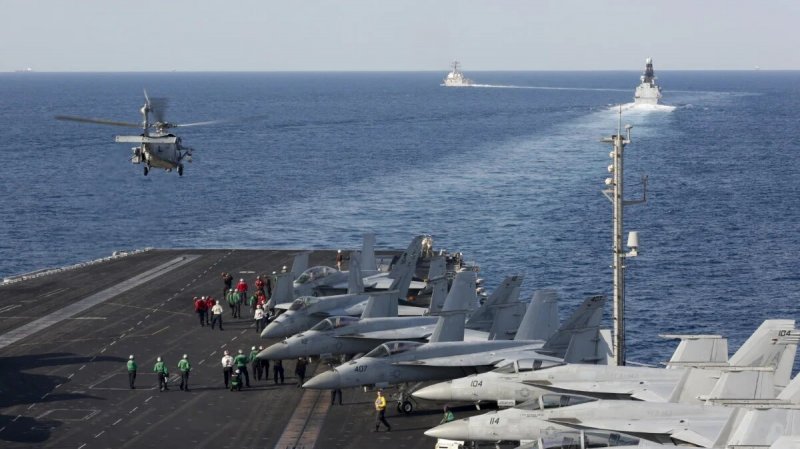
Photo: AFP
The question of whether the United States will strike Iran has rapidly become the dominant issue shaping global political discourse. Even the still-burning Russia–Ukraine war has, for the moment, slipped into the background, overshadowed by the growing possibility of a direct U.S.–Iran military confrontation. That alone says a great deal about how serious and potentially transformative such a conflict would be.
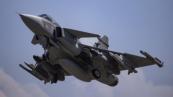
The buildup is real. Advanced F-35A fighter jets and EA-18 Growler electronic warfare aircraft, designed specifically to blind and suppress air defense systems, are being redeployed from the Caribbean to the Middle East. These are not symbolic assets. They are platforms associated with the opening phase of major air campaigns.
Yet despite the increasingly sharp rhetoric, many analysts argue that an actual large-scale war is unlikely. I find this confidence misplaced.
Iran is not Venezuela. And the Middle East is not Latin America. Comparisons to past U.S. interventions in weaker states ignore a fundamental reality: Iran is a hardened regional power with decades of experience preparing for exactly this type of confrontation.
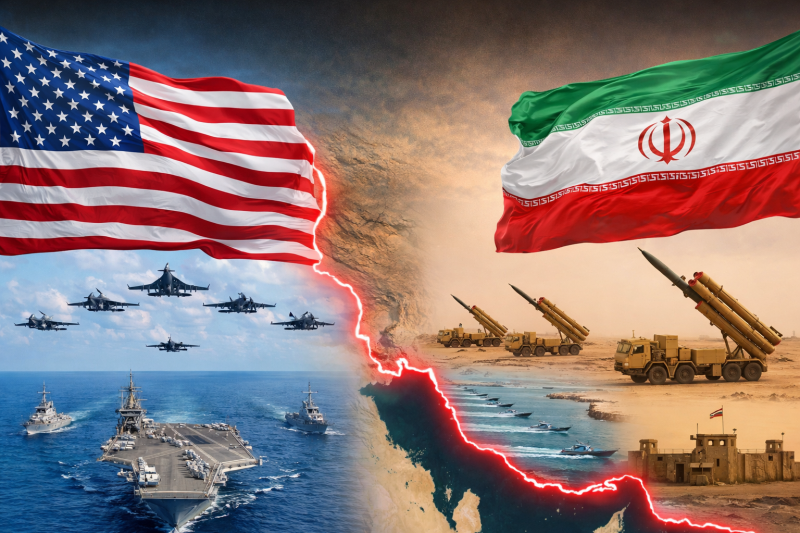 Photo: Shutterstock
Washington may be geographically distant from Iran, but it is deeply embedded across the region. American forces are stationed in close proximity to Iranian territory, and this creates an unavoidable vulnerability. According to Reuters, around 40,000 U.S. troops are currently deployed across the Middle East — nearly one-third of all American forces stationed abroad. Major concentrations are located in Kuwait, Qatar, and Bahrain.
Kuwait serves as a logistical backbone for U.S. operations, hosting key air bases such as Ali Al Salem and multiple military camps, including Camp Arifjan. Qatar houses roughly 13,500 American personnel and is home to Al Udeid Air Base, Washington’s most important air hub in the region. Bahrain hosts the U.S. Navy’s Fifth Fleet, the largest American naval installation in the Middle East, and around 9,000 U.S. troops.
Tehran has made that point explicitly. According to Iran’s state news agency IRNA, Abdollah Hajji Sadeghi, a representative of Supreme Leader Ali Khamenei in the Islamic Revolutionary Guard Corps (IRGC), warned that any attack on Iran would place all U.S. military infrastructure and allied facilities in the region under immediate threat.
This is not empty bravado. In June 2025, Iran launched missiles toward Al Udeid Air Base in Qatar. The strike was limited and largely symbolic, but it demonstrated reach, intent, and political will.
The uncomfortable truth for Washington is this: even if U.S. and Israeli air power overwhelms Iran’s air defenses and devastates key military sites, Tehran does not need to “win” in conventional terms to impose enormous costs.
Iran’s strategy has never been built around defeating the United States head-on. It is built around endurance, dispersion, and retaliation.
Yes, most experts agree that Iran would struggle to survive a sustained, combined U.S.-Israeli air campaign. Its missile stockpiles are finite. Its air force is outdated. Its economy is already under severe strain.
But war is not a spreadsheet exercise.
Once bombs start falling, Tehran’s primary objective will shift from defense to punishment. Iran will seek to make the war unbearably expensive — politically, militarily, and economically.
That means strikes against U.S. bases. It means attacks on regional allies. It means drones, missiles, and asymmetric operations across multiple fronts.
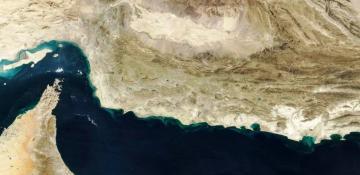
It also means the Strait of Hormuz.
Iran has repeatedly demonstrated its ability to disrupt shipping in the Persian Gulf. During the Iran–Iraq War, it mined sea lanes and attacked commercial vessels. If Tehran were to block or severely restrict traffic through Hormuz today, the consequences would be global. A significant share of the world’s oil and liquefied natural gas flows through that narrow passage. Even partial disruption would send energy prices soaring and push fragile economies toward recession.
This alone should dispel the illusion of a “quick victory.”
Another dangerous fantasy circulating in some Western commentary is the idea that limited U.S. strikes could trigger a rapid collapse of Iran’s political system or even usher in a transition to democracy.
This misunderstands Iran at a fundamental level.
The Islamic Republic is not merely a ruling elite perched above a passive society. It is a deeply embedded system with powerful institutions, extensive security organs, and millions of loyal supporters. The IRGC is not just a military force; it is an economic, political, and ideological pillar of the state.
Foreign military attack would almost certainly produce a rally-around-the-flag effect, strengthening hardliners rather than weakening them.
History offers plenty of examples. External bombardment rarely produces liberal revolutions. More often, it consolidates authoritarian power.
Could a military coup emerge? Highly unlikely. The armed forces most capable of seizing power are precisely those most invested in preserving the current order.
So what does a U.S. strike actually achieve?
At best, it could degrade specific Iranian capabilities: air defenses, missile infrastructure, and certain nuclear-related facilities. It could delay Iran’s technical progress. It could demonstrate American resolve.
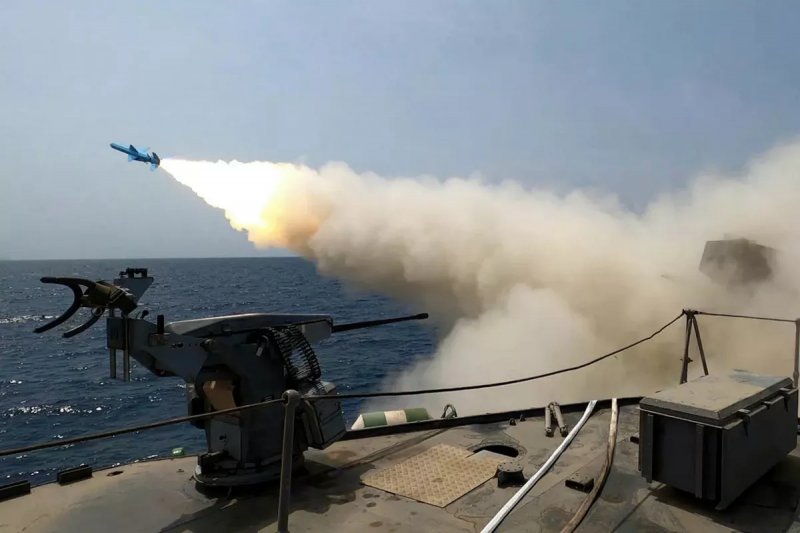 Photo: AP
But it would not eliminate Iran as a regional actor. It would not erase Iranian influence in Iraq, Syria, Lebanon, or Yemen. It would not magically produce a pro-Western government in Tehran.
What it would almost certainly do is plunge the Middle East into a new, far more dangerous phase of instability.
Israel would face intensified missile and drone attacks. Gulf states would become frontline targets. U.S. troops would operate under constant threat. Global energy markets would convulse. And diplomatic channels would collapse.
Perhaps most troubling is the sense that Washington’s current posture lacks a clearly articulated endgame. Escalation appears driven more by pressure tactics than by a coherent vision of what “success” actually looks like.
Betting that Iran will simply blink is a risky gamble.
Tehran has endured four decades of sanctions, isolation, and covert warfare. Its leadership has built an entire strategic culture around resistance. Expecting such a system to capitulate under threats alone ignores everything we know about how revolutionary states behave under siege.


Similar news