Azerbaijan–EU partnership enters a new strategic phase


The partnership between Azerbaijan and the European Union represents a relatively rare phenomenon in modern international relations. Unlike many geopolitical alignments that are built against a third party, cooperation between Baku and Brussels has largely been driven by a pragmatic understanding of mutual benefit.
Azerbaijan has never pursued membership in the European Union, nor has it attempted to attach itself to a stronger political bloc for protection or prestige. Instead, Baku has consistently promoted a model of equal and mutually advantageous cooperation based on shared interests, respect, and economic pragmatism.
For years, Azerbaijan has worked to ensure that the European Union views it not simply as another participant in the Eastern Partnership framework, but as a distinct and strategically important partner. That effort has gradually paid off. Today, many analysts argue that Azerbaijan’s importance to Europe, particularly in the fields of energy security and connectivity, may in fact exceed Europe’s importance to Azerbaijan.
If one removes the occasional political frictions caused by the influence of external actors, the relationship between Azerbaijan and the EU appears both natural and stable. The foundations of this partnership are strong, and its prospects remain promising. Europe needs reliable partners — countries that are predictable, capable of fulfilling agreements, and economically solvent. Azerbaijan fits this description well. It is a partner that contributes to European stability rather than seeking financial support from it. In today’s uncertain global environment, dependable economic partners are a rare and valuable asset.
At the same time, Azerbaijan benefits from access to a stable European market, the ability to advance its economic and political interests, and the expansion of its network of international partners. Baku has demonstrated over decades that it understands how to cultivate and maintain long-term partnerships.
The strategic significance of Azerbaijan has long been understood in European political circles, while in Azerbaijan, Europe has often served as a positive economic and institutional reference point. In recent years, relations between Azerbaijan and the EU have increasingly been described as strategic in nature. Once Azerbaijani gas began flowing to Europe through the Southern Gas Corridor, doubts about the value of cooperation with Baku largely disappeared.
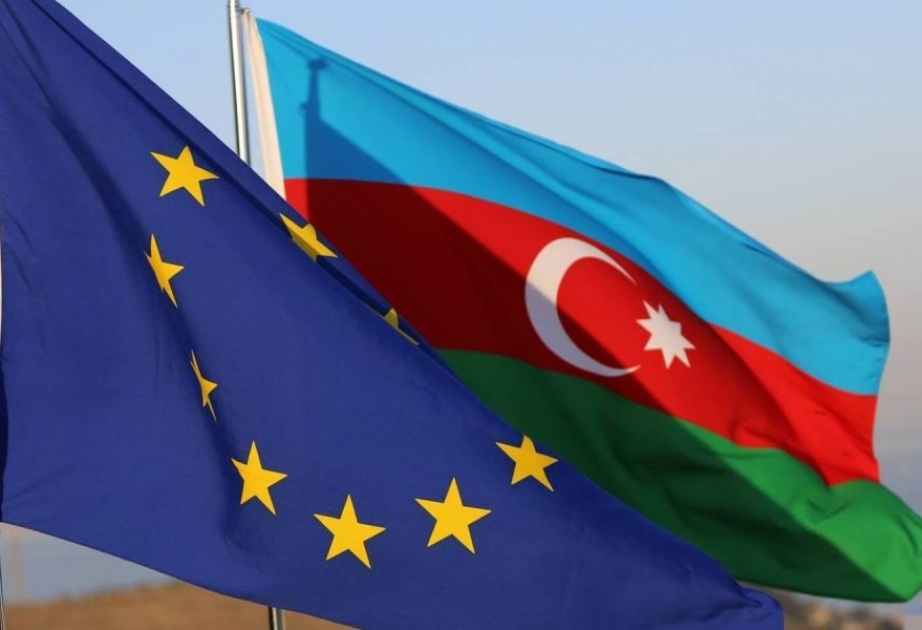
Source: Reuters
The current global context has only reinforced this reality. Geopolitical shifts have disrupted supply chains and created new vulnerabilities in the global energy system. The war in Ukraine and the renewed conflict in the Middle East have both undermined traditional energy routes and forced European policymakers to reassess their energy security strategies. Countries that had already diversified their energy supply through cooperation with Azerbaijan found themselves in a more resilient position.
This is one of the reasons Azerbaijan’s role in the European energy architecture has become increasingly visible. Today, Azerbaijan exports natural gas to 10 EU member states. More recently, supplies have begun reaching Western European markets such as Austria and Germany. Azerbaijani gas currently accounts for roughly four percent of EU imports — a modest figure when compared with the output of Russia or the Gulf states, but a significant achievement given Azerbaijan’s production scale. Importantly, no European country has withdrawn from Azerbaijani supply contracts; on the contrary, discussions increasingly focus on expanding volumes.
Energy cooperation remains the core of the Baku–Brussels relationship, but it is gradually evolving. Renewable energy and cross-regional electricity connectivity are becoming new pillars of cooperation. A major project currently under consideration involves an underwater energy cable designed to transmit green electricity from Kazakhstan and Uzbekistan to Azerbaijan, with further transmission toward Europe. If realized, this project could form part of a transcontinental energy corridor stretching from Central Asia across the Caspian Sea, through the South Caucasus, and onward to Europe.
Another initiative under development involves the transmission of green energy along the Azerbaijan–Georgia–Türkiye–Bulgaria route. Such projects demonstrate that Azerbaijan’s role is expanding beyond that of a traditional energy exporter. Increasingly, it is emerging as a critical hub linking energy producers in Central Asia with consumers in Europe.
Yet energy is not the only dimension of Azerbaijan’s strategic relevance. Transport and logistics have become equally important in a world where many traditional trade routes have been disrupted. The South Caucasus now occupies a critical position between major geopolitical fault lines. Conflicts to the north and south have complicated traditional trade corridors, increasing the importance of alternative routes that pass through Azerbaijan.

Source: euractiv
The Middle Corridor, connecting China and Central Asia to Europe via the Caspian Sea and the South Caucasus, is gaining unprecedented momentum. Container traffic along this route has grown dramatically, while demand for the Baku–Tbilisi–Kars railway continues to rise. These developments highlight the strategic importance of the infrastructure that Azerbaijan has invested in over the past two decades.
Geography alone does not create opportunity. It is the ability to strategically utilize geographic advantages that transforms a country into a regional hub. Azerbaijan has demonstrated precisely this capability. Under the leadership of President Ilham Aliyev, the country has pursued a long-term strategy of building transport infrastructure, strengthening energy partnerships, and expanding its international economic network.
Within that network, the European Union occupies a particularly important position. The recent visit of European Council President António Costa to Azerbaijan symbolically marks the beginning of a new stage in EU–Azerbaijan relations. It comes at a moment when Europe is reconsidering its geopolitical priorities and searching for stable partners in a rapidly changing world.
In this evolving environment, Azerbaijan is gradually transforming from a regional energy supplier into one of Europe’s key partners in energy security, economic connectivity, and the sustainable development of the broader Eurasian space.
By Tural Heybatov


Similar news