Why Azerbaijan is no longer vulnerable to blockades


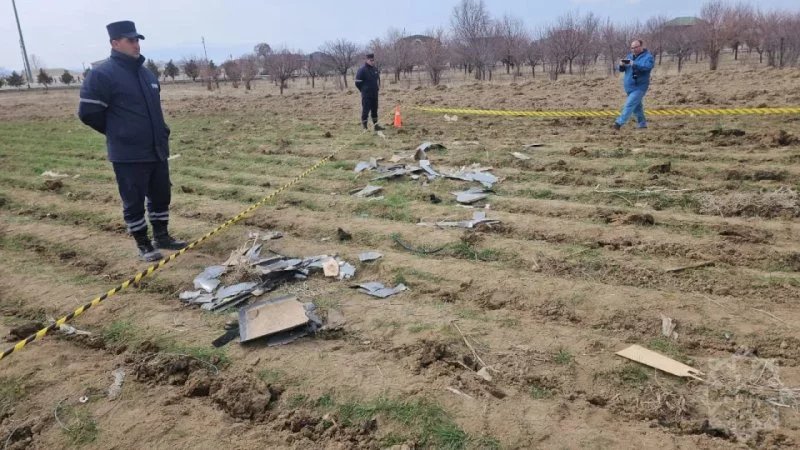
The recent drone attacks launched from Iranian territory against Nakhchivan have inevitably revived an old and painful question: could the Nakhchivan Autonomous Republic once again face isolation or blockade?
In the immediate aftermath of the attack, air and bus connections between Nakhchivan and mainland Azerbaijan were temporarily suspended. Nakhchivan Airport was closed to both domestic and international flights. At the same time, Azerbaijan shut down its southern airspace along the border with the Islamic Republic of Iran as a precautionary security measure.
These developments inevitably reminded many observers of the vulnerability that once defined Nakhchivan’s geopolitical position. For decades, the autonomous republic existed in an extremely fragile logistical environment, geographically cut off from the rest of Azerbaijan. Yet the situation today is profoundly different from the early 1990s, when Armenia’s blockade of Nakhchivan threatened the region’s very survival.
The temporary disruption of flights and bus routes has already been resolved in a pragmatic way. Azerbaijan Airlines (AZAL) began transporting passengers via a combined route: flights to the Turkish city of Igdir followed by bus transfers to Nakhchivan. The system has functioned without serious delays or disruption. How long this arrangement will remain in place depends largely on the evolving situation on the Iranian side of the border.
RECOMMENDED STORIES
For Azerbaijan, however, the issue is not merely technical or logistical. Baku has made it clear that verbal assurances from Tehran are not enough. Azerbaijani officials want to understand how such an attack could have occurred at all and whether Iran can guarantee that similar incidents will not happen again. Until those questions are answered convincingly, the sense of risk will remain.
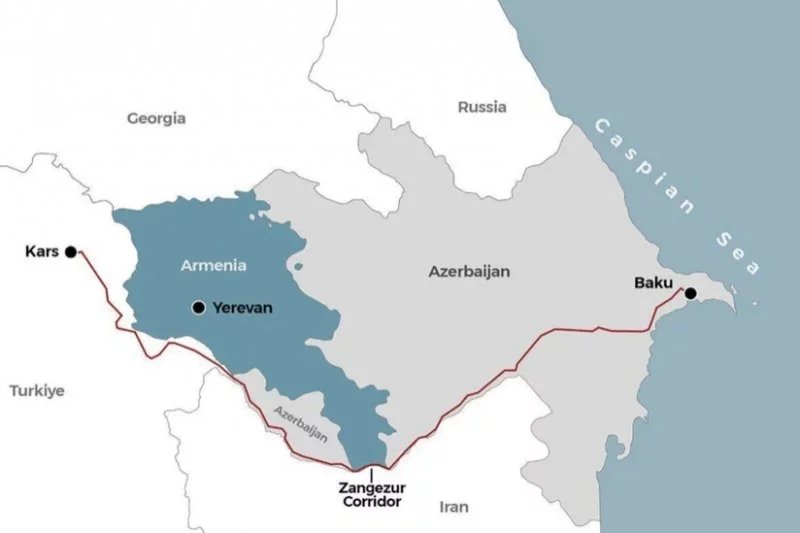
Whenever the question of Nakhchivan’s connectivity arises, attention inevitably turns to the still unrealized Zangezur corridor. Armenia had five years to fulfill its commitments under the trilateral agreement that ended the 44-day war. Yet progress has stalled. Today, the project is sometimes referred to under broader geopolitical frameworks such as the TRIPP route, a development that in many ways complicates rather than accelerates its implementation.
 Source: AZERTAC
Realistically, the question of the corridor is now tied to the broader geopolitical environment in the region. With war currently unfolding in Iran, any major infrastructure breakthrough involving Armenia appears unlikely in the near future.
In theory, Armenia could signal goodwill and propose facilitating land transit between mainland Azerbaijan and Nakhchivan. Such a move would demonstrate a willingness to build genuinely neighbourly relations. But the more relevant question today is whether Azerbaijan actually needs such assistance.
The answer is increasingly clear: not anymore.
Unlike the late Soviet and early post-Soviet years, Nakhchivan today has reliable connections with both Azerbaijan and the outside world. Air routes, road transport through Türkiye, and expanding infrastructure links have dramatically reduced the region’s vulnerability.
In the late 1980s and early 1990s, the situation was dramatically different. Nakhchivan’s blockade began even before the full escalation of the Karabakh war. During the Soviet era, the main land connection between Nakhchivan and Türkiye ran through Armenian territory. Once those routes were cut off, the autonomous republic faced a severe humanitarian and economic crisis. At that time, Baku lacked both the capacity and political stability to address the crisis effectively.
The turning point came after Heydar Aliyev returned to Nakhchivan.
On October 29, 1991, a temporary bridge across the Araz River connecting Azerbaijan and Türkiye was opened. Less than a year later, on May 28, 1992, the permanent Sadarak-Dilucu bridge was inaugurated. Symbolically named the “Umut” or “Hope Bridge,” the project was fully financed and constructed by Türkiye.
This bridge became far more than just infrastructure. Alongside it, a high-voltage electricity line was built to supply the autonomous republic with power. Through this route, Turkish humanitarian aid began reaching Nakhchivan, helping prevent a humanitarian disaster and allowing the region to break out of its isolation. Türkiye effectively became the lifeline that sustained Nakhchivan during its most difficult years, providing fuel, electricity, and critical supplies.
Today that strategic partnership continues to reshape the region’s logistics.
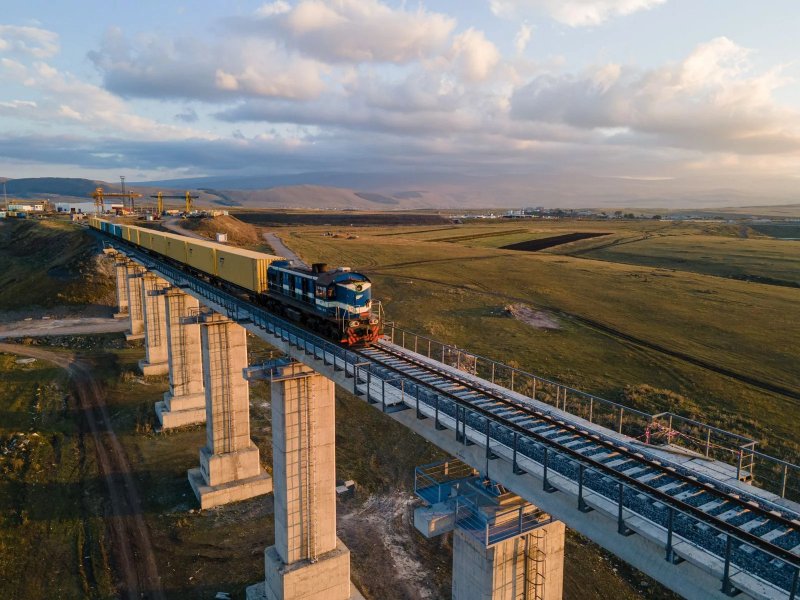
In the coming years, Nakhchivan will also gain a railway connection with Türkiye and, through that, with Azerbaijan and international transport networks. On August 22, 2025, construction officially began on the Kars–Igdir–Aralik–Dilucu railway line. The 224-kilometer railway will extend to the Nakhchivan border and is designed to carry 5.5 million passengers and up to 15 million tons of cargo annually.
The new railway is expected to become part of the broader East-West corridor. If the Zangezur corridor is eventually realized, the two routes could become interconnected. Even before that happens, however, the railway will link into the Baku–Tbilisi–Kars system, creating a longer but reliable route connecting mainland Azerbaijan with Nakhchivan.
 Source: Azerbaijan Railways
In other words, physically isolating Nakhchivan today is no longer a realistic scenario.
The same is increasingly true for energy security.
After Armenia cut off electricity lines and gas pipelines connecting Nakhchivan with mainland Azerbaijan in the early 1990s, the autonomous republic faced a prolonged energy crisis. For nearly 15 years, the region lived without natural gas.
A partial solution emerged in December 2005 when natural gas supplies from Iran began flowing to Nakhchivan via the Tabriz–Nakhchivan pipeline under a swap agreement signed the previous year. The agreement was designed to last 25 years. Iran also constructed a short Khoy–Julfa pipeline segment to facilitate deliveries, and small-scale gas supplies had actually begun even earlier, in 1992.
However, the arrangement was expensive for Azerbaijan. Tehran was reluctant to lower tariffs despite the fact that its initial construction costs had long since been recovered.
A major strategic shift occurred last year.
On March 5, 2025, the Igdir–Nakhchivan gas pipeline was officially launched during a video conference ceremony attended by the presidents of Azerbaijan and Türkiye. This new pipeline significantly reduced Nakhchivan’s dependence on Iranian gas and introduced real diversification into the region’s energy supply system.
While Azerbaijani gas traveling to Nakhchivan still passes through multiple countries and is therefore not cheap, the key issue — energy security — has now been addressed.
The memorandum on the construction of the Igdir–Nakhchivan pipeline was signed on December 15, 2020, in Ankara. The pipeline stretches 97.5 kilometers from Igdir to the Sadarak district, with 17.5 kilometers on Azerbaijani territory and 80 kilometers on Turkish territory. It has the capacity to transport two million cubic meters of gas per day, or approximately 730 million cubic meters annually, with the potential to more than double its capacity in the future.
Taken together, these developments lead to a clear conclusion.
A transport or energy blockade of Nakhchivan today is no longer feasible. Over the past three decades, Azerbaijan has systematically built the infrastructure necessary to ensure that its geographically separated autonomous republic remains connected, resilient, and firmly integrated into the economic and political space of a unified Azerbaijani state.
By Tural Heybatov


Similar news