Who are the oilmen behind Trump’s return? How shale oil fueled his political comeback


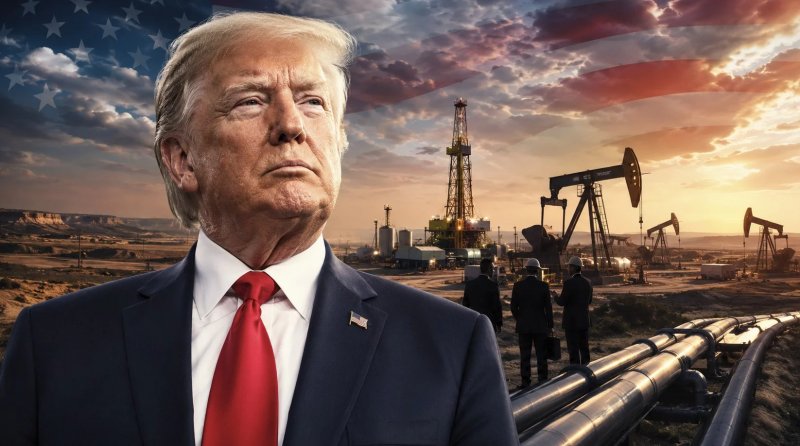
When people say that Donald Trump was brought back to power by “oilmen,” the explanation sounds too simple. In reality, his victory was the result of a much broader coalition: frustrated voters, conservative donors, big business, parts of the technology and financial elite, and the oil and gas sector, which saw in Trump a chance to regain political comfort after years of pressure from the climate agenda.
But within this coalition, the oil industry occupied a special place. This was not only about traditional energy giants such as ExxonMobil, Chevron, or ConocoPhillips. A crucial role in America’s energy politics is now played by companies linked to shale oil production, especially in the Permian Basin, Bakken, and Eagle Ford. These companies helped turn the United States into the world’s largest oil producer and made domestic energy a powerful political argument.
Shale oil is not an abstract term. It means Texas, New Mexico, North Dakota, Oklahoma, thousands of wells, drilling rigs, service companies, pipelines, jobs, and huge tax revenues. It is an entire economic system that depends on the rules set in Washington: access to federal lands, environmental regulations, permitting costs, export policy, tax conditions, and the attitude of the White House toward fossil fuels.
The main center of this system is the Permian Basin, located in West Texas and southeastern New Mexico. It is the heart of America’s shale revolution. A major share of U.S. oil production growth comes from this region. If global oil politics was once associated mainly with Saudi Arabia, OPEC, and the Middle East, today it is impossible to understand the global oil balance without the Permian Basin. American shale oil has changed OPEC’s behavior, strengthened U.S. energy independence, and given Washington new leverage in foreign policy.
Among the major players in U.S. shale production are ExxonMobil, Chevron, ConocoPhillips, Occidental Petroleum, EOG Resources, Diamondback Energy, Devon Energy, Pioneer Natural Resources, Continental Resources, and others. Some of them are global giants; others became symbols of the shale boom itself. But they all share one thing: they benefit from a political environment in which production is not restricted by heavy environmental barriers, infrastructure projects are approved faster, and the federal government does not treat oil and gas as industries of the past.
Photograph: Dado Ruvić/Reuters
That is why Trump was a convenient candidate for them. His slogan “drill, baby, drill” was not just a rally phrase. It was a direct political signal to the industry: a new administration would prioritize American oil, gas, LNG, and energy dominance. For oil and gas companies, this meant hope for softer regulation, faster permitting, support for exports, and less political pressure from the climate lobby.
A special role in this story is often associated with Harold Hamm, the founder of Continental Resources and one of America’s best-known oil billionaires. His company became one of the symbols of the shale boom, especially in the Bakken formation. Hamm has long supported Trump and the Republican Party, and his position reflects the mood of a significant part of the oil and gas business: Washington should not restrain production, but help it grow.
But this story cannot be reduced to one person or one company. American oil politics is a network of interests. The Permian Basin is connected to companies, investors, banks, service contractors, state governments, local budgets, ports, LNG exports, and petrochemicals. When Trump promises to expand drilling, he is not speaking only to billionaires. He is speaking to an entire industrial America where oil and gas are seen as sources of jobs, money, and national strength.
This is where the key political point emerges. For ordinary American voters, the oil issue often comes down to the price of gasoline. Trump understood this well. He linked the high cost of living, inflation, and fuel prices to Democratic policies, even though the oil market depends on many factors, from global demand to OPEC decisions, wars, sanctions, and investor behavior. But politically, his formula worked: more American oil means cheaper energy, more jobs, and less dependence on the outside world.
This logic resonated especially strongly in oil-producing states and industrial regions. Texas, North Dakota, Oklahoma, Louisiana, Pennsylvania, and other energy-heavy areas saw Trump as a politician who spoke their language. For many of them, the “green transition” often looks not like the future, but like a threat to jobs and local economies. Trump turned that anxiety into an electoral resource.
Still, it would be inaccurate to say that oilmen literally brought Trump to power. They could not have done it without mass voter dissatisfaction. His return became possible because of inflation, the migration crisis, fatigue with Democrats, weak communication from the Biden administration, and a widespread feeling that Washington had lost touch with everyday life in the country. The oil industry provided money, support, and political infrastructure, but the votes came from millions of Americans.
Nevertheless, the oil and gas sector became one of the main beneficiaries of Trump’s political comeback. For the industry, his victory meant more than a change of administration. It signaled a shift in the attitude toward fossil fuels: from pressure and restrictions to support, from climate caution to energy expansion, from talk of reducing dependence on oil to the slogan of energy dominance.
Shale oil is especially important here. It became the foundation of America’s new energy power. Without the shale revolution, the United States would not have achieved such a level of oil self-sufficiency and would not be able to influence the global market with such confidence. That is why companies operating in the Permian, Bakken, and Eagle Ford are not just producers of raw materials. They are part of the political economy of modern America.
For Trump, they matter for three reasons. First, they provide money and support to the Republican political infrastructure. Second, they help him sell voters the image of a strong industrial America. Third, they allow him to build a foreign policy argument: the United States should not be a dependent player in the global energy market, but its dominant force.
So the question “who are these oilmen?” has a concrete answer. They are not only the old oil barons. They are the owners, executives, investors, and lobbyists of companies producing oil in America’s shale basins, especially the Permian Basin. They include ExxonMobil, Chevron, ConocoPhillips, Occidental Petroleum, EOG Resources, Diamondback Energy, Devon Energy, Continental Resources, and other players for whom Trump’s policy means fewer restrictions, more drilling, and greater confidence in the industry’s future.
But the main conclusion is broader. Trump was not brought to power by oilmen alone. He was brought back by an America tired of high prices, migration disputes, political polarization, and a sense of instability. The oil industry was simply among those who understood this wave early, invested in it, and now expects political returns.
In this sense, shale oil has become not only an energy resource, but also a political weapon. It gave Trump a simple slogan, gave the industry hope for a comeback, and gave voters the promise of a cheaper and stronger America. That is why the story of oilmen and Trump is not only a story about money. It is a story about how a barrel of oil became part of a larger battle for power in the United States.
By Samir Veliyev
By Ulviyya Salmanli


Similar news