Don't you know where to invest now? - Read!


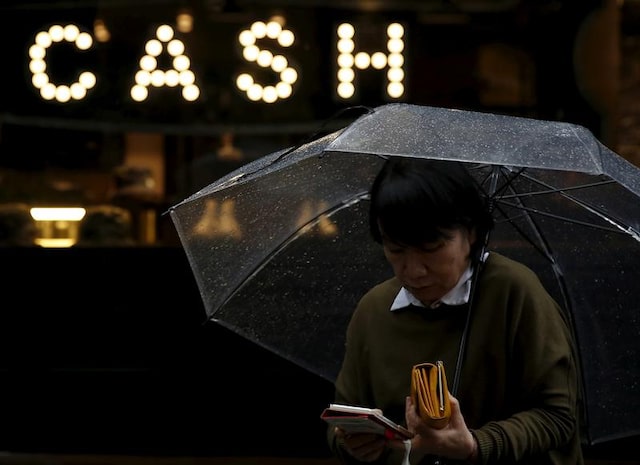
I’m 38 and currently hold roughly $300,000 in cash. I don’t own any other assets like real estate or cars. At the moment, the money is just sitting in my bank account yielding 1.9% interest. I’m familiar with the concept of stocks and ETFs, but I’m too inexperienced to "pull the trigger" on them yet, News.Az reports, citing Reuters.
I see picking single shares as a gamble given my lack of knowledge, and I’m hesitant about ETFs because I’m worried the AI bubble might burst in a few years and cause a crisis similar to 2008.
What would be your advice on how to invest (or not invest) this money? — Andrii, Germany
A. I collected tips from 18 (!) financial advisers, who urge Andrii to set aside money for emergencies, identify investment goals, assess risk tolerance and diversify a portfolio away from low‑yielding cash.
Here is what they said.
NORMALIZE THE HESITATION
"Having a large amount of cash and feeling unsure about how to invest it is incredibly common — especially for investors who are thoughtful and aware of risk," says Michelle Petrowski, founder of Being in Abundance, a fee-only financial planning firm in Phoenix.
Adds Kashif Ahmed, a certified financial planner at American Private Wealth in Bedford, Massachusetts: "Scared money doesn't make money. Your hesitation about the unknown is understandable."
That caution is not a weakness, though. Think of it as a starting point.
BUILD AN EMERGENCY FUND
"The first step is to make sure you have an emergency fund that covers three to six months of expenses," said Eric Papa, a certified financial planner at RS Crum in Newport Beach, California. Set aside enough money to help with the financial shock of a layoff, healthcare crisis or other unexpected event.
IDENTIFY YOUR INVESTMENT GOALS
Next, think about what you want to do with your money. Do you want to buy a car in the coming months, build a down payment for a home in a few years or fund a retirement account to be tapped several decades from now?
"For short-term, big-ticket goals, I favor money market funds and government bonds," Papa says. "These options prioritize safety of principal and liquidity."
For longer-term goals such as retirement, equity exposure is crucial to outpace inflation. This can be done effectively through target-date funds or broadly diversified ETFs, Papa says.
While all of these investments will fluctuate due to market volatility, they offer greater potential for long-term growth than cash.
AVOID INFLATION RISK
Holding $300,000 entirely in cash earning under 2% means the value of your money is slowly eroding over time, particularly after inflation and taxes. Mitzie Wilson, a certified financial planner at Farther in Atlanta, cites the rule of 72: With the current account earning 1.9%, it will take approximately 36 years for the funds to double.
"Just owning cash tends to lead to long-term underperformance and erosion of purchasing power," adds Thomas Van Spankeren, a financial adviser at RISE Investments in Chicago.
Patrick Huey of Victory Independent Planning in Naples, Florida, put it bluntly: "Sitting on $300,000 in cash earning 1.9% isn't really a strategy — it's buying short-term comfort at the expense of long-term growth."
DIVERSIFY BEYOND AI AND AVOID CONCENTRATION
Fear of an artificial intelligence bubble should not stop someone from investing.
"Don't confuse AI with the entire stock market," Huey says, urging a globally diversified mix across sectors and countries.
Look for opportunities beyond AI and Magnificent Seven stocks, including dividend stocks and small-cap shares trading at cheap valuations. Bonds can help stabilize your portfolio when stocks go down.
"While markets can and do experience downturns, broadly diversified investments have consistently outperformed cash over long periods, even after major crises," says Theresa Pablos, a certified financial planner at Equalis Financial in Los Angeles.
MOVE YOUR MONEY INTO THE MARKET SLOWLY
Use a gradual, diversified approach rather than investing the full $300,000 at once. Move long-term dollars into a managed account over six to 18 months on a set schedule to make market swings easier to stomach, Huey says.
"The goal isn't perfection — it's making steady progress with a plan you can stick to," says Joon Um, a financial adviser at Secure Tax & Accounting in Beverly Hills, California.
SEEK PROFESSIONAL HELP
You go to the doctor when you are sick and the mechanic when your car needs service, so it makes sense to find a professional who can counsel you on your money journey and guide you through market volatility.
"You owe it to your future self not to squander a wonderful opportunity," Ahmed says.
Do you need to refinance your mortgage? Are you in the market for a new car? Send your personal finance questions to me at onthemoney@thomsonreuters.com opens new tab, and I'll tap my extensive source network and brain trust for expert advice. Don’t forget to subscribe to our On the Money personal finance newsletter, too.


Similar news