Elbit Systems opens seventh Romanian facility with Watchkeeper XR flight demonstration


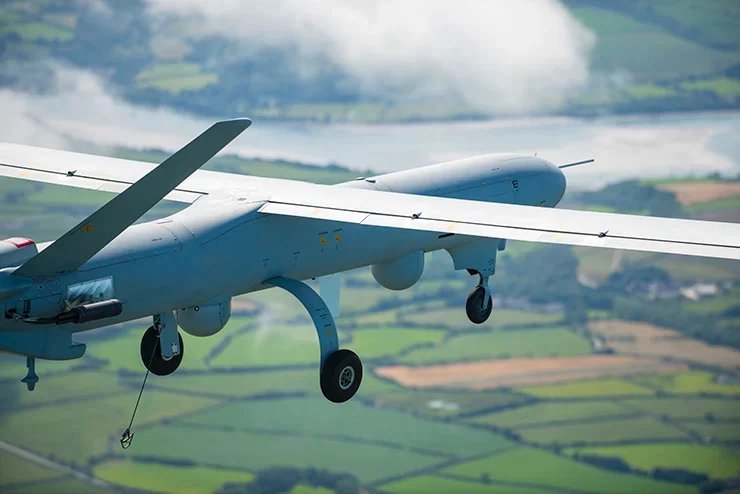
Elbit Systems inaugurated a new unmanned aerial systems production facility in Chitila, Romania on April 27, 2026 — and marked the occasion by flying the Watchkeeper XR over Romanian skies for the first time, turning a ribbon-cutting into a live capability demonstration for Romanian government and military officials watching from the ground.
The Chitila facility is the seventh production site Elbit Systems has established in Romania, adding an integrated capability for the production, integration, testing, and maintenance of advanced UAS platforms to an industrial footprint that already employs more than 1,000 Romanian professionals News.Az reports, citing Defence-Blog.
The new site was developed within the framework of the Watchkeeper XR program, linking its existence directly to one of the most significant Romanian military procurement efforts currently underway. Elbit Systems has been operating in Romania for over three decades, and the Chitila opening represents the latest and most visible expansion of that long-standing relationship.
RECOMMENDED STORIES
Yoram Shmueli, General Manager of Elbit Systems Aerospace, opened his remarks by noting that the Watchkeeper XR had flown in Romanian skies for the first time earlier that same day. “The facility we inaugurate today is the seventh production site Elbit has established in Romania, a clear demonstration of our long-term commitment and confidence in the local ecosystem,” Shmueli said. He described what the facility delivers in terms that go beyond hardware: “what we deliver is not just a platform, but capability: systems that are reliable, mission-ready, and prepared to operate where and when they are needed.”The Watchkeeper XR is an advanced tactical unmanned aerial system designed for persistent intelligence, surveillance, and reconnaissance missions at medium altitude.
It is a development of the Watchkeeper W program that has been in service with the British Army, refined with lessons drawn from operational experience and recent conflicts — a phrase Elbit’s own materials use deliberately, pointing toward what the war in Ukraine has demonstrated about the operational demands placed on tactical UAS in a peer-level fight. The Watchkeeper XR can operate in contested environments, carries sophisticated sensor payloads, and is built for the kind of long-endurance, wide-area surveillance missions that military planners increasingly regard as foundational to situational awareness at the operational level.
Producing that system inside Romania, at a facility that handles the full lifecycle from production through integration, testing, and maintenance, gives the Romanian Armed Forces something that imported equipment cannot: a domestic industrial base capable of sustaining and supporting the platform without dependence on foreign supply chains for every maintenance action and upgrade cycle. That kind of self-sufficiency has become a priority across NATO’s eastern flank, where years of watching Russia weaponize energy and trade dependencies have made defense industrial independence a national security question as much as an economic one.
Elbit’s model in Romania reflects the kind of industrial partnership that European defense procurement increasingly demands. Rather than selling finished systems from Israeli factories, the company has built local production capability across seven sites, employed more than a thousand Romanian engineers and technicians, and structured its programs around technology transfer and Made in Romania production. That approach serves both parties: Romania gets sovereign industrial capability and local employment, while Elbit gets a manufacturing base inside the European Union with access to European defense markets and the political credibility that comes with genuine local investment.
The opening ceremony drew representatives from the Romanian government and armed forces alongside Elbit’s senior leadership — a guest list that reflects the strategic significance both sides attach to the Chitila facility. Romania’s defense spending has grown substantially in recent years, driven by its position on NATO’s eastern flank, its border with Ukraine, and government commitments to reach and exceed the alliance’s two percent of GDP defense spending threshold. That investment is flowing into procurement programs across land, air, and sea domains, and the Watchkeeper XR program sits within a broader Romanian Armed Forces modernization effort aimed at closing the capability gaps that decades of post-Cold War underinvestment left behind.
The UAS market Elbit is building capacity to serve in Romania is not static. The war in Ukraine has accelerated European demand for tactical reconnaissance drones at a pace that the continent’s legacy defense industrial base was not structured to meet. Countries that had modest drone requirements before 2022 now face the prospect of needing thousands of systems, not dozens, to match the operational concepts that the conflict has validated at scale. A facility in Romania capable of producing, integrating, and maintaining advanced UAS platforms is positioned at the intersection of that demand surge and the European Union’s push to build defense industrial capacity within its own borders rather than importing capability from outside.
Elbit’s seven Romanian facilities, more than 1,000 local employees, and over three decades of in-country presence represent a depth of industrial commitment that cannot be replicated quickly by competitors arriving late to the market. The Watchkeeper XR flying over Chitila on the day its production facility opened was not an accident of timing — it was a deliberate demonstration that the program is real, the platform works, and the Romanian capability to sustain it is being built right now, not promised for some future date.
By Leyla Şirinova


Similar news