Fabrizio Vielmini: Meloni’s visit to Baku was a strategic signal from Rome – INTERVIEW


Italian Prime Minister Giorgia Meloni’s visit to Azerbaijan came at a sensitive moment for both the South Caucasus and Europe. Against the backdrop of the European Political Community summit in Yerevan, growing competition among European powers in the region, and continuing uncertainty in transatlantic relations, Meloni’s trip to Baku carried significance that went beyond protocol diplomacy.
For Italy, Azerbaijan remains one of its most important partners in terms of energy security, trade, connectivity, and access to the wider Caspian and Central Asian region. For Baku, Rome is not only a major economic partner but also one of the key European capitals capable of maintaining a pragmatic and balanced dialogue with Azerbaijan.
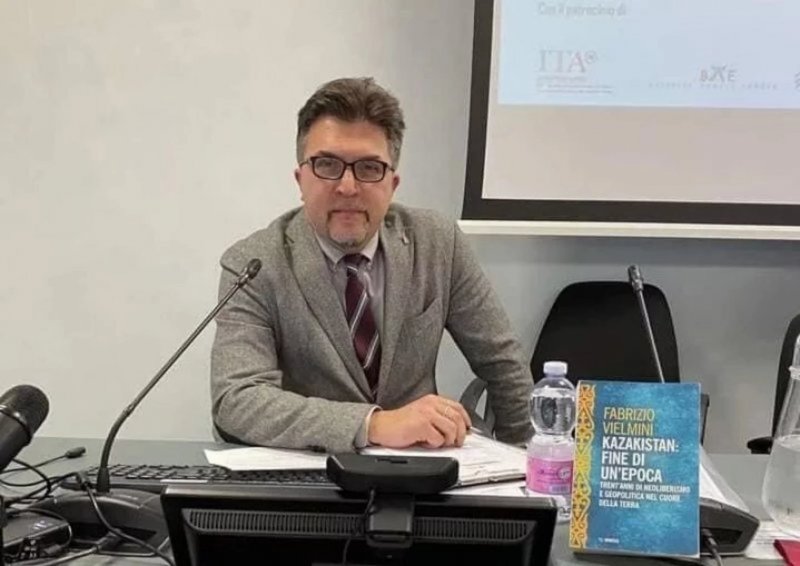
In an interview with News.Az, Italian expert Fabrizio Vielmini shared his views on the reasons behind Meloni’s visit, Italy’s strategic interests in Azerbaijan, the quiet rivalry between Rome and Paris in the South Caucasus, and the challenges facing Italy amid growing tensions between Europe and the Donald Trump administration.
 Source: AZERTAC
- How do you assess Giorgia Meloni’s visit to Azerbaijan?
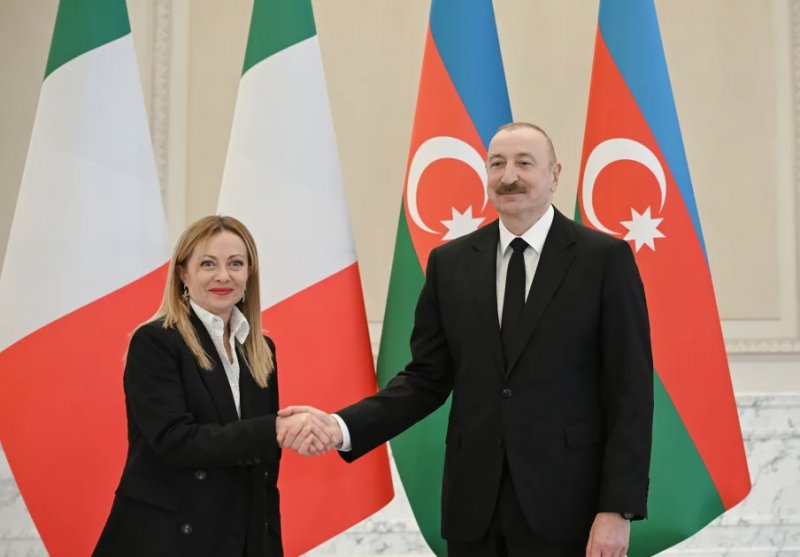
- From Rome’s perspective, the visit was a success. While in the Caucasus for the European Political Community summit in Yerevan, Meloni travelled to Baku to deepen what her government describes as a “strategic relationship” — one it has consistently sought to strengthen.
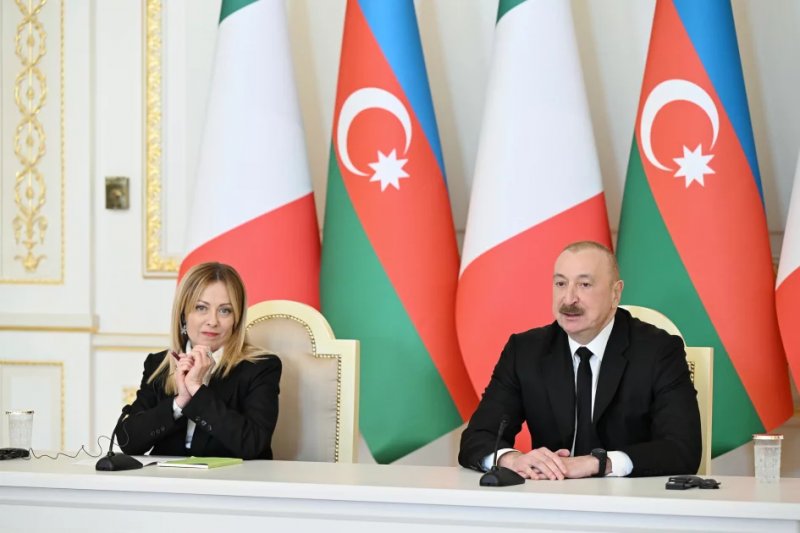
During the meeting, President Ilham Aliyev and Giorgia Meloni agreed to expand bilateral cooperation, including through an Azerbaijan–Italy business forum in Baku scheduled for the second half of 2026.
- What were the main reasons behind this visit?
- The visit is rooted in strong economic interdependence. According to recent trade data, Azerbaijan is one of Italy’s key suppliers of oil and gas, accounting for a significant share of Italian energy imports. In turn, Italy remains the main destination for Azerbaijani exports.
Against the backdrop of global energy disruptions — exacerbated, in the Italian government’s view, by US policy toward Iran — Meloni is seeking to shield Italy’s economy from external shocks.
Following similar diplomatic and economic outreach to North Africa and the Gulf, she sees Baku as a key partner in strengthening Italy’s energy security. Beyond hydrocarbons, Italy is also closely monitoring the Caucasus–Central Asia trade corridor. Rome aims to position itself within emerging overland routes linking the Caspian Sea to European markets.
The planned business forum in Baku is intended to identify new investment opportunities, building on Italy’s already strong commercial presence in Azerbaijan.
- Given Armenia and Georgia’s political proximity to France, and competition between Rome and Paris within the EU, is Italy also seeking closer ties with Azerbaijan to counterbalance French interests in the South Caucasus and Central Asia?
- There is a symbolic geography to this visit that is difficult to ignore. France has drawn closer to Armenia and Georgia, both of which are increasingly viewed in Paris as preferred partners in the region.
The contrast was visible: Emmanuel Macron was warmly received in Yerevan, while Meloni travelled to Baku for talks with President Aliyev. Although Italian officials avoid framing this in terms of direct rivalry, the visit does highlight diverging Franco-Italian perspectives within the EU.
Meloni’s trip can be interpreted as a quiet signal that Rome sees value in diversifying its partnerships in the Caucasus, including with actors that Paris tends to approach more cautiously.
 Source: AZERTAC
- What is Italy’s current role in EU policy?
- Meloni continues to navigate a delicate position — sitting, as one might say, on more than one chair. Domestically, she occasionally appeals to growing eurosceptic sentiment among Italian voters. Officially, however, her government remains aligned with Brussels.
During this trip, she sought to leverage Italy’s position as Azerbaijan’s leading EU partner. In her meeting with President Aliyev, she expressed support for the normalisation of relations between Azerbaijan and Armenia, as well as continued dialogue between the EU and Azerbaijan — messages that also reflected the broader context of the Yerevan summit.
It is a balancing act between nationalist rhetoric at home and pro-European diplomacy abroad.
- What consequences could Meloni’s disagreements with the Donald Trump administration have for Italy?
- The prevailing view in Italian foreign policy circles remains that Italy’s safest course is to act as one of the United States’ most reliable allies in Europe. However, Meloni must also respond to growing unease in Italy and across the EU over Washington’s increasingly unpredictable positions.
The mainstream view in Italian foreign policy circles remains that Italy’s safest option is to act as one of the most loyal US allies in Europe. Yet Meloni must also respond to growing unease in Italy and across the EU over Washington’s increasingly unpredictable moves.
She is now engaged in a delicate political balancing act. In Yerevan, she reportedly expressed concern over the possible withdrawal of US troops from Italy, after Donald Trump suggested that Washington could consider reducing its military presence in Italy and Spain. Rome insists it has consistently met its alliance obligations.
Meloni has also pointed to US actions toward Iran as an example of Washington acting without sufficient coordination with its allies. Following the summit, US Secretary of State Marco Rubio was expected to visit Rome for talks with Italian officials. One of Meloni’s priorities is reportedly to prevent a broader US disengagement from Europe.
That said, it is difficult to foresee outcomes significantly worse than those Italy already faces as a result of erratic US policies in the Mediterranean and Eurasia.


Similar news