Fehmi Chalmuk: The problem of immigrants in Turkey is one of the major issues for over 13 years – INTERVIEW


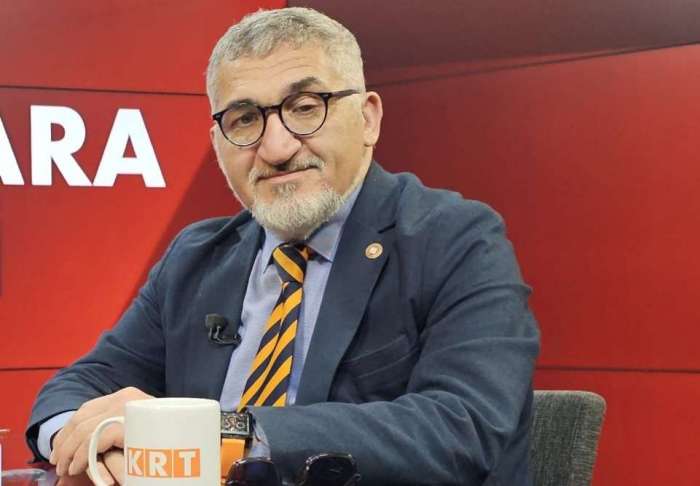
News.Az presents an interview with Turkish political scientist and editor-in-chief of Politikadam.com, Fehmi Chalmuk.
- The problem of immigrants in Turkey has been discussed for quite some time. What are the main aspects of this issue you can highlight?
- The problem of immigrants in Turkey is not new. It has been discussed for about 13 years and is one of the major issues. Firstly, this problem has a sociological aspect. Secondly, and most importantly, it has an economic aspect. The sociological aspect involves the Turkish government's invitation to Syrian refugees, granting them temporary protection status, and comparing their reception to the welcoming of the Ansar. Refugees were temporarily housed in tent camps. However, the acceleration and intensity of migration led to a loss of control over this process. This caused discussions about the deterioration of the social and demographic structure in various parts of Turkey. Many protests were directed at the changing demographic structure of Turkey, with fears that these refugees and migrants would stay in the country permanently.
- What impact have Syrian refugees had on the Turkish economy and labor market?
- There is a misconception about the financial costs to the Turkish Republic for the refugees. Yes, the Turkish Republic allocates funds for shelter, food, and medical services for arriving refugees. However, most of these expenses are covered with the support of the World Bank. There is a belief in society that Syrians live at the expense of our salaries and taxes, but Turkey uses European Union and World Bank funds for this purpose. At the same time, the construction of brick houses in the Syrian canton is fully organized by the Turkish Republic and non-governmental organizations.
- What measures are being taken to address the social and demographic changes caused by migration?
- From an economic standpoint, the most critical aspect is the perception that Syrians, Turkish citizens, and citizens of the Turkish Republic are deprived of their economic rights and employment opportunities. Since February 28, 1997, vocational schools in Turkey have not been able to prepare qualified and intermediate personnel, and this problem has snowballed due to a lack of appropriate training. After 2012, many industrialists and entrepreneurs in Turkey started using refugees to meet their needs for intermediate personnel. New discussions argue that refugees with temporary protection status work without insurance in industrial enterprises in organized industrial zones such as Gaziantep, Marash, Kilis, Adana, Osmaniye, and Mersin, creating an illusion of opportunities for Syrians. Meanwhile, there are many unemployed people in Turkey, but Syrians form the largest group of workers in eight organized industrial zones in Gaziantep, with most of them insured. It is important to note that 80% of shoe exports from Gaziantep are carried out by Syrian refugees who have either founded companies or work as intermediate personnel. Turkey has recognized this problem, and discussions continue.
- How does Turkey control migration, and what measures are being taken to prevent illegal entry?
- The Directorate of Migration Management of the Ministry of Interior of the Turkish Republic stopped the intense and uncontrolled migration at a critical moment. However, the Ministry of Interior and the Turkish Armed Forces continue to actively work on regulating migration flows, especially those arriving illegally through Iran and by sea. All refugees in Turkey now have identity cards confirming their temporary protection status. If an asylum seeker is caught without such an identity card, they are immediately deported, as they are considered to have entered Turkey illegally. These events are actively covered in the media. Immigrants arrive not only from Syria but also from Africa, the Far East, and Asia. Turkey, being on a key migration route, experiences significant pressure. In response, the Turkish police have intensified their operational efforts.
- What diplomatic efforts is Turkey making to address the situation with Syrian refugees?
- The Assad government has stated that the actions of the temporary Syrian government, created in Turkey, are aimed at dividing the country, which has led to the beginning of migration movements and turned the situation into a point of conflict. The main reason for the clash between the Free Syrian Army and Assad's army is precisely this. Of course, Turkey bears the heavy burden of these refugees from Syria. In the early years of the AK Party rule, Turkey supported a close friendship with Syria that could have led to the abolition of borders between the countries, similar to the situation between Azerbaijan and Turkey. However, the civil war, especially after the Arab Spring, negatively affected Turkey. Turkish and Syrian leaders will soon meet. A schedule will be drawn up indicating how many refugees will return to Syrian territory, in what form, and over what period.
The main problem of the central Syrian government is the existence of terrorist organizations in northern Syria. If they are not destroyed with Russia's support, the schedule for returning refugees to Turkey will be extended. To prevent this schedule from being extended, an immediate operation is necessary. Iraq has actively fought terrorism, but now it is working on the "Path of Development" project. Syria faces enormous financial costs due to the war, and these costs need to be eliminated. Oil must be exported to safe hands, making Turkey the best partner. This concerns not only oil products. Economic cooperation between Turkey and Syria in creating a corridor for natural gas and energy, as well as in agricultural production, is very important in the post-pandemic economic situation.
- How do you see the future of economic cooperation between Turkey and Syria in the post-pandemic situation?
- The friendship between Turkey and Syria is not new. Turkey and Syria share the longest border corridor. It is important to understand that it is not only about reconstruction, urbanization, and infrastructure. China is making significant investments in the Middle East and Africa. Russia is also a major regional power. However, support for terrorist organizations has been provided by both European countries and America. If Syria's architecture is questioned again, Turkey must implement this regional development in an international consortium with neighboring countries such as China, Russia, Azerbaijan, Iraq, and Iran. The Western world, which turned a blind eye to the civil war in Syria, stimulated it, and supported terrorism, will also fight for participation in the reconstruction. International media show that the greatest obstacles are created by European states and America.
- What steps need to be taken to resolve the migration situation and rebuild Syria in the short term?
- The problem will be resolved when the countries of the region jointly address this issue. The Astana process was one of the most important platforms for achieving this goal. But today, I do not think that the return of refugees and the reconstruction of Syria are issues that can be resolved in the short term. Because many problems have accumulated.


Similar news