Hormuz "Economic Clock of War" triggers global energy and inflation crisis


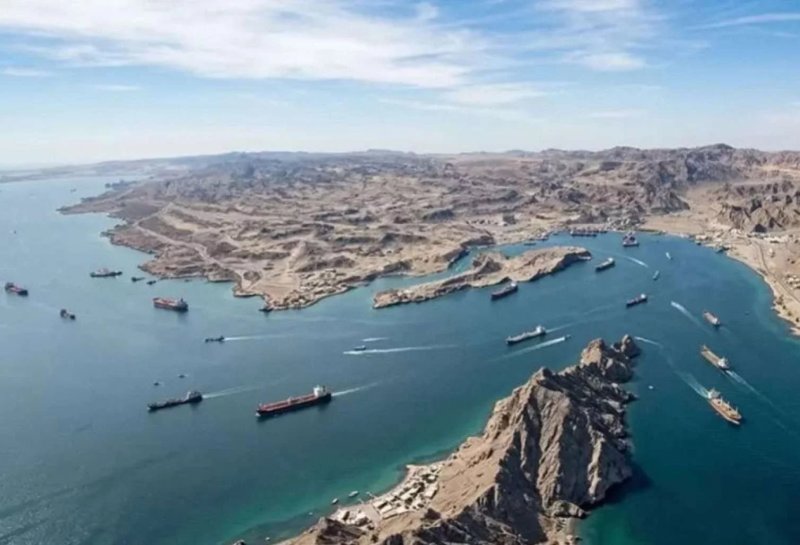
As Tuesday marks two months since the United States and Israel launched joint military strikes against Iran, repeated disruptions to shipping through the Strait of Hormuz have turned the waterway into an “economic clock of war.”
Analysts warned that even brief interruptions of passage ripple through global markets and that prolonged instability risks evolving into a broader inflation and growth crisis, News.Az reports, citing Irish News.
Roughly 20 per cent of global oil and liquefied natural gas passes through this narrow corridor linking the Gulf to global markets, making it one of the world’s most critical energy chokepoints. Shocks of this magnitude propagate rapidly through trade, finance and consumption, ultimately affecting household budgets across economies worldwide.
RECOMMENDED STORIES
Amid escalating geopolitical tensions, flows through the Strait of Hormuz have become increasingly volatile.Data from shipping analytics firms show that prior to the escalation, an average of 45-50 oil tankers transited the strait each day. In the weeks since, that number has dropped by more than half, with fewer than 20 vessels transiting daily, and at times of heightened tension, falling to near zero as shipping has been temporarily halted.
Russell Hardy, CEO of Vitol, the world’s largest independent oil trader, warned that the market will lose at least 1 billion barrels of crude and refined products due to the crisis.
He noted that sustained attacks on Gulf energy infrastructure and repeated closures of the strait have already removed some 12 million barrels per day of production since late February. Analysts expected the global oil market to shift from an expected surplus into a deficit of about 750,000 barrels per day in 2026.
Fatih Birol, executive director of the International Energy Agency (IEA), said the war in the Middle East “is creating a major energy crisis, including the largest supply disruption in the history of the global oil market,” warning that without a swift resolution, impacts will intensify.
In response, the IEA has coordinated an emergency release of around 400 million barrels from strategic reserves in March, the largest ever, to stabilise markets.
Brent crude, the international benchmark, rose 63 per cent in March, surpassing the 46 per cent monthly gain recorded in September 1990 during the first Gulf War. Analysts estimate sustained instability could keep Brent crude between 100 and 190 US dollars per barrel, with an average above 130.
Meanwhile, the shock is reshaping global flows. The London-headquartered maritime analytics firm Windward noted that crude shipments are increasingly rerouting toward the Gulf of Mexico, positioning the United States as a key export anchor amid Hormuz disruptions.
US producers could benefit from higher prices, even as import-dependent economies bear the costs, analysts were quoted by Al Jazeera as saying.
If the first layer of impact unfolds in supply, the second is felt in daily life. Reports point to a widening “conflict tax.”
The International Monetary Fund (IMF) identified energy as the main transmission channel, noting that for fuel-importing economies, rising prices act like a sudden tax on income.
Recent data showed these pressures are increasingly visible at the fuel pump. In the United States, gasoline prices rose by more than 24 per cent in March alone, contributing significantly to a surge in retail spending driven largely by higher fuel costs.
In Asia, higher fuel and electricity costs are squeezing manufacturing output and household purchasing power, and in Europe, the crisis revives memories of the 2021-2022 gas shock. British officials warn that elevated food and energy prices could persist for months even after the conflict ends, reflecting delayed inflationary effects.
The real-world impact in other respects is increasingly visible. The war in the Middle East has triggered a sharp rise in air fares, with the lowest-priced economy tickets costing, on average, 24 per cent more than a year ago, according to new research from the consultancy Teneo. The report said airspace restrictions linked to the conflict have forced airlines to reroute numerous flights, increasing fuel consumption and pushing up operating costs.
At the micro level, the consequences are equally tangible. In Ethiopia, a wholesale trader told Xinhua that fuel shortages delayed shipments by several days, causing goods to spoil and resulting in financial losses. In Portugal, consumers reported rising grocery bills eroding incomes, reflecting a broader cost-of-living strain.
“Even if the war is far away, the effect reaches people’s daily lives very quickly,” said Tiago Santos, a Brazilian immigrant working as a salesman in Lisbon, Portugal, capturing how geopolitical shocks in energy markets translate into lived economic pressure far beyond the region of conflict.
Beyond immediate shocks, analysts have pointed to longer-term changes. Restoring oil production to pre-conflict levels will likely take several months, depending on the extent of damage to oilfields and how smoothly shipping through the Strait of Hormuz resumes.
Even under a relatively constructive scenario, the Australia and New Zealand Banking Group (ANZ) analysts estimate that only 2-3 million barrels per day could return in the first month, with another 2-3.5 million barrels per day gradually coming back over the rest of the second quarter. However, they stressed that operational disruptions, damaged infrastructure and export bottlenecks mean the recovery will not be smooth or linear.
At a systemic level, the crisis is accelerating a reconfiguration of global energy and trade networks. Windward reported that alternative logistics patterns, notably overland transport corridors and destination shifts, are becoming increasingly normalised rather than temporary responses.
“This architecture is unlikely to unwind quickly, even if the ceasefire holds,” the report noted, adding that war-risk insurance, backlog pressure, congestion risk and unresolved transit governance mean that the current system has already moved from improvisation into operational normalisation.
More broadly, the crisis highlights the vulnerability of maritime chokepoints and is prompting countries to diversify supply sources, expand strategic reserves and rebalance efficiency with resilience in global trade systems.
At the same time, the shock is reshaping the trajectory of the energy transition. Policymakers across regions have called for faster deployment of clean energy to reduce exposure to similar shocks.
South Korean President Lee Jae Myung has recently urged a rapid, large-scale transition toward renewables. European Commission President Ursula von der Leyen has called for speeding up “the integration of low-carbon, home-grown energy” to strengthen energy security.
“This fossil fuel crisis will happen again and again,” said UN Climate Change Executive Secretary Simon Stiell. “Sunlight does not depend on narrow and vulnerable shipping straits. Wind blows without massive taxpayer-funded naval escorts.”
By Leyla Şirinova


Similar news