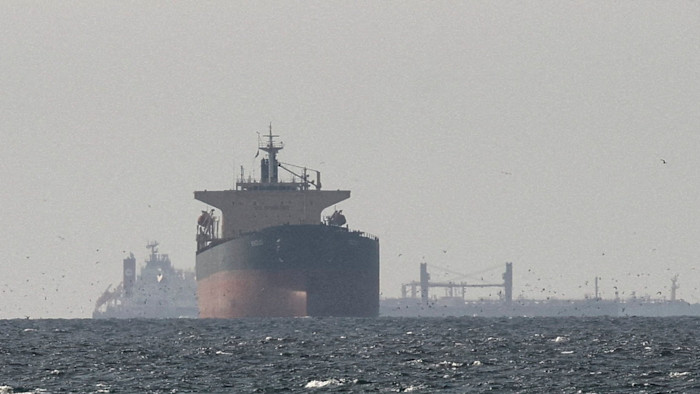
Recent reports indicate that Iran is considering requiring vessels to pay transit fees or tolls in cryptocurrency, rather than traditional currencies like the US dollar.
This proposal would apply to ships passing through the Strait, one of the most critical maritime routes for global oil flows. In some cases, payments could be demanded for “safe passage” or as part of broader monitoring and control measures over shipping traffic.
The move is still evolving, with questions remaining about how consistently such a system would be enforced.
Why Iran is turning to Bitcoin and crypto
The primary motivation is sanctions circumvention. Western sanctions have significantly restricted Iran’s access to the global financial system, particularly dollar based transactions.
By using cryptocurrencies:
Iran can bypass traditional banking channels
Transactions become harder to track and block
Revenue can be secured outside Western oversight
Crypto also offers flexibility in dealing with buyers and shipping operators who may already be using alternative payment systems.
Iran has already developed a sizable domestic crypto ecosystem, which supports mining, trading, and state-linked transactions.
How the system would work in practice
Under the reported framework, shipping companies passing through the Strait may be required to:
Register or coordinate with Iranian authorities
Follow designated routes controlled by security forces
Pay a transit fee, potentially in Bitcoin or other digital assets
There are also indications that the Islamic Revolutionary Guard Corps may oversee or enforce aspects of this system, particularly in areas where maritime control is strongest.
Some reports suggest fees could reach significant levels per vessel, depending on cargo and risk factors.
Why the Strait of Hormuz is central to this move
The Strait of Hormuz is a strategic chokepoint through which roughly one fifth of global oil supply passes under normal conditions.
Control over this corridor gives Iran substantial leverage over global energy markets.
In the current crisis environment, shipping traffic has already been severely disrupted, with vessel movements falling sharply due to security risks and restrictions.
By introducing crypto based tolls, Iran is effectively attempting to monetize that leverage while reinforcing its control over maritime access.
Why this is significant for global energy trade
If implemented at scale, the use of Bitcoin for oil related transit payments would represent a major departure from traditional energy trading systems.
Global oil markets have historically been dominated by the “petrodollar” system, where transactions are conducted in US dollars.
Iran’s approach could:
Undermine dollar dominance in certain transactions
Encourage alternative payment systems
Increase fragmentation in global energy markets
However, widespread adoption remains uncertain due to practical and regulatory constraints.
Why experts are skeptical
Despite the headline impact, many analysts question how feasible large scale crypto payments for oil shipping really are.
Key concerns include:
Liquidity limitations for large transactions
Price volatility of cryptocurrencies
Operational complexity in maritime logistics
Legal risks for companies involved
Some experts argue that while crypto may be used in niche cases, it is unlikely to replace traditional payment systems in the near term.
How this fits into broader geopolitical strategy
The move is not just economic but strategic. By tying access to a critical global chokepoint to alternative payment methods, Iran is:
Expanding its economic toolkit under sanctions
Testing new models of financial sovereignty
Sending a signal to global markets about its influence
This aligns with broader efforts by sanctioned states to explore non dollar trade mechanisms, including local currencies and barter arrangements.
What it means for oil markets and shipping
For shipping companies and oil traders, the proposal introduces new layers of complexity.
They must now consider:
Compliance risks with sanctions regimes
Operational risks in a conflict zone
Financial risks linked to crypto transactions
Some may choose to comply due to cost pressures or lack of alternatives, while others may avoid the route altogether.
What happens next
The implementation of crypto based transit payments remains uncertain and could evolve depending on geopolitical developments.
Key factors include:
Whether the Strait fully reopens to normal traffic
How strictly Iran enforces the payment system
The response from major global powers and regulators
For now, the development underscores a broader trend: the intersection of geopolitics, energy markets, and digital finance is becoming increasingly complex, with new mechanisms emerging in response to pressure on traditional systems.