What do we know about Eid al-Adha?


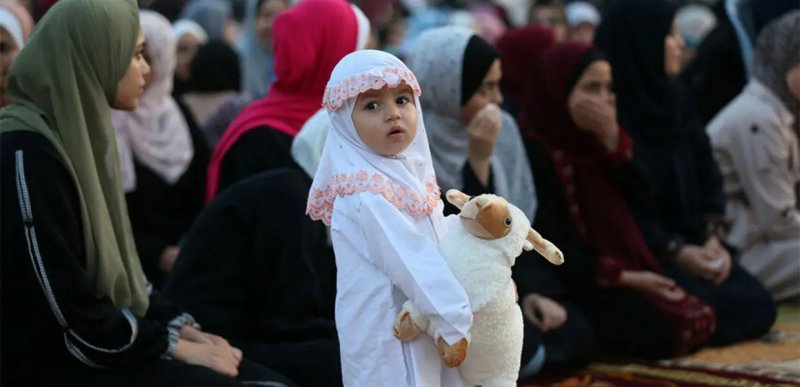
Eid al-Adha, known as the Festival of Sacrifice, is one of the most important religious holidays in Islam and is celebrated by Muslims across the world.
Observed annually on the 10th day of Dhu al-Hijjah, the final month of the Islamic lunar calendar, the holiday commemorates the devotion and faith of Prophet Ibrahim, who was willing to sacrifice his son in obedience to God's command before God provided a ram to be sacrificed instead, News.az reports.
For more than 1.9 billion Muslims worldwide, Eid al-Adha is far more than a religious celebration. It is a period that combines worship, family unity, charitable giving, community solidarity, and reflection on values such as sacrifice, compassion, gratitude, and responsibility. Every year, millions gather in mosques and homes to mark the occasion, while the holiday also coincides with the annual Hajj pilgrimage in Saudi Arabia, one of the Five Pillars of Islam.
As Muslims around the world prepare to celebrate Eid al-Adha, here is what we know about the holiday, its origins, traditions, significance, and place in contemporary society.
What is the origin of Eid al-Adha?
The origins of Eid al-Adha are rooted in one of the most significant narratives in the Abrahamic religious tradition.
According to Islamic belief, Prophet Ibrahim received a divine command in a dream instructing him to sacrifice his son as a test of faith and obedience. Although the command was extraordinarily difficult, Ibrahim accepted God's will and prepared to carry it out. At the final moment, God intervened and replaced his son with a ram, sparing the child and rewarding Ibrahim's unwavering devotion.
The event occupies a central place in Islamic teachings and serves as a symbol of complete trust in God. Muslims believe that the story demonstrates the importance of faith, sacrifice, patience, and submission to divine guidance.
Eid al-Adha was established to commemorate this event and remind believers of the values represented by Ibrahim's actions.
Why is Eid al-Adha considered one of Islam's most important holidays?
Islam recognizes two major annual festivals: Eid al-Fitr and Eid al-Adha.
While Eid al-Fitr marks the end of Ramadan, the month of fasting, Eid al-Adha is associated with sacrifice and pilgrimage. Many Islamic scholars regard Eid al-Adha as the more significant of the two celebrations because of its direct connection to Hajj and its emphasis on devotion and charity.
The holiday serves multiple purposes simultaneously. It is a religious observance, a family celebration, a charitable occasion, and a communal event. For believers, it provides an opportunity to strengthen spiritual commitments while reinforcing social bonds.
The values promoted during Eid al-Adha extend beyond religious rituals. The holiday encourages generosity, concern for vulnerable populations, family cohesion, respect for elders, and support for local communities.
When is Eid al-Adha celebrated?
Unlike holidays based on the Gregorian calendar, Eid al-Adha follows the Islamic lunar calendar.
The holiday begins on the 10th day of Dhu al-Hijjah, the twelfth and final month of the Islamic year. Since the lunar year is approximately eleven days shorter than the solar year, the date of Eid al-Adha changes annually when measured according to the Gregorian calendar.
The exact date can sometimes vary from one country to another depending on local moon sighting practices or astronomical calculations adopted by religious authorities.
In Azerbaijan, religious authorities have confirmed that Eid al-Adha in 2026 will begin on May 27.
The holiday typically lasts between three and four days, although the length of official public holidays varies from country to country.
What is the connection between Eid al-Adha and Hajj?
One of the defining characteristics of Eid al-Adha is its close relationship with the Hajj pilgrimage.
Hajj is one of the Five Pillars of Islam and represents a religious obligation for every Muslim who possesses the financial and physical ability to undertake the journey at least once during their lifetime.
Every year, millions of pilgrims travel to Mecca and surrounding holy sites in Saudi Arabia to perform rituals that commemorate events associated with Prophet Ibrahim, his wife Hajar, and their son Ismail.
The climax of the pilgrimage occurs immediately before Eid al-Adha. Pilgrims spend time in prayer and reflection at Arafat, one of the most sacred locations in Islam, before completing additional rituals.
Because Eid al-Adha coincides with the culmination of Hajj, Muslims around the world feel spiritually connected to the millions of pilgrims gathered in the holy cities.
What happens on the morning of Eid al-Adha?
For many Muslims, the day begins before sunrise.
Families wake early, dress in clean or new clothing, and prepare to attend a special congregational prayer. Mosques, prayer halls, and open-air prayer grounds often host large gatherings of worshippers.
The Eid prayer differs from ordinary daily prayers and is accompanied by a sermon focusing on faith, morality, social responsibility, gratitude, and community solidarity.
After prayers conclude, worshippers greet one another with expressions such as "Eid Mubarak," meaning "Blessed Eid."
Many people then visit relatives, friends, neighbors, and community members. The atmosphere is often festive, combining spiritual reflection with social interaction.
What is the significance of animal sacrifice?
The ritual sacrifice of an animal is perhaps the most widely recognized tradition associated with Eid al-Adha.
Known as Qurbani or Udhiyah, the practice commemorates the sacrifice made by Prophet Ibrahim and symbolizes devotion to God.
Eligible Muslims who possess sufficient financial means may sacrifice an approved animal such as a sheep, goat, cow, or camel. The sacrifice must be performed according to Islamic guidelines designed to ensure humane treatment.
Importantly, Islamic teachings emphasize that the ritual is not merely about slaughtering an animal. Rather, it represents gratitude, generosity, and a willingness to share blessings with others.
The meat is traditionally divided into portions. One portion is retained by the family, another is shared with relatives and friends, and a third is distributed to people in need.
This practice ensures that vulnerable members of society can participate in the holiday and benefit from communal support.
Is animal sacrifice mandatory?
The answer varies according to different Islamic schools of jurisprudence.
Most scholars agree that sacrifice is highly recommended for Muslims who can comfortably afford it. Certain schools regard it as obligatory under specific circumstances, while others classify it as a strongly encouraged religious practice.
Financial capacity remains a key consideration. Individuals facing economic hardship are generally not expected to undertake the sacrifice.
Islamic teachings stress that intention and sincerity are more important than outward displays of wealth or ritual performance.
Why does charity play such an important role during Eid al-Adha?
Charity occupies a central position within the holiday's meaning.
One of the core objectives of Eid al-Adha is ensuring that all members of society can share in the celebration, regardless of their financial circumstances.
Muslims are encouraged to donate money, provide food, assist vulnerable families, support charitable organizations, and participate in humanitarian initiatives.
In many countries, religious groups and community organizations coordinate large-scale food distribution programs during the holiday period.
The emphasis on charity reflects broader Islamic principles concerning social justice, compassion, and collective responsibility.
The holiday serves as an annual reminder that prosperity carries obligations toward those less fortunate.
How is Eid al-Adha celebrated in different parts of the world?
Although the religious foundations remain universal, cultural traditions vary considerably.
In the Middle East, South Asia, Central Asia, Africa, Europe, and North America, communities often adapt celebrations to local customs while preserving the core religious elements.
Common traditions include:
Family reunions
Community meals
Special holiday foods
Visits to relatives
Charitable activities
Exchange of gifts
Religious gatherings
Cultural festivals
Children's celebrations
In many Muslim-majority countries, governments declare public holidays, enabling citizens to spend time with their families and communities.
Major cities often witness increased travel activity as families reunite for the occasion.
How important is family during Eid al-Adha?
Family occupies a central place in the holiday.
Many Muslims view Eid al-Adha as an opportunity to strengthen family relationships, resolve disagreements, and reconnect with relatives.
Large family gatherings are common, with multiple generations sharing meals and participating in celebrations together.
Children often receive gifts, money, or special treats. Elderly family members are frequently visited and honored.
The emphasis on family reflects broader Islamic teachings concerning respect, kinship ties, and social cohesion.
For many people, the holiday represents one of the few occasions each year when extended families gather in significant numbers.
What economic impact does Eid al-Adha have?
Beyond its religious significance, Eid al-Adha generates substantial economic activity.
The holiday affects multiple sectors including agriculture, livestock production, transportation, retail trade, hospitality, food services, and tourism.
Livestock markets experience increased demand in the weeks preceding the holiday. Retailers often see higher consumer spending as families purchase clothing, gifts, food, and household goods.
Transportation networks become busier as people travel to visit relatives or return to their hometowns.
In many countries, the holiday represents one of the most economically active periods of the year.
How is Eid al-Adha observed in Azerbaijan?
In Azerbaijan, Eid al-Adha is one of the country's most significant religious holidays.
Mosques across the country hold special prayers attended by thousands of worshippers. Families gather to celebrate, visit relatives, and participate in charitable activities.
Religious authorities coordinate announcements regarding the holiday date and prayer schedules, while state institutions typically declare official non-working days to mark the occasion.
The holiday reflects both Azerbaijan's Islamic heritage and broader cultural traditions emphasizing hospitality, generosity, and family unity.
What message does Eid al-Adha carry in the modern world?
Although rooted in an ancient religious narrative, Eid al-Adha continues to resonate in contemporary society.
The holiday's central themes remain relevant across cultures and generations. Sacrifice, responsibility, compassion, solidarity, gratitude, and service to others are values that transcend religious boundaries.
In a world often characterized by conflict, economic inequality, and social fragmentation, Eid al-Adha encourages reflection on humanity's shared responsibilities.
For Muslims, the holiday serves as a reminder that genuine faith is expressed not only through worship but also through generosity, ethical conduct, and care for others.
More than fourteen centuries after the emergence of Islam, Eid al-Adha remains one of the most widely observed religious celebrations in the world. It continues to unite communities across continents through a common commitment to faith, charity, family, and social responsibility, making it one of the most enduring and meaningful observances in the global religious calendar.
By Faig Mahmudov


Similar news