Why has China become strategically important for Serbia?


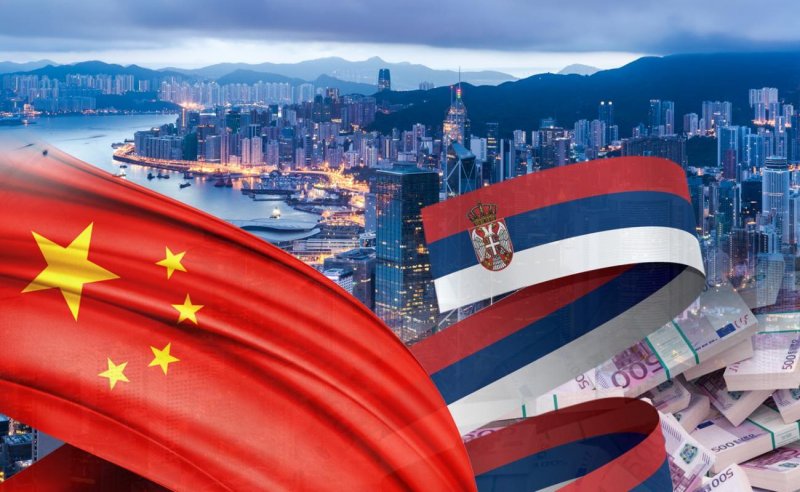
As Serbian President Aleksandar Vučić visits China at the invitation of Chinese President Xi Jinping, attention is once again focused on one of the most important strategic partnerships in the Balkans.
Over the past decade, relations between Belgrade and Beijing have evolved far beyond traditional diplomacy, becoming a key pillar of Serbia’s economic development strategy and an important element of its broader foreign policy balancing act, News.az reports.
The visit highlights a central question for Serbia’s future: why has China become such an indispensable partner for Belgrade, and what does this relationship mean for Serbia’s position between East and West?
Why has China become strategically important for Serbia?
For much of the post-Cold War period, Serbia's foreign policy revolved primarily around Europe. Membership in the European Union remained the country’s declared strategic objective, while relations with Russia were shaped by historical, cultural and political ties.
China occupied only a marginal place in Serbian foreign policy thinking.
That reality has changed dramatically.
Over the last decade, Beijing has transformed into one of Serbia’s most significant economic partners, major investors and political supporters. The relationship is built on complementary interests. Serbia seeks investment, infrastructure modernization, access to global markets and diplomatic backing on sensitive national issues. China seeks reliable partners, logistical access to Europe and opportunities to expand its economic footprint in strategically important regions.
This convergence has elevated bilateral relations to a level rarely seen between a European state and China.
How important is China to Serbia’s economy?
The numbers illustrate the scale of the transformation.
Trade turnover between Serbia and China increased from approximately $1.5 billion in 2014 to around $6 billion in 2023. Such growth reflects China's rapidly expanding economic role in the Serbian economy.
Chinese companies have become involved in:
-
Infrastructure construction
-
Railway modernization
-
Road development
-
Energy projects
-
Metallurgical industries
-
Manufacturing investments
-
Logistics networks
For a country seeking accelerated economic modernization without sufficient domestic capital, Chinese financing and investment have provided opportunities that few other external partners could match.
The importance of Chinese investment extends beyond individual projects. It signals international confidence in Serbia’s economy and helps attract additional investors from other regions.
What makes the China-Serbia free trade agreement so significant?
The entry into force of the China-Serbia Free Trade Agreement in July 2024 represented a major milestone in bilateral relations.
The agreement is particularly notable because it is China's first free trade agreement with a country in Central and Eastern Europe.
Under the arrangement, tariffs on more than 95 percent of products are expected to be gradually eliminated. Nearly 20,000 product categories are covered, creating unprecedented opportunities for Serbian exporters.
Potential beneficiaries include:
-
Agricultural producers
-
Food processing companies
-
Fruit exporters
-
Meat producers
-
Industrial manufacturers
-
Technology-related sectors
For Serbia, preferential access to the world's second-largest economy offers a potentially transformative opportunity.
However, the agreement's ultimate success depends not on market access alone but on Serbia's ability to produce competitive goods at sufficient scale and quality.
Why does Serbia see China as more than an economic partner?
The relationship extends well beyond trade and investment.
One of the most important political dimensions concerns Kosovo.
China consistently supports Serbia's position regarding territorial integrity and does not recognize Kosovo's independence. As a permanent member of the United Nations Security Council, Beijing possesses significant diplomatic influence on issues affecting Serbian national interests.
For Belgrade, this support carries substantial weight.
At a time when many Western countries recognize Kosovo, Chinese backing provides Serbia with an important diplomatic counterbalance and reinforces Belgrade’s negotiating position in international forums.
This political alignment has strengthened mutual trust and deepened strategic cooperation.
How does China help Serbia maintain foreign policy flexibility?
Modern Serbian diplomacy is built on a principle of strategic balancing.
Belgrade seeks to avoid excessive dependence on any single geopolitical center.
Instead, Serbia attempts to maintain productive relations with:
-
The European Union
-
China
-
Russia
-
The United States
-
Regional partners
China plays a crucial role within this framework.
The partnership allows Serbian leaders to demonstrate that the country possesses alternatives beyond traditional Western structures. This strengthens Belgrade's negotiating position and reduces vulnerability to external political pressure.
From the Serbian perspective, diversification enhances sovereignty.
Rather than choosing exclusively between competing blocs, Belgrade seeks to engage all major actors where national interests coincide.
Does cooperation with China undermine Serbia’s European ambitions?
This remains one of the most debated questions in European policy circles.
Officially, Serbia continues to support membership in the European Union. European markets remain Serbia's largest export destination, and the EU continues to be the country's most important overall economic partner.
However, frustration over the slow pace of accession negotiations has encouraged Serbian policymakers to diversify external partnerships.
China fills part of that space.
For Belgrade, cooperation with Beijing is not necessarily intended as an alternative to Europe but rather as a supplement to existing relationships.
European officials, however, often express concern about growing Chinese influence in sectors such as infrastructure, telecommunications and strategic industries.
As a result, Serbia must carefully manage its relationships to avoid creating tensions that could complicate its European integration process.
Why is infrastructure cooperation so important?
Infrastructure represents one of the most visible symbols of Serbian-Chinese cooperation.
Projects such as the Belgrade-Budapest railway illustrate Beijing's long-term vision for regional connectivity.
These investments serve several purposes simultaneously:
For Serbia:
-
Improved transport infrastructure
-
Increased regional competitiveness
-
Enhanced logistics capabilities
-
Greater attractiveness for foreign investors
-
Economic modernization
For China:
-
Better access to European markets
-
Expanded trade routes
-
Stronger logistical networks
-
Greater economic influence in Southeast Europe
The result is a mutually beneficial partnership that combines commercial and strategic interests.
What are the risks of deeper economic dependence on China?
Despite numerous advantages, the relationship also presents challenges.
The most significant concern is trade imbalance.
While Serbian exports to China have increased substantially, imports from China remain considerably larger. Chinese machinery, industrial equipment, electronics and manufactured products dominate bilateral trade flows.
If this imbalance persists, Serbia could become increasingly dependent on imported Chinese goods while struggling to expand higher-value domestic production.
Additional concerns include:
-
Overreliance on external financing
-
Limited technology transfer
-
Potential debt vulnerabilities
-
Exposure to geopolitical tensions
-
Regulatory differences with European standards
To maximize benefits, Serbia must ensure that Chinese investment contributes to sustainable domestic economic development rather than merely increasing consumption of imported products.
Why does China view Serbia as a special partner?
From Beijing’s perspective, Serbia occupies a unique position in Europe.
Unlike many Western countries where Chinese investment often encounters significant political resistance, Serbia generally maintains a favorable attitude toward cooperation with China.
In recent years, bilateral relations have been elevated to the level of a "community with a shared future," a designation that Beijing reserves for particularly important partnerships.
Several factors explain Serbia's importance:
-
Strategic Balkan location
-
Transport connectivity potential
-
Political stability of bilateral relations
-
Openness to investment
-
Supportive diplomatic environment
-
Long-term cooperation opportunities
For China, Serbia represents both a trusted partner and an important gateway into Southeast Europe.
Can Serbia continue balancing between major powers?
This remains the central strategic challenge facing Belgrade.
The rivalry between major powers is intensifying. Relations between China and Western countries remain complicated. Tensions involving Russia continue to affect European security dynamics.
As geopolitical competition grows, maintaining equal distance from competing centers of power becomes increasingly difficult.
Yet Serbia has so far demonstrated considerable skill in pursuing a multi-vector foreign policy.
Belgrade receives economic benefits from Europe, diplomatic support from China and Russia on key national issues, and investment from multiple international partners.
Whether this balancing strategy remains sustainable will depend largely on future developments in global politics and Serbia’s ability to continue defending its strategic autonomy.
The bigger picture
President Vučić’s visit to Beijing is about far more than bilateral meetings and economic agreements.
It reflects Serbia’s broader vision of international relations: maintaining European aspirations while cultivating alternative partnerships that enhance national flexibility and strengthen sovereign decision-making.
For Serbia, China is simultaneously a market, an investor, a diplomatic ally and a strategic counterweight. For China, Serbia offers political reliability, regional influence and an important foothold in the Balkans.
The success of this partnership will ultimately be measured not by diplomatic symbolism but by economic outcomes. If Serbia can leverage Chinese cooperation to expand exports, modernize industry and strengthen domestic production, the relationship may become one of the most consequential strategic partnerships in contemporary Southeast Europe.
If not, the benefits may remain largely political while economic asymmetries continue to grow.
That is why Serbia’s relationship with China is no longer simply about friendship. It is increasingly about how a medium-sized European state seeks to navigate an increasingly competitive and fragmented international order.
By Faig Mahmudov


Similar news