Iran's missile debris fell in Qatar after being shot down


Eyewitness video shows a large object descending rapidly before striking near a busy urban roadway, followed by an explosion consistent with remaining rocket fuel ignition, News.Az reports, citing foreign media.
RECOMMENDED STORIES
Local reports indicate that toxic propellant associated with the missile ignited after impact. Authorities have not confirmed casualties or damage assessments at the time of reporting.
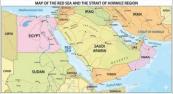
Iranian officials stated Saturday that their armed forces conducted retaliatory strikes against several locations across the Gulf region. According to Iran’s Fars news agency, targets included Bahrain, Kuwait, Qatar, and the United Arab Emirates, all of which host United States military facilities. The announcement came after what Iranian authorities described as a large-scale joint attack carried out earlier by the United States and Israel.
Qatar’s Ministry of Defense said in a statement that it had “thwarted” multiple attacks directed toward the country, indicating that air defense systems successfully intercepted incoming missiles before impact. The ministry did not disclose the number of missiles involved or specific interception locations.
Regional reporting described similar developments elsewhere. Bahrain confirmed that a missile attack targeted the headquarters of the United States Navy’s Fifth Fleet, calling the incident “a treacherous attack” and “a blatant violation of the kingdom’s sovereignty and security.” Explosions were also reported in Kuwait, where facilities linked to United States Central Command are located, according to Al Jazeera Arabic.
In the United Arab Emirates, state media reported that at least one person was killed in Abu Dhabi after several Iranian missiles were intercepted. Authorities there did not immediately release additional operational details but confirmed that air defense systems had engaged incoming threats.
The falling missile debris recorded in Qatar illustrates a known operational consequence of modern missile defense engagements. Interceptor systems destroy incoming ballistic threats at altitude, but fragments, propulsion components, or partially intact missile sections may continue descending toward the surface. In many cases, residual fuel remains within the structure, increasing the risk of post-impact fires or explosions.
Ballistic missiles typically rely on highly energetic propellants designed to sustain high-speed flight through the atmosphere. When interception occurs before full fuel depletion, surviving debris can still contain volatile material capable of ignition upon ground impact. Military planners generally consider this an unavoidable secondary risk during defensive operations, particularly in densely populated regions.
The broader exchange reflects an expanding regional dimension to the conflict between Iran, Israel, and the United States. Gulf states hosting U.S. bases have long been viewed as potential targets during escalation scenarios, given their role in supporting regional military operations and logistics networks.
Air defense cooperation among Gulf partners has increased in recent years, integrating radar coverage and interceptor systems intended to counter ballistic missile threats. The reported interceptions in Qatar and neighboring states suggest these systems were actively employed as Iranian retaliatory strikes unfolded across multiple countries simultaneously.
While interceptions prevented direct strikes on intended targets, the incident demonstrates how even successful defensive actions can expose civilian populations to indirect danger.
By Ulviyya Salmanli


Similar news