Iran strikes Tel Aviv after Larijani killed


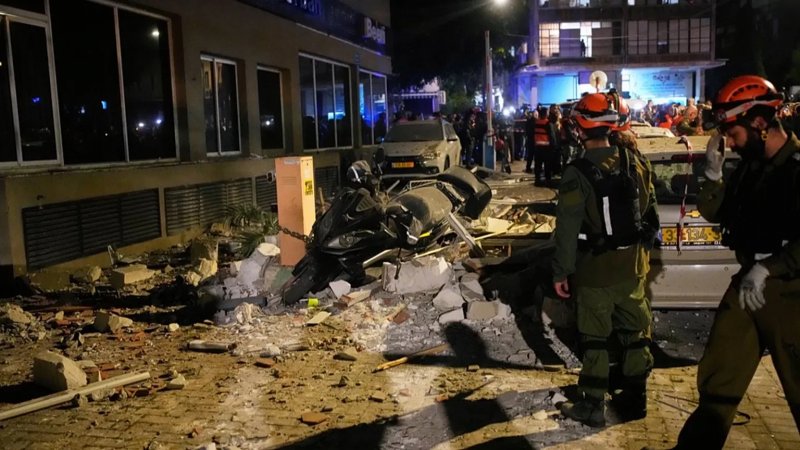
Iran’s Islamic Revolutionary Guard Corps (IRGC) says it has struck more than 100 targets in Tel Aviv in retaliation for the killing of Ali Larijani, Iran's former top security official.
In a statement on Wednesday, the IRGC announced that the targets were hit during the 61st wave of its ongoing Operation True Promise 4, News.Az reports, citing Iran’s international English-language Press TV channel.
RECOMMENDED STORIES
“The hostile objects were targeted using multi-warhead Khorramshahr-4 and Qadr missiles, as well as Emad and Kheibar Shekan projectiles, as a means of avenging the martyrdom of Dr. Larijani, the former secretary of Iran's Supreme National Security Council (SNSC),” the statement read.
“During these intense strikes, the Khorramshahr-4 and Qadr missiles hit more than 100 military and security targets in the heart of the occupied territories without encountering any obstruction,” it added.
The IRGC described this stage of the operation as evidence of “the disintegration of the Zionist regime's multilayered and highly advanced air defense systems.”
It said field reports indicated a “partial blackout” in Tel Aviv as a result of the strikes, which also reportedly made it more difficult for Israeli forces to control the situation and assist those affected.
The IRGC claimed that Operation True Promise 4 has so far killed or injured more than 230 Israelis.
In addition to Tel Aviv, the Iranian strikes reportedly targeted sensitive and strategic sites in Jerusalem, the port of Haifa, Be’er Sheva, which serves as Israel’s technological hub, and the Negev Desert.
The IRGC also said American facilities across the region, including in Qatar, Bahrain, the United Arab Emirates, Kuwait, and Saudi Arabia, faced intense reprisals.
Ali Larijani, who served as secretary of Iran’s Supreme National Security Council and was a former parliament speaker, was killed in an Israeli attack on March 17. Iranian authorities described his death as an assassination and blamed hostile foreign actors, prompting the IRGC’s retaliatory strikes.
By Emil Kaziyev


Similar news