Jeffrey Sachs warns Iran-US tensions in Strait of Hormuz may end without formal deal


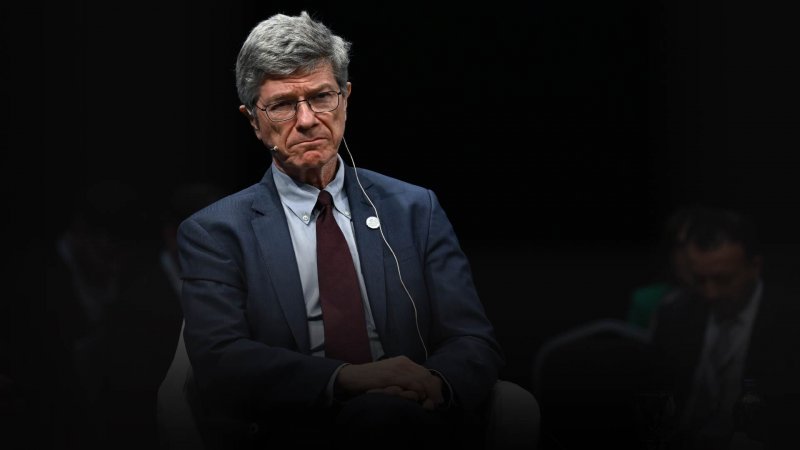
American economist and public policy analyst Jeffrey Sachs has offered a detailed assessment of rising tensions between Iran and the United States in the Persian Gulf and the Strait of Hormuz, suggesting that the conflict may ultimately de-escalate without a formal agreement.
Sachs said that while Washington may prefer a military resolution, Iran’s ability to retaliate strongly across the region makes escalation highly risky and potentially damaging for global energy markets and the wider economy, News.Az reports, citing TABNAK.
He argued that any further escalation in the Persian Gulf could have serious consequences not only for regional actors such as Israel and Gulf states, but also for the United States and the global economic system. For this reason, he suggested the most likely outcome is an informal end to hostilities rather than a structured peace deal.
RECOMMENDED STORIES
Sachs stated that the United States does not currently have a viable military option that guarantees success, creating what he described as inconsistent policy behavior and uncertainty in Washington.
He also noted that domestic and geopolitical pressures, including lobbying dynamics and the interests of key allies, could complicate diplomatic efforts and increase the risk of miscalculation in the region.
According to him, Israel continues to favor a more confrontational approach, while the US administration faces political challenges in presenting any outcome as a clear victory.
Addressing concerns over maritime security, Sachs said Iran’s position in the Strait of Hormuz should not necessarily be viewed as destabilizing. He argued that Iran has an interest in keeping the waterway open and functioning, provided its own security is not threatened.
He added that Iran could seek economic compensation mechanisms such as transit fees, while also expressing interest in improved relations with neighboring Gulf states—if foreign military presence in the region is reduced.
When asked about possible outcomes, Sachs said the most realistic scenario is a fragile cessation of hostilities without a formal agreement, although he emphasized that uncertainty remains high and conditions could change rapidly.
He warned that the situation is vulnerable to “false flags, miscalculations, and inconsistent decision-making,” making long-term stability difficult to predict.
On Iran’s nuclear program, Sachs argued that a bilateral deal between Iran and the US is unlikely at this stage. He suggested that any lasting settlement would require a broader international framework involving countries such as China and Russia, along with enforcement mechanisms through the UN Security Council.
He also pointed to past breakdowns in agreements, referencing the collapse of the 2015 nuclear deal, and argued that trust between Washington and Tehran remains deeply damaged.
Sachs concluded that nuclear discussions are more likely to succeed only after tensions de-escalate and if they are conducted in a multilateral setting designed to ensure compliance from all sides.
By Aysel Mammadzada


Similar news