Key points of Germany’s new pension reform bill


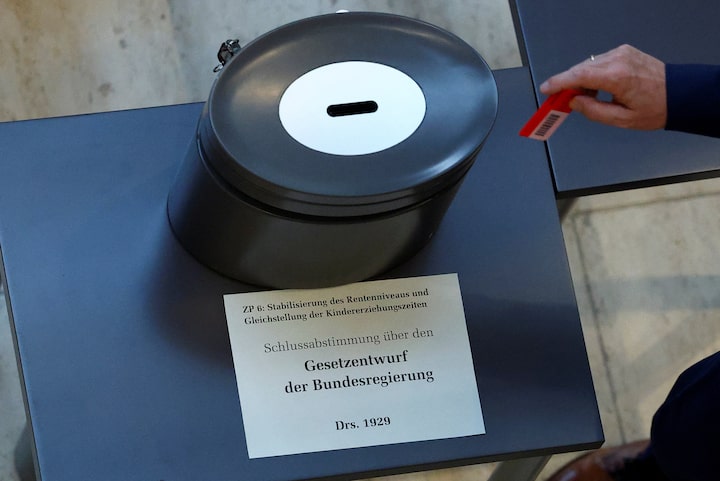
Germany’s coalition government is poised to approve a major pension reform on Friday, raising benefits by roughly €185 billion over the next 15 years and allowing retirees to work tax-free. Economists warn, however, that the package could deepen long-term financial pressures as the country’s population rapidly ages.
The reform, part of the coalition agreement between Chancellor Friedrich Merz’s conservatives and the centre-left SPD, faced internal resistance from younger conservative MPs but is expected to pass. A broader structural reform is planned for 2026, News.Az reports, citing Reuters.
Germany’s average state pension—currently 48% of the average wage—will be kept at this level until 2031, then gradually decline to 46.3% by 2039.
Without intervention, the pension ratio would have dropped sooner, reaching 44.9% by 2040.
The adjustment will cost €122 billion through 2039.
The change partly rolls back a 2005 reform that sought to limit pension growth as the number of retirees rose faster than the number of contributors. Germany’s demographic challenge is stark: while there were 2.7 workers per pensioner in 1992, there are fewer than two today, and the ratio is projected to fall to 1.3 by 2050.
The “mother’s pension,” which rewards time spent raising children, will be expanded.
Parents of children born before 1992—who previously received only six months of credit—will now be eligible for up to three years of childcare credits, aligning them with parents of younger children.
Around 10 million parents, mostly women, will benefit, at a cost of €62.7 billion by 2039.
To encourage older workers to remain in the labour force, retirees working beyond the official retirement age of 67 will be able to earn up to €2,000 per month tax free starting in 2026.
Germany’s working-age population is projected to shrink significantly—6.3 million fewer workers in 2030 compared to 2010—which economists say will weigh on GDP per capita.
The new incentive will cost the state about €890 million annually in lost tax revenue between 2026 and 2030.


Similar news