Middle corridor and Eurasian connectivity explained


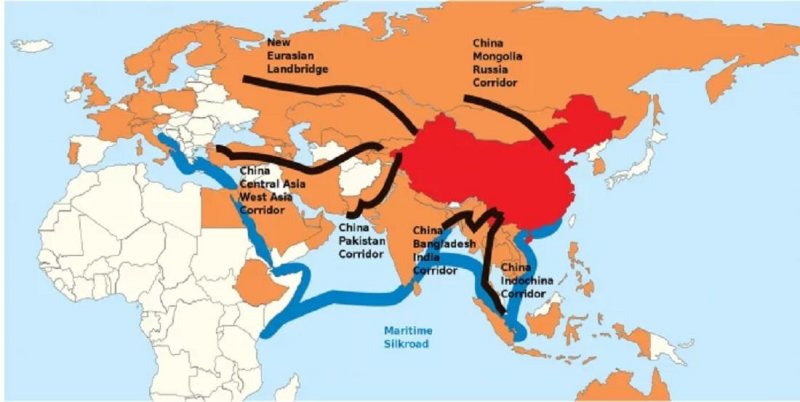
The Middle Corridor has emerged as one of the most strategically significant connectivity projects of the modern era.
By early twenty twenty six it was no longer discussed only by transport specialists or regional policymakers. It had become a subject of global debate involving governments logistics companies investors and security analysts.
RECOMMENDED STORIES
At its core the Middle Corridor represents a reconfiguration of how goods energy and data move between Asia and Europe. It offers an alternative to traditional routes that dominated global trade for decades. Shifting geopolitical realities supply chain shocks and economic diversification strategies have accelerated interest in this corridor.
On twelve February twenty twenty six the Middle Corridor was among the most discussed themes because it symbolized a broader transformation in global connectivity. It reflects how states are adapting to a more fragmented world by investing in resilient diversified and multi route networks.
What the middle corridor actually is
The Middle Corridor is a multimodal transport route linking East Asia to Europe through Central Asia the Caspian Sea the South Caucasus and onward to European markets. It combines rail maritime and road transport into a single integrated corridor.
Unlike older routes that rely heavily on one geography or political space the Middle Corridor distributes risk across multiple states and modes of transport. Cargo moves from China and Central Asia by rail to the Caspian Sea crosses by ship to the western shore and then continues by rail toward Europe.
This structure allows flexibility. If one segment faces disruption cargo can be rerouted within the corridor. This adaptability is one of the reasons the Middle Corridor has gained strategic importance.
How global supply chain shocks reshaped priorities
The last decade exposed vulnerabilities in global supply chains. Disruptions caused by geopolitical tensions pandemics and infrastructure bottlenecks forced companies and governments to reassess dependence on a narrow set of routes.
The Middle Corridor gained attention as a practical response to these vulnerabilities. It offers diversification without requiring a complete redesign of existing trade networks. Instead it complements established routes by providing an additional option.
For many stakeholders the corridor represents insurance against uncertainty. It does not replace other routes but reduces the risk associated with overreliance on any single pathway.
The strategic geography of the corridor
Geography is destiny in connectivity projects. The Middle Corridor passes through regions that historically served as bridges between civilizations and markets.
Central Asia connects major production centers to transit hubs. The Caspian Sea provides a natural maritime link. The South Caucasus serves as the gateway to European networks. Each segment plays a distinct role in the overall system.
This geography gives certain states increased strategic relevance. Transit countries become indispensable partners rather than peripheral players. Their infrastructure policies regulatory frameworks and political stability directly affect the corridor’s success.
The role of Azerbaijan in the middle corridor
Azerbaijan occupies a pivotal position in the Middle Corridor. Situated on the western shore of the Caspian Sea it serves as the main gateway connecting Central Asia to the South Caucasus and Europe.
Investments in ports railways logistics zones and digital systems have strengthened this role. Azerbaijan’s transport infrastructure has been designed to handle growing volumes of transit cargo while minimizing delays.
Beyond physical infrastructure Azerbaijan has emphasized coordination and standardization. Harmonizing customs procedures tariffs and transit rules is as important as building tracks and ports. This institutional dimension has elevated the country’s standing as a reliable transit hub.
Ports rail and logistics as strategic assets
Modern connectivity is not defined solely by distance. Efficiency reliability and predictability matter more than ever.
Ports along the Caspian Sea have become critical nodes. They enable the transfer of cargo between rail and maritime transport and determine the speed of transit across the sea.
Rail networks on both sides of the Caspian have been upgraded to handle higher volumes and heavier loads. Logistics centers integrate storage processing and distribution functions adding value beyond simple transit.
These assets are increasingly viewed through a strategic lens. Control and resilience of logistics infrastructure influence economic security and geopolitical leverage.
Economic benefits for transit and partner countries
The Middle Corridor offers tangible economic benefits to participating states. Transit fees job creation and investment inflows contribute directly to national economies.
More importantly connectivity supports broader economic development. Improved transport links attract manufacturing logistics services and industrial clusters. Regions once considered peripheral can integrate into global value chains.
For landlocked countries in Central Asia the corridor provides access to global markets without dependence on a single outlet. This diversification strengthens economic sovereignty.
The corridor and energy connectivity
While the Middle Corridor is primarily discussed in terms of trade it also intersects with energy connectivity. Infrastructure corridors often carry multiple flows including goods electricity gas and data.
Energy projects linked to the corridor enhance regional integration and resilience. Shared infrastructure reduces costs and creates incentives for cooperation.
Energy connectivity also reinforces the strategic value of transit states. Countries that facilitate both trade and energy flows occupy central positions in regional systems.
Digitalization and the smart corridor concept
Connectivity in the twenty first century extends beyond physical movement. Digital systems increasingly define competitiveness.
The Middle Corridor is evolving toward a smart corridor model. Digital customs platforms real time tracking and data sharing improve transparency and reduce delays.
These technologies lower transaction costs and increase predictability. For global companies reliability is often more important than speed alone.
Digital integration also supports security. Monitoring systems enhance safety and reduce the risk of theft or disruption.
Geopolitical implications of the middle corridor
The rise of the Middle Corridor carries significant geopolitical implications. It alters traditional patterns of influence and dependence.
By offering alternative routes it reduces leverage derived from control over legacy corridors. This redistribution of influence can stabilize the system by preventing monopolization.
At the same time it introduces new diplomatic dynamics. Cooperation among transit states becomes essential. Disputes or policy misalignment can undermine the corridor’s effectiveness.
As a result connectivity diplomacy has become a distinct field of international relations.
Balancing cooperation and competition
While the Middle Corridor encourages cooperation it also introduces competition. Transit states seek to attract cargo by improving services and reducing costs.
This competition can be healthy driving efficiency and innovation. However it requires coordination to avoid fragmentation and bottlenecks.
Regional platforms and agreements help manage this balance. Shared standards dispute resolution mechanisms and joint investments align incentives and sustain momentum.
Environmental considerations and sustainability
Sustainability has become an integral part of connectivity debates. Rail based corridors generally offer lower emissions per unit of cargo compared to long distance trucking or air freight.
The Middle Corridor’s emphasis on rail aligns with climate goals. However maritime segments and infrastructure construction still carry environmental impacts.
Sustainable development requires careful planning investment in cleaner technologies and coordination with climate strategies. Many stakeholders view the corridor as an opportunity to integrate sustainability from the outset.
Challenges facing the middle corridor
Despite its promise the Middle Corridor faces challenges. Infrastructure gaps regulatory inconsistencies and capacity constraints remain in certain segments.
Weather conditions on the Caspian Sea can affect schedules. Differences in technical standards can slow operations. Financing large scale upgrades requires sustained commitment.
Addressing these challenges demands long term planning and cooperation. Short term solutions are insufficient for a project of this scale.
Why global interest continues to grow
Interest in the Middle Corridor continues to grow because it aligns with multiple global trends. Supply chain diversification regional integration and strategic autonomy all converge in this project.
For businesses the corridor offers flexibility and resilience. For states it enhances economic security and diplomatic relevance.
This convergence explains why the corridor moved into the global spotlight in early twenty twenty six and why it is likely to remain there.
The middle corridor as part of a wider connectivity shift
The Middle Corridor should be seen as part of a broader shift toward networked connectivity. Instead of relying on single dominant routes global trade is moving toward a web of interlinked corridors.
This networked approach increases resilience. Shocks in one area can be absorbed by rerouting through others.
In this sense the Middle Corridor is not an isolated project but a key component of an emerging global system.
Long term outlook
Looking ahead the success of the Middle Corridor will depend on sustained investment policy alignment and trust among partners.
As volumes increase the corridor will face new tests. Capacity management digital integration and environmental performance will shape its future.
If these challenges are met the corridor could redefine Eurasian connectivity for decades.
Conclusion
The Middle Corridor represents more than a transport route. It is a strategic response to a changing world.
By linking regions diversifying supply chains and enhancing cooperation it addresses some of the most pressing challenges of our time.
The debates of February twenty twenty six reflect a recognition that connectivity is power. Those who build and manage corridors shape the future of global trade and cooperation.
By Faig Mahmudov


Similar news