Namibians vote in pivotal election as SWAPO's 34-year rule faces strong opposition


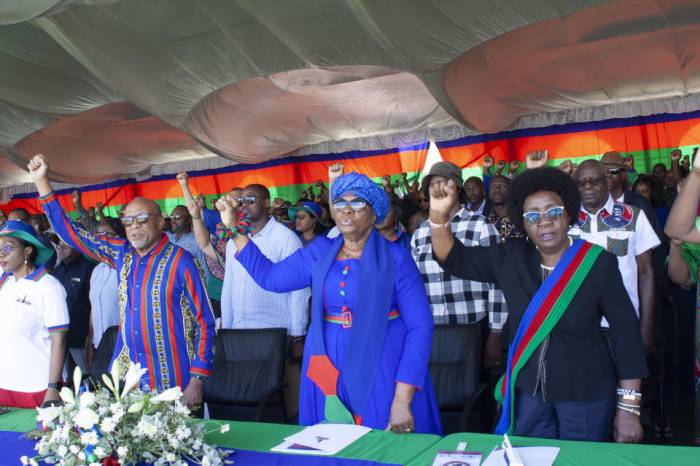
Namibia's vice president Netumbo Nandi-Ndaitwah, center, of the ruling South West Africa People's Organization, (SWAPO) attends an election rally in Windhoek, Namibia, Sunday, Nov. 24, 2024, ahead of elections Wednesday, Nov. 27, 2024. Photo: AP
Namibians will head to the polls on Wednesday in what is expected to be the most fiercely contested election in decades, as the ruling SWAPO party faces a serious challenge after 34 years in power.
If SWAPO candidate Netumbo Nandi-Ndaitwah wins, she will make history as Namibia's first female president, News.Az reports, citing Reuters.A SWAPO loss would mean the first transition of power to a new party since Namibia gained independence from apartheid South Africa in 1990.
High unemployment, corruption allegations and inequality have eroded SWAPO's support, which fell to 56% in the 2019 presidential election from 87% in 2014. There are no reliable polls on how it might fare this time.
The frontrunner among 14 opposition candidates is Panduleni Itula, a former dentist who won 29% of votes in 2019 after splitting from SWAPO and now leads a new political party, the Independent Patriots for Change.
Namibians vote separately for members of parliament and for the president, who needs more than 50% of votes to win.
"This will be the most challenging and significant election after the first one of 1989," Rui Tyitende, a lecturer at the University of Namibia, said.
He said the outcome would largely hinge on the turnout of young voters, who make up more than half the electorate and are more likely to back the opposition.
"Young people are disproportionately affected by unemployment, poverty and consumed with a deep sense of hopelessness," Tyitende said.
"If they do not pitch, SWAPO will win."
Namibia is currently led by interim president Nangolo Mbumba, who took over in February after the death of former president Hage Geingob but is not contesting the election.
Namibia is an upper-middle-income country but has high levels of poverty and inequality, according to the World Bank.
A 2021 government report found that 43% of the population were living in "multidimensional poverty", a measure that takes into account income as well as access to education and public services among other factors.
Namibia ranks second in the world for income inequality after neighbouring South Africa, World Bank figures show. Both countries spent decades under white minority rule.
SWAPO has struggled to distance itself from corruption scandals, although Nandi-Ndaitwah has never been implicated. Two former ministers are still on trial in the "fishrot" case, a major bribery scandal that surfaced in 2019.


Similar news