Lana Ravandi-Fadai: A ground operation against Iran would be suicide for the Trump administration - INTERVIEW



Mojtaba Khamenei’s elevation as Iran’s Supreme Leader signals continuity with a harder-line political course. Analysts describe him as closely linked to the Islamic Revolutionary Guard Corps and likely to prioritize regime survival, retaliation, and strategic deterrence. A U.S. ground operation appears unlikely, while Iran may face a prolonged air campaign, mounting internal pressure, and rising regional tensions.
This assessment was shared by Lana Ravandi-Fadai, head of the Eastern Cultural Centre at the Institute of Oriental Studies of the Russian Academy of Sciences and associate professor at the Russian State University for the Humanities, in an interview with the News.Az analytical portal.
- How do you assess the election of Mojtaba Khamenei as Iran’s Supreme Leader?
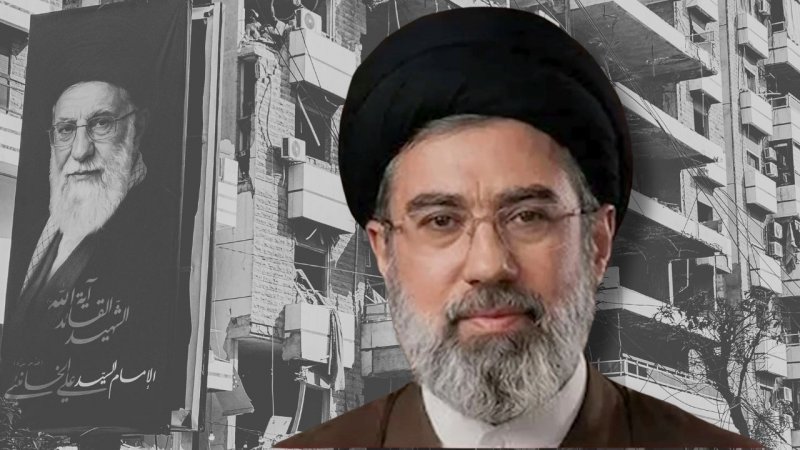
- Mojtaba Khamenei is a far more complex and, I would even say, more revolutionary figure than his father in his later years. He is not a bureaucrat. In Iranian terms, he could be described as a “mujahid,” a fighter for the faith. Mojtaba participated in the war with Iraq and has real combat connections with the Islamic Revolutionary Guard Corps rather than merely formal ties.
While his father had to balance among various factions, Mojtaba has always been considered one of their own by the Basij militia.
There were debates about his religious status. Before his election, he did not hold the highest clerical rank of ayatollah. However, the 1989 Constitution no longer requires the Supreme Leader to be a grand ayatollah, so there was no formal obstacle to Mojtaba’s election. Especially at a time when the country is under attack, when enemy strikes hit residential areas and civilians are killed, the Assembly of Experts is concerned less with theological credentials and more with the ability to defend the country quickly and effectively. In Qom, a solution was quickly found and he was appointed Supreme Leader. This demonstrates the flexibility of the system.
Source: Reuters
Mojtaba Khamenei was raised and politically prepared by his father, Ali Khamenei. For many years he acted as a “gray cardinal,” mediating disputes and resolving disagreements between the clergy and the IRGC. One could even say that after the war he played a significant role in shaping the IRGC and other Iranian security structures. He is a man who keeps his finger on the pulse of the Islamic system.
Donald Trump expressed outrage, saying the appointment was unacceptable and suggesting he should personally determine who the Supreme Leader should be. But the situation demonstrated that the fate of Iran is determined by the Iranian people themselves. The elite power struggle that Israeli analysts predicted during the selection of the new leader never materialized.
- What policy changes might occur in Iran under Mojtaba Khamenei?
- Under Mojtaba Khamenei, several developments are possible.
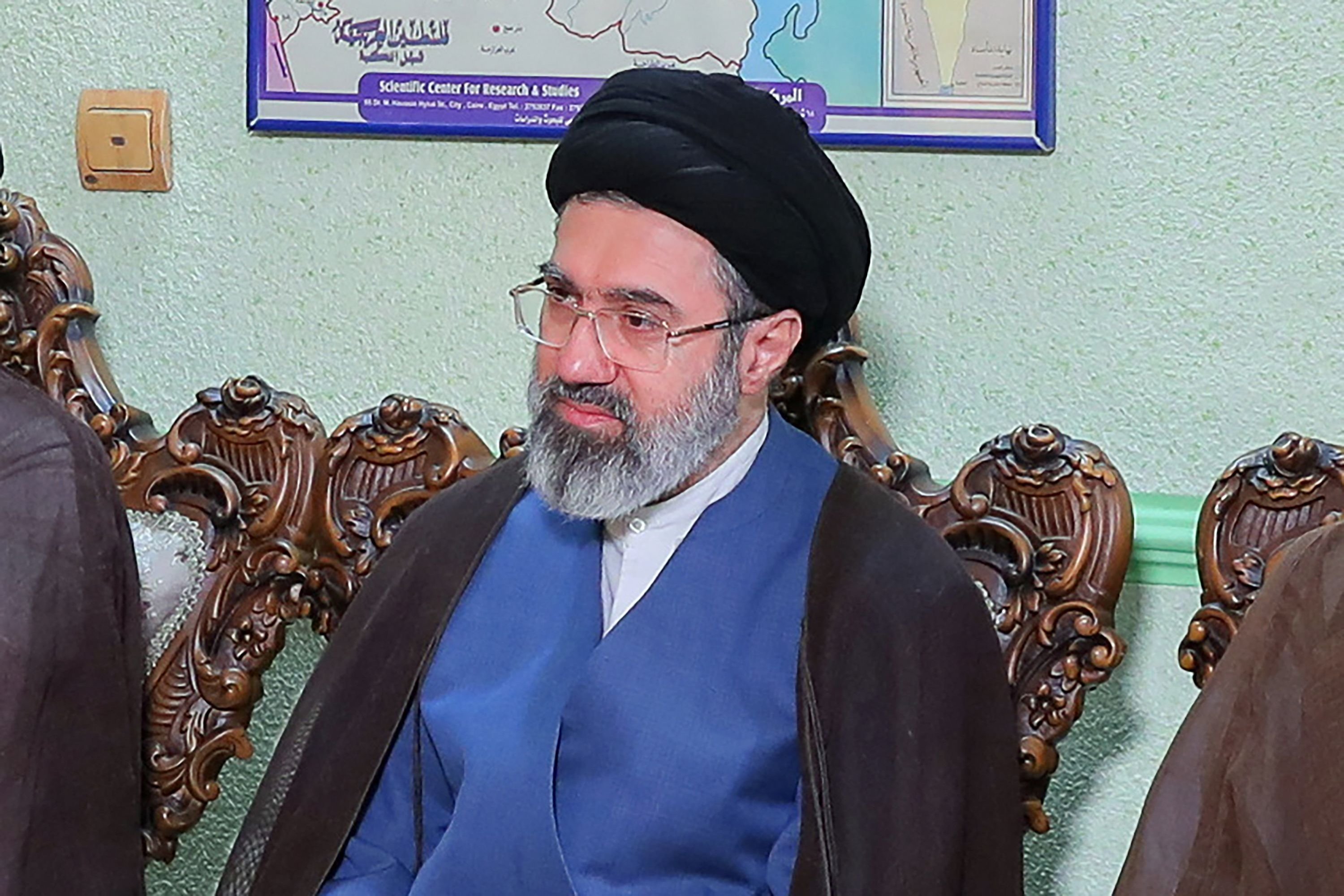
Some younger analysts believe Mojtaba might significantly liberalize the Islamic system, as has happened in some countries when relatives of rulers come to power. I do not agree with that view. We must clearly understand that many of his closest relatives were killed in strikes carried out by the United States and Israel. His father, mother, wife, and son were among the victims. For him, revenge against enemies will therefore become a matter of honor. Alongside traditional policy motivations, there will also be a strong personal motive.
This means powerful strikes against Israel and American bases may become a central objective while the war continues. His personal desire for revenge aligns with a sense of national humiliation, and this factor could prolong the conflict.
Source: BBC
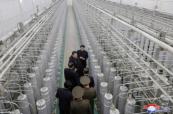
Regarding the nuclear program, it seems likely that the new leadership will conclude that Iran must become a threshold nuclear state. That means possessing all the technological capabilities necessary to quickly build a nuclear weapon if needed. They may not physically produce a weapon, but they will ensure that all the resources and technologies are available in case of necessity. The purpose would be to ensure that Tehran never again burns under foreign bombs. For the regime, this is a matter of survival.
As for the economy, the situation will of course be extremely difficult. Sanctions will remain. Mojtaba was not chosen as a liberal reformer. His task is to preserve Iran’s honor and independence. Iran has long experience living under sanctions, so the government will likely develop more effective ways to bypass them while relying on friendly countries.
- What are your forecasts regarding military escalation around Iran? How likely is a U.S. ground operation?
- I still hope that the Trump administration is pragmatic to the point of cynicism and will not enter a battlefield where defeat is almost guaranteed.
Yes, the United States and Israel have launched an air campaign, and we see serious strikes against military infrastructure and other targets. Various contradictory statements from Washington are designed to create uncertainty and psychological pressure.
In my opinion, a ground operation against Iran would be suicide for the Trump administration. Such an adventure would collapse his already weakened approval ratings. The Pentagon understands this perfectly well. Iran’s mountainous terrain would swallow an invading army. This is not the flat desert of Iraq. The Zagros Mountains are filled with narrow passes and valleys where heavy equipment cannot move easily. Once American columns begin advancing through those mountains, they would become easy targets.
The United States does not have enough resources or allies for such an operation. Even according to analysts, Washington might gather only 70,000 to 100,000 troops for a campaign of this scale.
Iran, on the other hand, could mobilize up to half a million Basij militia fighters.
Most importantly, the Arab Gulf states will not allow their territory to be used as a launch platform as they did in 2003. Saudi Arabia and the United Arab Emirates understand that if American troops move across the region, Iranian missiles will strike them and threaten the oil infrastructure that underpins their wealth.
Trump also won elections with promises to end endless wars. If he becomes trapped in the Iranian mountains and repeats the nightmare of Afghanistan, his party would suffer in the midterm elections.
Instead, the United States will likely rely on what could be called a hybrid blitzkrieg.
Washington wants to destroy Iran’s air defense system and strike missile bases and nuclear facilities in order to weaken the country severely. At the same time, the United States is attempting to destabilize Iran internally by encouraging ethnic minorities such as Baloch, Kurds, and Azerbaijanis. There are rumors that up to 25,000 militants, including former Islamic State fighters, are being transferred for operations along Iran’s borders, though this has not been confirmed.
The main American objective is regime change carried out by the Iranian population itself. Washington and Israel appear to hope that economic collapse after military strikes will push people into the streets and bring down the government.
We may also see targeted special forces raids. Units such as Delta Force or Navy SEAL teams could attempt limited operations against specific targets in border areas. At the same time, the United States will invest heavily in opposition groups, and this may increase internal terrorism.
However, weakening Iran is not necessarily in the interests of Arab states. If central authority collapses, Iran will not magically become a democracy. Instead, it could turn into a massive black hole of chaos. Imagine Syria multiplied by ten, but with nuclear technology potentially falling into the hands of multiple armed groups. Such chaos would benefit no one — neither neighbors nor Europe, which would face millions of refugees.
According to this analysis, only the government of Benjamin Netanyahu would clearly benefit from such chaos.
The war will likely be long and exhausting even without a ground invasion. It will largely be fought in the air and will become a war of attrition. Iran has experience surviving such conditions from the Iran-Iraq War and decades of sanctions.
- How do you assess incidents involving Iranian missiles and drones striking Azerbaijan and Türkiye?
Source: APA
- If the confrontation with the United States and Israel is about geopolitics, incidents involving Azerbaijan and Türkiye touch something far more sensitive. They threaten relations with neighboring friendly nations.
On March 4, the Turkish Ministry of Defense announced that its air defense systems had intercepted a ballistic missile launched from Iranian territory. The debris fell in Hatay province. According to Western intelligence reports, the intended target may have been the Incirlik Air Base, where American forces are stationed.
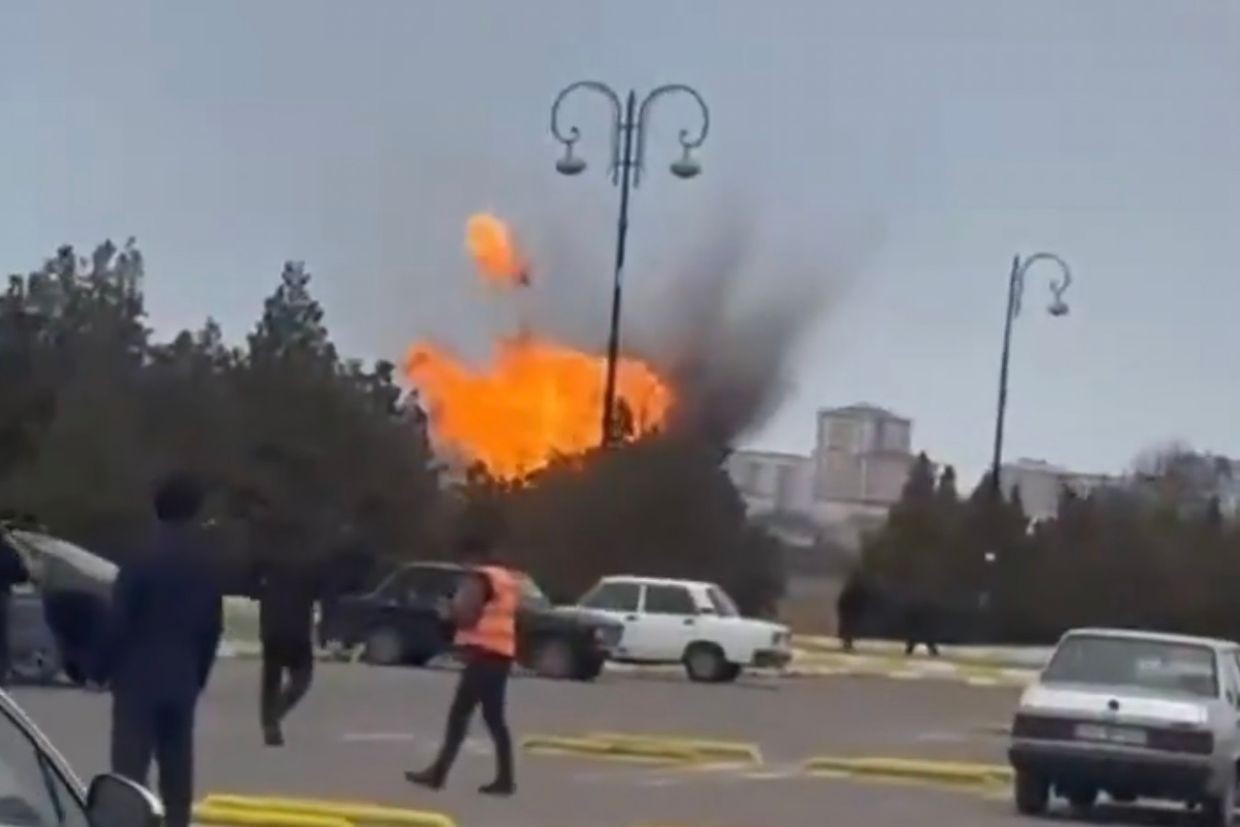
The following morning, two Iranian kamikaze drones struck the Nakhchivan Autonomous Republic. One hit the terminal building of the international airport, while the other crashed near a school in the village of Shakarabad. Four civilians were injured.
The reaction from Baku was immediate and strong. President Ilham Aliyev described the incident as a vile terrorist act and placed the army on the highest level of mobilization. Cargo transport between the two countries was temporarily suspended, though it has since resumed.
Tehran’s official position is that Israel is responsible for the incident. Iranian authorities say they respect the sovereignty of both Türkiye and Azerbaijan and would never deliberately strike them.
According to this view, the attack may have been a provocation designed to draw Iran’s neighbors into the war. Israeli forces could have launched the drones from Iraqi Kurdistan or used captured Iranian equipment to frame Tehran.
Another possibility is a technical failure. War creates chaos. Iran launched hundreds of drones and missiles toward American targets. Under intense electronic warfare, some may have lost guidance and crashed in unintended locations.
In any case, a direct war between Iran and Azerbaijan or between Iran and Türkiye is considered extremely unlikely. However, tensions along Iran’s northern borders could rise.
- How likely is it that ethnic groups inside Iran might rebel against the central government?
- Iran can be described metaphorically as a patchwork empire.
The largest minority group is the Azerbaijanis, who make up between 16 and 33 percent of the population according to different estimates. They are the second pillar of the state. Their numbers could reach up to 30 million people, and most preserve their native language.
They live mainly in northern cities such as Tabriz and Ardabil, and several million also reside in Tehran. They are predominantly Shia Muslims and played an active role in the Islamic Revolution. Both the Supreme Leader and President Masoud Pezeshkian are ethnic Azerbaijanis.
Their standard of living is often slightly higher than the national average, and they are well integrated into the structures of the Islamic Republic. Although there are complaints about limited education in the Azerbaijani language, separatism is generally not characteristic of Iranian Azerbaijanis. Recent protests by Azerbaijanis were primarily economic rather than nationalist.

Source: IRNA
Kurds make up around 10 percent of Iran’s population and live mainly along the western border with Iraq. Some Kurdish groups support autonomy, and there is historical memory of the short-lived Mahabad Kurdish Republic in 1946.
Kurdish regions are mountainous and difficult to control, which makes them potentially volatile.
Baloch communities in southeastern Iran are another concern. They live in a poor desert region bordering Pakistan, where militant groups such as Jaysh al-Adl operate.
However, even if separatist movements intensify, they are unlikely to unite into a single front. Kurdish, Arab, and Baloch groups have different goals and external sponsors. Therefore, a nationwide separatist uprising remains unlikely.
Iran may face localized insurgencies, but the central state would probably survive.
The greater challenge for Iran may be a prolonged war of attrition combining air strikes, internal unrest, and covert operations by foreign intelligence services.


Similar news