Nvidia CEO says next-gen AI chips are in full production


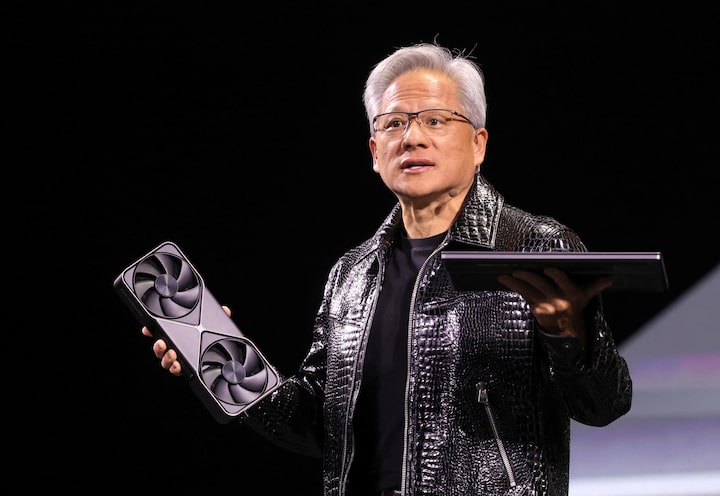
Nvidia CEO Jensen Huang said the company’s next generation of chips is now in full production, promising a major leap in performance as competition intensifies in the global AI chip market.
Speaking at the Consumer Electronics Show (CES) in Las Vegas, Huang said the new chips can deliver up to five times more artificial intelligence computing power than Nvidia’s previous generation when running chatbots and other AI applications. He added that the chips are already being tested by AI companies in Nvidia’s labs and are expected to roll out later this year, News.Az reports, citing Reuters.
At the center of the launch is Nvidia’s Vera Rubin platform, which combines six separate chips. A flagship server will include 72 graphics processing units and 36 new central processors. Huang said the chips can be linked into large-scale systems with more than 1,000 units, improving the efficiency of generating AI “tokens” by as much as tenfold.
The performance gains rely partly on a proprietary data format that Nvidia hopes will be adopted more widely across the industry. Huang said this approach enabled a significant boost in output despite a relatively modest increase in transistor count.
While Nvidia remains dominant in AI model training, it faces growing competition in deploying AI services from rivals such as AMD, as well as major customers including Google. Much of Huang’s presentation focused on improving chatbot responsiveness, including a new “context memory storage” technology designed to handle longer conversations more efficiently.
Nvidia also unveiled a new generation of networking switches using co-packaged optics, a technology aimed at linking thousands of machines together and competing with products from Broadcom and Cisco.
The company said cloud provider CoreWeave will be among the first to deploy Vera Rubin systems, with Microsoft, Amazon, Oracle and Alphabet also expected to adopt the platform. Nvidia additionally announced wider releases of software for self-driving vehicles and emphasized its push to open-source both AI models and the data used to train them.
Huang said demand remains strong for older Nvidia chips such as the H200, including in China, though shipments are still subject to U.S. and international licensing approvals.


Similar news