Perseid meteor shower: A fiery sky show to illuminate August nights
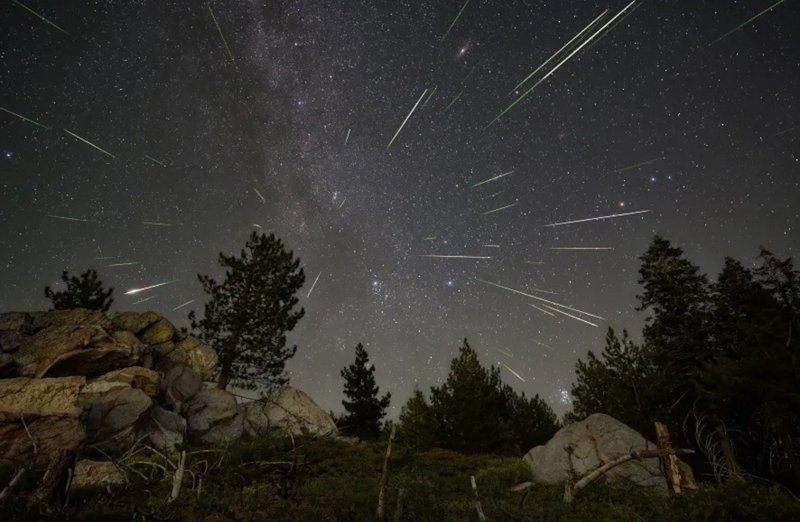
A view of the 2023 Perseid meteor shower from the southernmost part of Sequoia National Forest, near Piute Peak. Debris from comet Swift-Tuttle creates the Perseids. (NASA)
Stargazers are in for a treat as the highly anticipated Perseid meteor shower kicks off this year, beginning on Thursday, July 17, and running through August 24.
This mesmerizing celestial event, visible in countries like India, the United States, and the UK, promises to deliver one of the best sky shows of the year, News.Az reports, citing foreign media.
According to the National Aeronautics and Space Administration (NASA), "The Perseids, which peaks in mid-August, is considered the best meteor shower of the year." The meteor shower will be visible as swift and bright lights moving in the sky leaving long 'wakes' of light and colour behind them.
Named after Perseus constellation, the Perseids are made of tiny space debris from ‘Swift-Tuttle’ comet.
Stargazers in the India can look forward to a spectacular celestial treat over the next five weeks. To watch the cosmic show in the night sky, there is no need for any special equipment as a it can be viewed with the naked eye.
As the Perseid meteor shower streaks across the night sky up to 100 meteors per hour, it will peak between August 12 and 13, according to Time and Date.
Astronomy enthusiasts across the Unitel States will be able to catch a glimpse of the celestial wonder until August 24, Time and Date reported. Set to peak on the night of August 12 into the early morning of August 13, stargazers must find a secluded viewing spot to view up to 50 to 75 meteors per hour under ideal conditions, American Meteor Society Operations Manager, Michael Hankey.
The American Meteor Society's newsletter editor Robert Lunsford suggested that this year's showers' peak will not meet ideal conditions because the moon will be too bright.
The widely sought after meteor shower is active until August 24 but its peak time will be on the night of August 12 into the early morning of August 13.
The best direction to look into the sky is of Perseus constellation, which is known as the radiant, this is where the celestial show appears to originate. Dark and clear sky, away from the pollution of cities with a wide unobstructed view is ideal condition for the best viewing experience. To spot a meteor in the northern hemisphere, the best time is between midnight and an hour before sunrise.
News.Az