Who supports Armenian separatism? Not Armenia


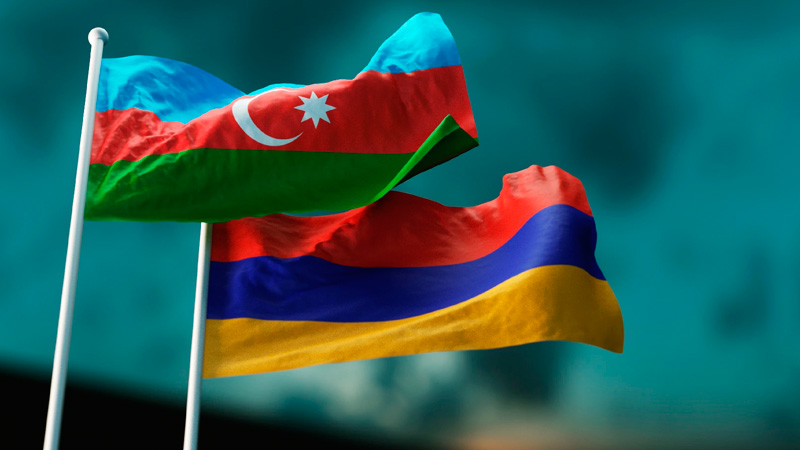
Speaking recently before voters, Armenian Prime Minister Nikol Pashinyan once again stated that Armenia should not continue the Karabakh movement. According to him, continuing the Karabakh movement would lead to new large-scale and localized wars, constant human losses, and ultimately to the loss of Armenian statehood.
The Armenian government is not only verbally distancing itself from separatism, but is also trying to prove its intentions through concrete actions. In late May, the Administrative Court granted the motion of Armenia’s Prosecutor General’s Office to invalidate the state registration of property rights belonging to the non-existent “NKR” for the building occupied by the separatists in Yerevan. In doing so, official Yerevan once again demonstrated that it remains committed to its declared course.
However, the Karabakh separatists have always had many other patrons. Even after the end of the conflict, these forces continue to support Armenian separatism. And now, as Yerevan is trying to distance itself from the Karabakh issue, which has proved destructive for Armenia itself, external support for the separatists has become especially visible. Instability and confrontation in the South Caucasus, it seems, remain important instruments for certain circles that are interested in preserving them.
France
France is known for its pro-Armenian position and has never tried to hide it. However, support by certain circles in France for the Karabakh separatists cannot be considered support for Armenia, since Armenia itself has rejected the continuation of the Karabakh agenda. While Yerevan is shutting down the “Artsakh representation,” the so-called “diplomatic representation” of the non-existent “NKR” continues to operate in Paris. It turns out that the Armenian diaspora in France and the lobby funded by it are not acting in Armenia’s interests at all, but are pursuing outside agendas.
France is currently one of the few countries where the “permanent representation” of the abolished separatist regime continues to function. It is headed by a certain “ambassador” named Hovhannes Gevorgyan. Gevorgyan appears at various events and meetings, including those held in the Senate and other official French institutions. The local lobby actively promotes revanchist narratives in the legislature, demanding the release of Armenian criminals convicted in Baku, the protection of a non-existent “Armenian heritage” in Karabakh, and the mass return of Armenians to Karabakh while preserving their former status.
In early May, speaking in the Senate, French Minister for Europe and Foreign Affairs Jean-Noël Barrot called on UNESCO to immediately send an assessment mission to Karabakh to monitor the condition of the allegedly endangered “Armenian heritage.” These statements caused surprise, since the same Barrot had only recently loudly welcomed the peace process between Baku and Yerevan.
Representatives of the abolished Karabakh regime have always felt very comfortable in France, especially during the years of the conflict. It would seem that, given the current peace agenda, Paris, which constantly declares its support for this process, should put an end to such visits today. But they continue.
In mid-April, representatives of the separatists, led by the so-called “speaker of parliament”, Ashot Danielyan, once again travelled to France. Danielyan is seen by influential French Armenian circles as a useful figure in the struggle against Pashinyan and in efforts to destabilize the region. At events organized by the “Artsakh representation,” discussions are held with the participation of well-fed lobbyists on the return of Armenians to Karabakh, holding Azerbaijan internationally accountable, and securing the release of the convicted leaders of the regime. During this “visit,” the separatists sought support — and, it seems, found it. In addition to Paris, they also visited the city of Alfortville, where they met with Mayor Luc Carvounas and French MP Isabelle Santiago. The same topics were discussed at those meetings.
It should be recalled that in 2017 the municipal council of Alfortville signed a “friendship charter” with the occupied city of Lachin, which the occupiers called “Berdzor.” In 2020, the Alfortville city council voted in favor of recognizing the “independence of Nagorno-Karabakh.”
On April 14, the separatists were received in the French parliament. It should be noted that, in honor of the separatist regime, an exhibition titled “We and Our Mountains” was organized at the initiative of French MP Emmanuel Mandon, chairman of the France-Artsakh Friendship Circle, Gilbert-Luc Devinaz, chairman of the France-Armenia Friendship Group in the French Senate, and the vice-president of the “International Information Group on Nagorno-Karabakh.” The exhibition was attended by members of the French parliament, senators, mayors, representatives of local authorities, journalists, and members of the Armenian diaspora.
Incidentally, the same Senator Gilbert-Luc Devinaz spoke on June 3 in Goris at the fifth conference on decentralized cooperation between Armenia and France. Although the event was formally devoted to regional development, intermunicipal exchange, and peaceful interaction, in reality it became yet another demonstration of France’s political bias. French guests voiced narratives such as “Armenia was attacked by Azerbaijan,” “Armenia is in danger,” and so on.
All this is happening not at the highest official level, but at the level of the lobby. Yet this does not change the essence of the matter. For example, France has a public organization called the “Association for the Support of Artsakh,” which conducts targeted propaganda against Azerbaijan’s territorial integrity, demands the return of Karabakh Armenians under international guarantees, and calls for the release of Armenian criminals.
The diaspora and lobby also planned to turn the opening ceremony of the new Armenian embassy building into an anti-Azerbaijani action. The ceremony took place in late April, but the guest list did not include the leaders of the local Armenian diaspora, Ara Toranian and Mourad Papazian, the head of the French Diocese of the Armenian Apostolic Church, or the “representative” of the separatists in France, Hovhannes Gevorgyan. Yerevan’s actions greatly angered the Coordinating Council of Armenian Organizations of France, known as CCAF, which issued a special statement.
Russia
Russia has always tried to put a good face on a bad game, supporting the Karabakh separatists while at the same time trying not to damage relations with Baku. After the 2020 war and the 2023 anti-terror measures, this support became quieter, but attempts continue at both official and unofficial levels to revive the Karabakh topic — a topic that Armenia itself has abandoned.
Moscow periodically organizes humanitarian aid campaigns for Armenians who voluntarily left Karabakh, trying to show that it stands with the Armenian people, and so on. The authorities turn a blind eye to provocative events held by the local diaspora on the territory of the Russian Federation.
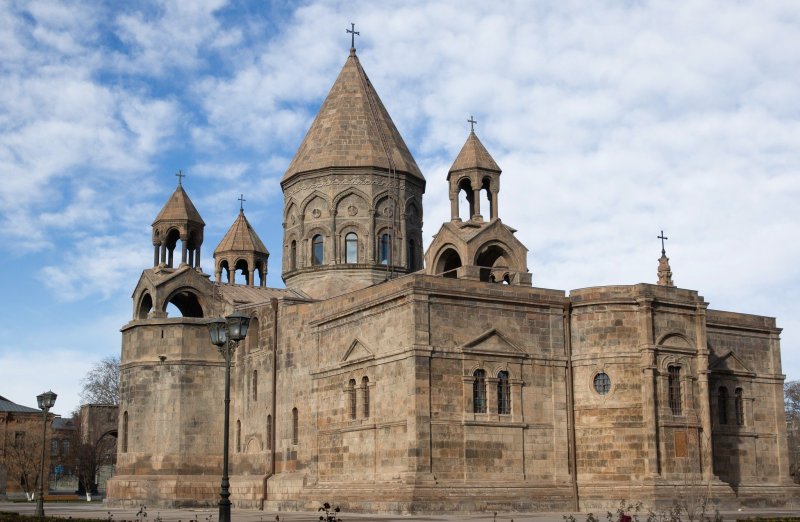
On May 10, Yezras Nersisyan, the brother of Catholicos Garegin, opened an exhibition in Moscow dedicated to the “culture and history of Artsakh.” The exhibition was allegedly timed to coincide with Victory Day on May 9, but in reality it was dedicated to the day of the Armenian occupation of Shusha. The provocative exhibition, titled “Do Not Let Karabakh Be Forgotten,” opened at the museum of the church complex of the Russian and New Nakhchivan Diocese of the Armenian Apostolic Church. According to the announcement, the exhibition will now operate on a permanent basis.
Among the guests at the ceremony was the same omnipresent Ashot Danielyan, as well as his predecessor as “speaker,” Ashot Ghulyan. The latter spoke at length and with pathos about the invaluable support provided to the separatists by the elite of the Armenian diaspora in Russia in the 1990s.
The fact that the provocative exhibition opened within the walls of a church belonging to the Armenian Apostolic Church diocese may, of course, explain why such a provocation was allowed at all. On the territory of its own diocese, the Armenian community may do as it pleases. The question is different: why do the Russian authorities allow visits by separatists? There is no answer to this question.
Provocations also continue to appear on Russian state television channels. They are no longer as frequent as before, but relapses still occur and each time leave an unpleasant aftertaste in bilateral relations.
A recent scandal erupted when the program Vremya Pokazhet showed viewers a pre-war map of the South Caucasus. On it, Azerbaijan’s Karabakh region was highlighted and labeled as the no longer existing “Nagorno-Karabakh.” The talk show Vremya Pokazhet has always been known for its anti-Azerbaijani narratives, and its authors and hosts apparently still have not understood how much has changed. However, they were eventually shown what was what: after protests from the Azerbaijani side, the program was removed and then restored, but without the provocative map of Azerbaijan.
The channel Russia 24 also often “confuses” realities with revanchist fantasies. As for Vladimir Solovyov, there is hardly any need to say much — his pro-Armenian position has long been known. In one of the May episodes of his program on Russia 1, the Russian propagandist once again distinguished himself by discussing “Armenian heritage” in Karabakh. In particular, he spoke about the Gandzasar monastery, which Solovyov described as “the greatest Armenian church,” allegedly proving Armenians’ right to Azerbaijani territories.
Frankly speaking, it is rather absurd to hear lectures about “antiquity” and “historical justice” from propagandists on Russian television.
Switzerland
Switzerland, which has always positioned itself as a model of strict neutrality, has never been neutral on the Karabakh issue. Unfortunately, a mix of Islamophobia and Turkophobia did not allow the country to demonstrate genuine neutrality and avoid automatically taking one side.
While Swiss Confederation President Guy Parmelin was preparing to travel to Armenia for the 8th summit of the European Political Community, the “speaker” of the Armenian separatists, Ashot Danielyan, arrived in Bern on a “working visit.” Danielyan has recently been visiting this country more and more often, as if the separatists had found some kind of loophole there for pursuing their revanchist plans.
The so-called visit took place from April 30 to May 1. As has become customary, an event dedicated to “Artsakh” was held in the Swiss parliament. Representatives of the diaspora, lobby groups, and the organization Christian Solidarity International, or CSI, took part in it.
Danielyan once again came to Switzerland to discuss the “protection of the fundamental rights of the people of Artsakh.” Bern also discussed the “immediate release” of Armenian criminals and the alleged destruction of “Armenian heritage.” It was the standard agenda.
It turns out that the Swiss parliament even has a commission called the “Swiss Peace Initiative for Nagorno-Karabakh.” It even has co-chairs — MPs Erich Vontobel and Stefan Müller-Altermatt. Moreover, another separatist organization operates in Switzerland — the “Committee for the Protection of the Rights of the People of Artsakh.”
Unlike their counterparts in other countries, local lobbyists are engaged in openly anti-Azerbaijani activity, openly meet with separatists, and are not particularly concerned about the diplomatic consequences for their own country.
In February, the same figures — Erich Vontobel and Stefan Müller-Altermatt, along with representatives of CSI — visited Yerevan and went to the separatist nest, where they held an “official meeting” with Danielyan. At that meeting, Vontobel was awarded a “medal,” while others received letters of gratitude.
It should be recalled that in October 2024, the Foreign Affairs Committee of the Swiss Federal Assembly called on the country’s government to organize an international peace conference on the Karabakh conflict, which no longer exists. The declared goal was to “promote dialogue between representatives of Azerbaijan and the Armenians of Karabakh regarding the safe and collective return of the Armenian population under the supervision or presence of international actors.” Both chambers of parliament voted in favor of the resolution, but the government opposed it.
Nevertheless, the lobby continues to give Armenian circles hope in order to remain relevant. Separatists are widely received in parliament and given unrealistic promises.
Conclusions
In conclusion, it must be stated that support for Armenian separatism remains in fashion. Moreover, this is happening in the very same countries whose governments welcome the peace agenda in the South Caucasus. Countries that allow their territories to be turned into platforms for anti-Azerbaijani games are crossing a line where the acceptable limits of lobbying Armenian interests turn into provocation with diplomatic consequences.
By Tural Heybatov


Similar news