Phil Lesh was like a traveler from another world


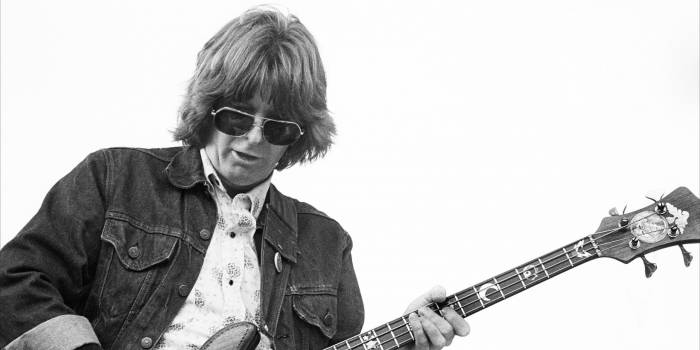
Even among the eclectic group of misfits in the Grateful Dead, Phil Lesh stood out as unique. Older than the rest, he had experienced different cultural influences. With a background in classical music and an admiration for beatnik culture, he didn’t come from a folk or blues tradition. It was only after guitarist Jerry Garcia persuaded him to join his band the Warlocks on bass in 1965 that he ventured into rock-and-roll, despite having never played it before, News.Az reports citing The Washington Post.
They would soon be known as the Grateful Dead, who over 30 years would blow open the aperture of rock music, rock concerts and rock fandom. Lesh’s first embrace of uncertainty crystallizes the crucial element he brought to the Dead: He pushed the band into the unknown. He channeled his love of improvisatory jazz, contemporary classical music and technology into their music, ensuring that the rock-and-roll he played reflected his obsessions. Thanks to Lesh, the Dead were liberated from the three-chord shuffle from the start.Lesh died Friday at 84, just weeks before the Grateful Dead were to take another curtain call for their contributions to American culture. The band’s rise through the psychedelic byways of the Bay Area roughly mapped with Lesh’s increasing confidence within the band. With Garcia taking a deliberately laissez-faire approach as leader, Lesh had free rein to integrate adventurous concepts within the band’s folk-blues architecture. Introducing the rest of the group to the searching explorations of John Coltrane, Lesh also seized the possibilities of the recording studio, often to the consternation of the band’s associates. In a letter lamenting the cost overages during the recording of their second album, 1968’s “Anthem of the Sun,” Joe Smith of Warner Bros. singled him out as the catalyst for chaos within the band: “It’s apparent that nobody in your organization has enough influence over Phil Lesh to evoke anything resembling normal behavior.”
“Anthem of the Sun” was indeed an indulgence, the pinnacle of Lesh’s fascination with recorded sound collages, an interest he cultivated when he attended Mills College, where he was classmates with the minimalist composer Steve Reich. The Dead backed away from such costly studio experimentations by the dawn of the 1970s, scaling back to the rustic Americana of “Workingman’s Dead” and “American Beauty.” By that point, Lesh established a distinctive instrumental style. Equally pliable and aggressive, his bass could chase after Garcia’s winding guitar lines or ground the band with a rattling boom. Lesh not only adapted easily to the simpler settings of country-rock, he wound up singing one of the Dead’s signature songs in “Box of Rain,” an aching tribute to his dying father co-written with the band’s regular lyricist Robert Hunter.
Despite his facility in the studio, the stage is where Lesh thrived, particularly during the first half of the 1970s. Thanks to the legions of Deadhead tapers, every one of the band’s tours was thoroughly documented, so it’s possible to sample any given date from 1972 or 1974 and hear how the Dead interpreted the improvisations instigated by Lesh through his introduction to Coltrane. Occasionally, they would lay into a loping vamp. More often they set out on a quest for aural transcendence, a journey encouraged and accelerated by Lesh’s bustling, insistent bass.
Aided by Owsley “Bear” Stanley, the Dead’s onetime acid source turned sound engineer, Lesh sought sonic nirvana through the development of their “Wall of Sound,” a custom-made rig of hundreds of speakers that stood 40 feet high. Lesh described the Dead’s 1974 tour with the “Wall of Sound” as “the most generally satisfying performance experience of my life with the band” — but it represented something of a closing chapter for the group. Its financial burden forced them off the road for a spell, a hiatus that accelerated Lesh’s descent into alcoholism. He played a diminished role in the band until the mid-1980s, when he re-emerged as a sober family man with a steady marriage and two sons.
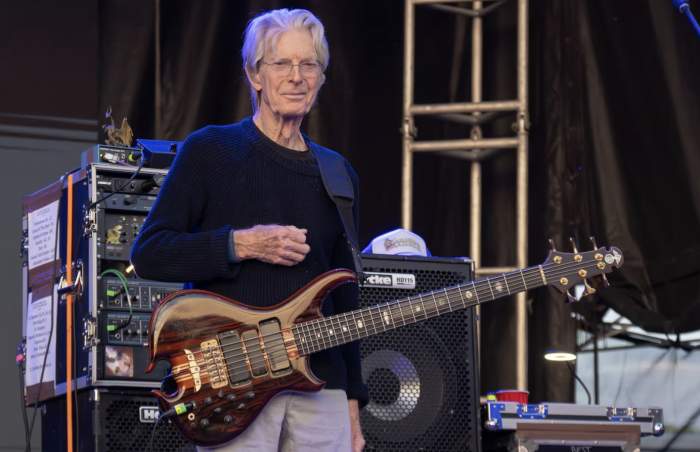
“Touch of Grey,” the song that gave the Grateful Dead their first Billboard Top Ten hit two decades after their first record, turned the band’s world upside down. Fresh fans flocked to the Dead, upsetting the delicate balance of the Deadhead ecosystem. Lesh bristled at the larger venues the band had to play to accommodate new listeners and, through the rest of his life, wound up choosing intimacy whenever he could. His options increased after the Dead disbanded in the wake of Garcia’s death in 1995. Freed of the confines of the Dead touring machine, Lesh opted to challenge himself creatively, designing Phil Lesh and Friends as a collective featuring a rotating crew of musicians, many quite younger than the bassist himself.
Although he occasionally reunited with his surviving bandmates, participating in the 2004 tour as the Dead and the group’s farewell concerts at Chicago’s Soldier Field a decade later, Lesh preferred settings where he could reconnect with the sense of adventure that fueled him during the band’s glory days. While Bob Weir, Mickey Hart and Bill Kreutzmann toured arenas as Dead & Company in recent years, Lesh stayed near his home, often playing Terrapin Crossroads, the San Rafael, California, venue he established with his family, with his Terrapin Family Band, which often featured his grown sons Grahame and Brian.
Lesh’s decision to not participate in Dead & Company suggested that he found sustenance not in the Dead itself but rather the band’s ethos: the idea that a group of mismatched musicians could stumble their way toward the sublime. By pushing the Grateful Dead toward new, unheard vistas, Lesh demonstrated what could be possible within rock-and-roll — not just the outer reaches of “Space” that he encouraged in the group’s famous improvised jams, but by turning inward on compositions “Box of Rain” and “Unbroken Chain,” songs that exhibited an emotional intelligence uncommon in rock. Within that spectrum — from the head to the heart — laid Lesh’s enduring legacy, an entire strange trip in one full life.


Similar news