Prospects for Azerbaijani natural gas transit to Europe via Ukraine


Editor's note: Ivan Us, chief consultant of the Center for Foreign Policy Research of the National Institute for Strategic Studies (Ukraine), Ph.D. in Economics.
On June 10, Bloomberg, one of the world's leading business publications, released an article focused on the prospects of using Ukraine's gas transportation system. It's worth noting that one of Ukraine's significant sources of foreign currency income was the transportation of natural gas from Russia to Europe. In 2021, the last year before the full-scale war began, transit revenue brought Ukraine about $1 billion, which was substantial for the Ukrainian economy.However, the onset of the full-scale war led to a dilemma. Ukraine severed diplomatic relations with Russia and ceased foreign trade with it. In such a situation, the logical question arose about stopping the transportation of gas from Russia to Europe. This question frequently arose among the Ukrainian population (since Russia's sale of natural gas to Europe brought money into Russia's budget, which was used to wage war against Ukraine).
But not all European countries were ready to instantly give up on Russian natural gas and asked Ukraine to continue the transit (for which Ukraine received money). Although these were smaller amounts due to lower volumes of gas being transported, it was still money that the war-torn country needed.
As a result, a decision was made to pump natural gas from Russia to Europe until the end of the current contract for its transportation. The term of this contract, covering this transit agreement, expires at the end of this year. Amidst the ongoing war, most market observers expect that gas supplies will finally cease.
However, this does not eliminate the need for European countries to receive natural gas. As noted in the Bloomberg article, representatives of European governments and private companies are negotiating with their counterparts in Ukraine on how to ensure gas supply next year.
According to some sources, one option being discussed is for European companies to buy and inject gas from Azerbaijan into pipelines leading to Europe. Such an agreement would allow Europe to avoid the complications associated with purchasing Russian gas while trying to limit Russia's revenues.
This idea is gaining momentum because it would enable Ukraine to earn money from transit, providing crucial funding for its war-torn economy. However, there are concerns that the outdated pipelines could become military targets or fall into disrepair, and their restoration would be costly.
In an interview with Bloomberg, Oleksiy Chernyshov, the CEO of Ukraine's state-owned company Naftohaz, ruled out any plans involving cooperation with Russia's Gazprom and stated that gas supplies from Azerbaijan "could have a future," suggesting that Ukraine is also interested in developing this scenario.
Moreover, implementing gas supplies from Azerbaijan to Europe via Ukraine could ensure the use of Ukraine's gas transportation system in future periods, which is also necessary for understanding Ukraine's future revenues.
As for Europe, since negotiations are at an early stage, people familiar with the matter expect decisions to be made only by the end of the current year when the current contract expires and winter begins in Europe, increasing pressure to make a decision.
According to some Bloomberg sources, the gas giant Uniper SE, which was nationalized by Germany as the energy crisis destroyed its business model, is involved in the discussions. A representative of the German Ministry of Economy stated that the government is negotiating within the European Union.
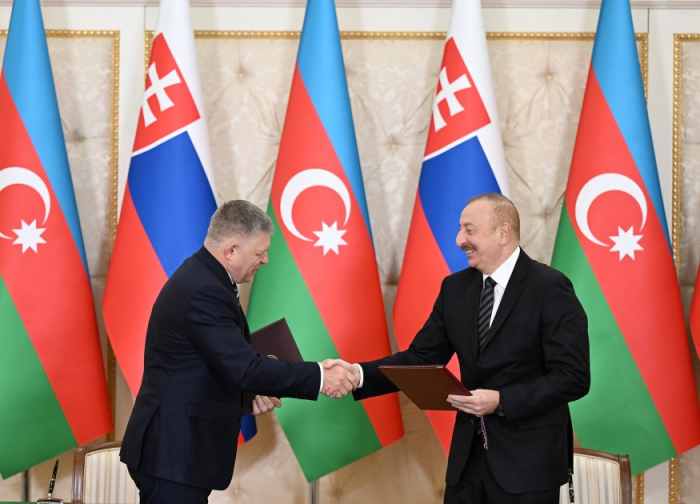
Slovakia is one of the key countries that could benefit from such a deal, and Prime Minister Robert Fico mentioned this possibility in early May 2024, following a trip to Azerbaijan, when Azerbaijan and Slovakia signed a declaration of strategic partnership.
He noted that agreeing on economic and pricing terms depends on negotiations between companies such as Russia's Gazprom, Azerbaijani, Ukrainian companies, and others. If an agreement is reached, Slovakia will be able to import gas from Azerbaijan, with part of it remaining in Slovakia and part going to other countries.
Regarding Russia's interests, it still sends about 15 billion cubic meters of gas to Europe through Ukraine, mainly to Slovakia and Austria, where Russia remains the dominant supplier. In Austria, Russian gas has covered more than 80% of Austrian consumption for five consecutive months. Europe also imports Russian LNG by sea, and despite frequent debates about whether it should do so, it has never imposed sanctions on Russian gas.
The European Commission, the executive body, believes that the EU can withstand the cessation of Russian transit through Ukraine without any serious security risk. Its plan is to rely on alternative suppliers and implement its ambitious climate strategy, including more renewable energy sources and energy savings. Some member states are less optimistic and fear a repeat of the energy crisis.
As for Azerbaijan's interests, it is worth noting that it already uses its pipeline system to Europe at full capacity. Therefore, additional logistical capabilities are needed to transport natural gas to Europe. Then Azerbaijan will be able to increase exports to Europe. But to start such work, new long-term contracts are needed.
To summarize, many details still need to be agreed upon, and it is unclear whether a deal will be reached at all. Events on the battlefield in Ukraine could also be an important determining factor. Since the security factor has not been eliminated, this concerns both the pipeline on Ukrainian territory and the use of the Black Sea.
But it can already be said that while the war may end in the short term, strategic interests in natural gas supplies to Europe will not disappear, and both Azerbaijan and Ukraine are interested in making the idea of supplying gas from Azerbaijan through Ukraine to Europe a reality.
(If you possess specialized knowledge and wish to contribute, please reach out to us at opinions@news.az).


Similar news