Israel vs. Hezbollah: Is peace with Lebanon possible?


Editor’s note: Moses Becker is a special political commentator for News.Az. He holds a PhD in political science and specializes in interethnic and interreligious relations. The views expressed in this article are the author’s own and do not necessarily reflect the position of News.Az.
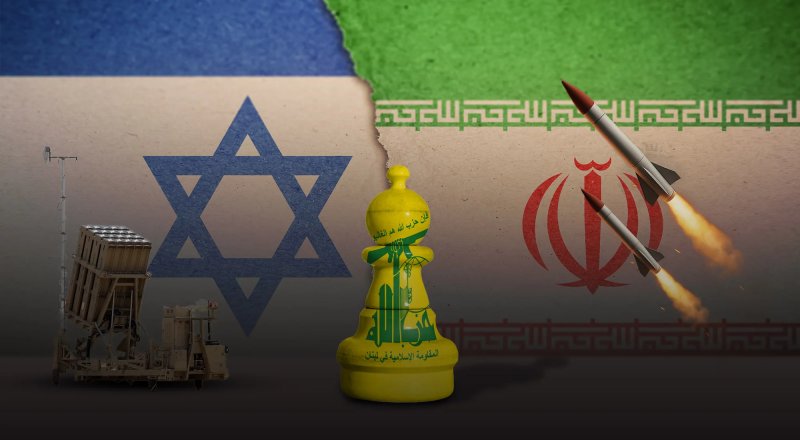
On March 11, Hezbollah announced the launch of Operation Eaten Eagle against the Jewish state in response to U.S. and Israeli strikes on Iran and the elimination of Ayatollah Ali Khamenei by the Israeli Air Force. The group fired around 100 rockets toward Israeli territory. According to preliminary data, two people sustained minor injuries as a result of the shelling.
On the evening of March 14, 2026, in response to repeated attacks on Israeli territory by the terrorist organization, the Israel Defense Forces (IDF) launched a ground and air operation in Lebanon. On March 16, the Israeli military struck the Haret Hreik area in Beirut.
According to the IDF press service, the strikes are targeting the “terrorist infrastructure of the Shiite group Hezbollah” located in the Lebanese capital. In addition, Israeli aircraft hit headquarters and various facilities in Beirut used by Hezbollah to plan and carry out attacks against IDF forces and Israeli territory. Additional targets in southern Lebanon were also struck as part of the 91st Division’s border defense operations.

Source: Reuters
As a result, the Israeli military has moved to active operations, threatening to expand the buffer zone if Hezbollah does not disarm. The situation is further complicated by the possible involvement of Syria, where the new government is reportedly ready to assist in disarming Hezbollah, raising concerns among the Shiite community. If Hezbollah lays down its arms, it could lead to violence from Syrian forces, which is perceived as a serious threat.
In any case, Hezbollah appears to have only one option left: to continue fighting until its eventual collapse. Already, the southern suburbs of Beirut (Dahiya), where many Shiites reside, have been destroyed, and the number of refugees has exceeded 850,000.
According to official data, the death toll from Israeli strikes in Lebanon has reached 826, with more than 2,000 civilians injured. On the Israeli side, during the war with Iran and Hezbollah, 14 people have been killed and more than 2,900 injured.
The Lebanese state has been unable to organize adequate humanitarian assistance, further worsening the crisis. Internal divisions have also emerged within Lebanon. A large portion of the population opposes the so-called “resistance,” a term that has recently fallen out of use in local media. A significant share of the Christian and Sunni population, as well as the Druze community, supports ending the confrontation with Israel and establishing lasting peace with final border demarcation.
At present, IDF actions can be viewed as a limited military operation. However, it cannot be ruled out that Israel may attempt to seize a larger portion of Lebanese territory in the future, which would lead to further destruction of already weakened civilian and industrial infrastructure.
All of this is increasing tensions between the Shiite community and the rest of the population, which is exhausted by war and devastation.

Source: alhurra
As for the U.S. position, its objective in this conflict is to defeat Hezbollah and establish lasting peace between Lebanon and Israel. Currently, there are active reports about possible negotiations between the two sides.
Lebanon has accepted a French proposal as a basis for peace talks, while Israel and the United States are still studying its terms. The framework has emerged as Israel prepares for a significant expansion of its ground operation in Lebanon.
Israeli and U.S. officials have indicated that Jerusalem is considering an offensive aimed at capturing territory south of the Litani River and dismantling Hezbollah’s infrastructure. If implemented, this would become Israel’s largest ground operation in Lebanon since the 2006 war.
France is seeking to initiate negotiations on a political declaration, with support from Washington and Paris, to be agreed upon within a month. Talks are expected to begin at the level of senior diplomats and later move to top political leadership, with Paris proposed as the venue.
According to the proposal, Lebanon would preliminarily recognize Israel and commit to respecting its sovereignty and territorial integrity. Both sides would reaffirm their commitment to UN Security Council Resolution 1701 and the 2024 ceasefire agreement.
Lebanon would also undertake to prevent attacks on Israel from its territory and implement an internal plan to disarm Hezbollah and ban its military activities.
The proposal includes the redeployment of Lebanese armed forces south of the Litani River, alongside the withdrawal of Israeli forces from areas captured during the current campaign within one month.
A U.S.-led monitoring mechanism would be established to respond to ceasefire violations and neutralize potential threats. UNIFIL peacekeepers would oversee Hezbollah’s disarmament south of the Litani River, while a separate UN Security Council-authorized coalition would supervise the process in other parts of Lebanon.
The plan also envisions Lebanon declaring its readiness to negotiate a permanent non-aggression agreement with Israel, to be signed within two months and formally ending the state of war that has existed since 1948.
Under this agreement, both countries would commit to resolving disputes peacefully and establishing security arrangements. Following its signing, Israel is expected to withdraw troops from five positions in southern Lebanon under IDF control since November 2024.
The final stage of the French proposal provides for the completion of border demarcation between Israel and Lebanon, as well as between Lebanon and Syria, by the end of 2026.
According to available information, Lebanese President Joseph Aoun has already appointed a negotiating team for potential talks with Israel.
Israeli Prime Minister Benjamin Netanyahu has tasked Strategic Affairs Minister Ron Dermer with handling the Lebanese file and coordinating with the Trump administration, which is expected to play a leading role.
Earlier, President Aoun sent an official proposal to UN Secretary-General António Guterres to begin peace negotiations with Israel, though no response had been received from the Israeli side at the time.
Israeli Foreign Minister Gideon Sa’ar stated that if the Lebanese government and army want to change the situation, they must take concrete steps to stop Hezbollah’s attacks from Lebanese territory.
Establishing peace between Israel and Lebanon would open a new chapter in the history of the Middle East and contribute to economic progress and prosperity across the region.
(If you possess specialized knowledge and wish to contribute, please reach out to us at opinions@news.az).


Similar news