Religious and national tolerance: Advancing interethnic relations


By Rovshan Sayyaroglu
In today’s globalized and rapidly changing world, the issues of intercultural dialogue, mutual respect, and peaceful coexistence among different ethnic and religious communities have become increasingly vital.
At a time when many societies face rising extremism, xenophobia, and religious intolerance, robust models of tolerance are not only desirable — they are essential for ensuring sustainable development and social harmony. Within this context, the concept of multiculturalism goes beyond academic discourse and becomes a practical framework for securing civil peace and inclusive growth.
Multiculturalism is more than just a policy of recognizing cultural diversity; it is a comprehensive philosophy rooted in the protection of ethnic and religious identities within a shared legal and civic space. It embodies respect for different worldviews, traditions, and ways of life, creating a platform for equal and meaningful dialogue between cultures. At the heart of any truly multicultural society lies the principle of tolerance — a deep inner willingness to accept the other, to understand and honor different values, customs, and beliefs.
Tolerance, however, is not merely a legal norm that guarantees equal rights. More importantly, it is a cultural and spiritual value. Even if all citizens are formally equal before the law, genuine societal harmony cannot exist without sincere respect, empathy, and goodwill. Tolerance is cultivated through historical memory, national character, systems of education, and the cultural traditions that shape a people’s moral code.
In this regard, Azerbaijan stands as a compelling example. Tolerance and respect for other religions and cultures are not externally imposed norms here — they are an integral part of the national mindset and collective identity. For centuries, the Azerbaijani people have demonstrated a profound respect for religious and ethnic diversity. Peoples and confessions living in this land have coexisted in peace, each contributing to the country’s rich cultural mosaic.
These traditions are especially evident in everyday life. For instance, the participation of Christian and Jewish communities in iftar dinners during the holy month of Ramadan has become a well-established tradition. In the village of Nic in the Gabala region, where the Udi Christian community resides, it is not uncommon for Christians to host iftar meals for local Muslims in their churches — a powerful reflection of mutual respect, trust, and genuine spiritual kinship. This is not merely religious tolerance but a profound cultural unity based on shared human values.
The Azerbaijani model of interfaith relations is also institutionalized at the state level. National Leader Heydar Aliyev, the architect of modern Azerbaijani statehood, placed special emphasis on fostering an atmosphere of religious peace and harmony. Under his leadership, a legal framework was developed to protect religious freedoms and encourage dialogue among confessions. The Constitution of 1995 enshrines these principles, stating that religion is separate from the state and that all religious beliefs are equal before the law. Article 48 of the Constitution guarantees every citizen the right to determine their attitude toward religion, freely express and disseminate their beliefs, and perform religious rituals.
Today, this policy is being successfully continued by President Ilham Aliyev, under whose leadership Azerbaijan has remained committed to fostering interreligious and interethnic harmony. Through his direct initiatives, mosques, churches, synagogues, and other places of worship are being restored or newly built; religious communities, regardless of affiliation, receive support for their activities. This approach ensures equal treatment and full protection of all citizens, regardless of their faith.
The Heydar Aliyev Foundation also plays a significant role in promoting the values of tolerance. Its projects are aimed at strengthening interfaith and interethnic understanding, advancing humanistic ideals, promoting intercultural dialogue, and nurturing a spirit of respect for others among the younger generation.
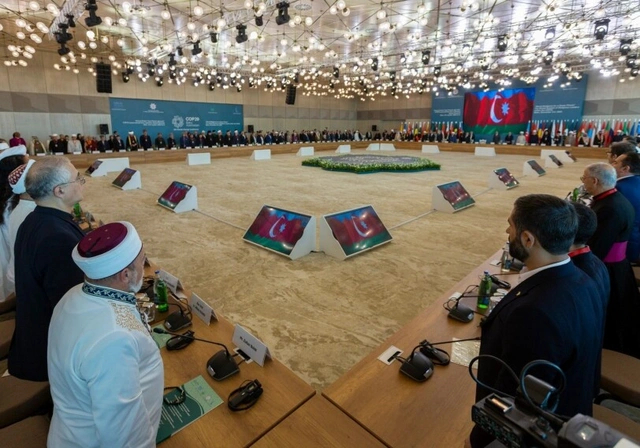
Internationally, Azerbaijan has emerged as a strong advocate for civilizational dialogue and global peace. The country regularly hosts international humanitarian forums, summits of world religious leaders, and events marking the International Day for Tolerance, with participation from a wide range of confessions and cultures. These initiatives reflect the high level of societal cohesion in Azerbaijan and enhance its reputation as a bridge between East and West, and between civilizations and cultures.
Thus, the Azerbaijani model of tolerance and multiculturalism demonstrates that genuine harmony and stability are possible where spiritual values are respected, where dialogue replaces confrontation, and where diversity is seen not as a threat, but as a source of strength. This is the path Azerbaijan continues to pursue with confidence — offering an inspiring example for other nations striving for a peaceful, inclusive, and sustainable future.
The material was prepared with the financial support of the Media Development Agency of the Republic of Azerbaijan.


Similar news